When abuse comes home - Howard University law professor wants Jamaica to do more to shield children from sexual predators within families
Loading article...
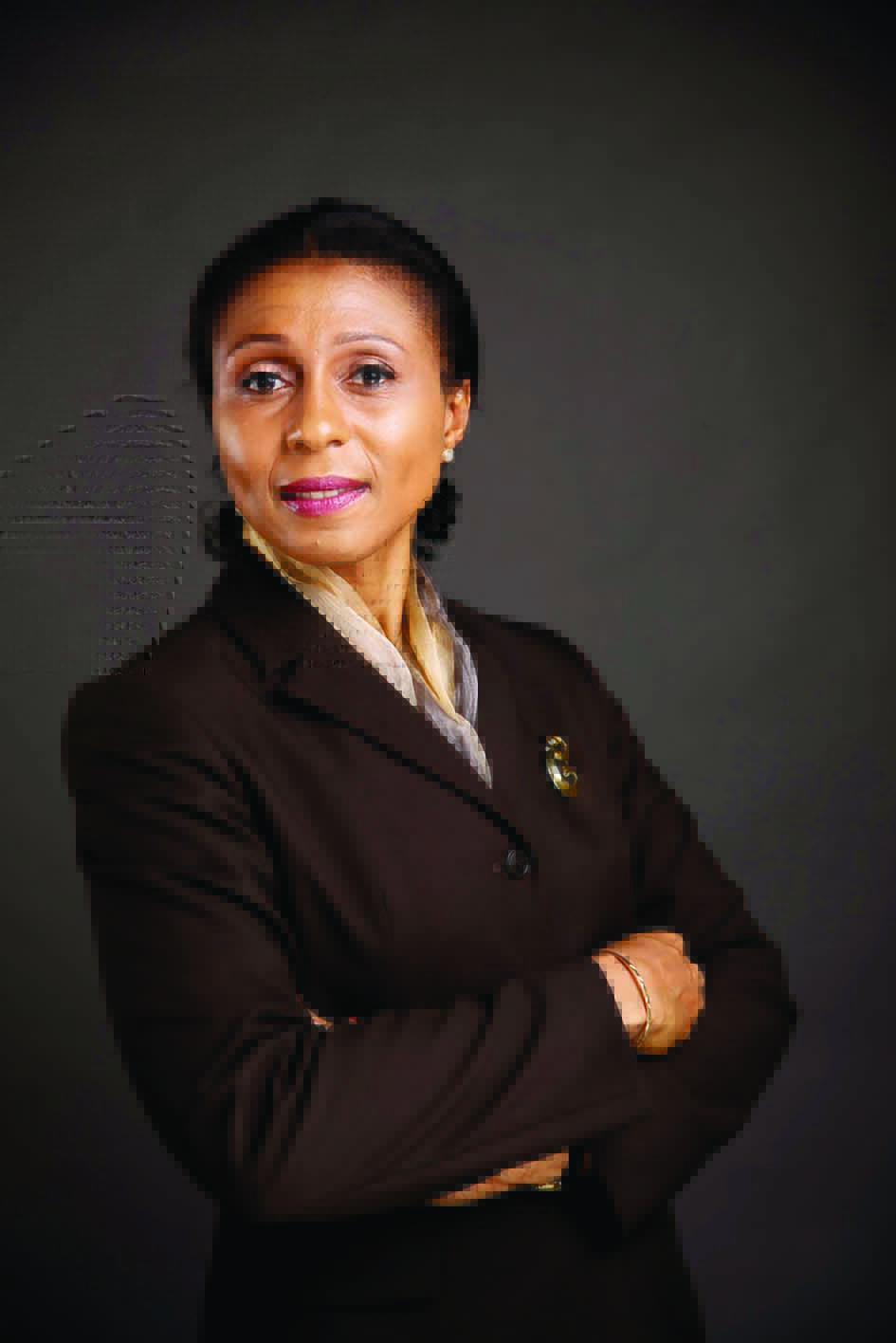
WESTERN BUREAU:
For many Jamaican children, the greatest threat does not come from strangers lurking in dark corners but from trusted adults within their own homes.
It is a painful reality that sits at the heart of new research by Jamaica-born legal scholar Sha-Shana Crichton, who says incest and intrafamilial child sexual abuse remain among the country's most hidden and devastating crimes.
In her paper, Children at Risk: Intrafamilial Child Sexual Abuse – Incest in Jamaica, Crichton argues that while incest remains one of society's strongest taboos, cultural silence, fear, shame and legal gaps continue to place vulnerable children at risk.
The Howard University School of Law assistant professor believes the issue extends far beyond criminal law.
At its core, she says, it is about Jamaica's responsibility to protect its children.
"Let the children grow up," Crichton said during an interview with The Sunday Gleaner.
"Don't rob them of their childhood."
Her warning comes against the backdrop of troubling national statistics.
Jamaica's first Violence Against Children and Youth Survey, released in 2024, found that nearly one in four Jamaican girls, 23.7 per cent, experienced sexual violence before reaching the age of 18. Among boys, 11.7 per cent reported experiencing sexual violence during childhood.
The figures are alarming, but Crichton believes they tell only part of the story. Many cases, she argues, never reach the authorities.
One of the most troubling findings emerging from her research is the extent to which child sexual abuse remains hidden behind family walls.
According to Crichton, many children never report abuse because they fear they will not be believed. Others are discouraged from speaking by relatives determined to protect family reputations or preserve financial arrangements that depend on the abuser.
"Children are seen to be seen and not heard," she said. "You have situations where children think they cannot talk, and then there is the shame culture."
That shame culture, she argues, often allows abuse to continue unchecked. "People say, 'You can't speak about this because you're going to bring shame to the family.'"
In some instances, she said, mothers may be reluctant to report abuse because the perpetrator is the household's primary provider. "Oftentimes the reputation of the family becomes more important than the child," Crichton said.
"What happens in this house stays in this house, even though it's killing the child."
One of the biggest misconceptions surrounding incest and intrafamilial abuse is that it occurs only in poor or dysfunctional communities. Crichton says the evidence suggests otherwise.
"It happens in all economic strata," she said. "Educated, uneducated, rich, not rich. It happens across the board."
While poverty may increase certain risks through overcrowded housing, displacement and limited privacy, she stressed that abuse is not confined to any one social group.
Research has shown that children from affluent households can be just as vulnerable, though such cases may be more effectively concealed. "The best of families have it," she said.
The common denominator, according to Crichton, is not income or education. It is access.
"It is a power-and-control issue," she explained. "The child is there. The child is vulnerable. There is easy access, and there is power." She believes many perpetrators abuse children because they occupy positions of trust and authority.
In those situations, children often feel powerless to resist, particularly when the abuser controls the family's finances or daily life.
For survivors, the consequences often extend far beyond childhood.
Crichton said the most significant damage is frequently psychological rather than physical.
"The psychological harm is significant," she said.
Survivors can struggle with depression, anxiety, post-traumatic stress disorder, substance abuse, self-destructive behaviour, relationship difficulties and profound feelings of shame. Some battle anger for years.
Others find it difficult to trust people or form healthy relationships.
In severe cases, survivors may experience suicidal thoughts or mental-health crises linked directly to childhood trauma. Without intervention and counselling, those effects can follow victims well into adulthood. "It is tremendously traumatic," Crichton said.
The impact extends beyond individual survivors.
Families often experience secondary trauma, while communities bear the social and economic costs associated with untreated mental-health issues, lost productivity and increased demand for support services. "What could have been a productive citizen is sometimes taken out of operation because of the trauma," she said.
While her research explores the broader issue of child sexual abuse, Crichton's legal concerns focus on the definition of incest under Jamaican law.
She argues that the Sexual Offences Act remains largely rooted in biological relationships, despite the reality that many Jamaican children are raised in households that include stepfathers, adoptive parents, long-term partners and other adults who function as parents.
According to Crichton, children abused by those individuals experience the same betrayal, manipulation and trauma as children abused by biological relatives.
Yet the law does not always recognise those relationships in the same way. Her position is simple. The issue should not be limited to biology. It should be about trust, authority and the power adults exercise over children.
"The trauma is the same," she said.
For Crichton, the law must evolve to reflect the realities of Jamaican family life if it is to provide meaningful protection for vulnerable children.
The assistant professor believes prevention must become as important as prosecution.
She is calling for stronger support systems, more community outreach, increased engagement by social workers and safer avenues for children to report abuse. Schools, she says, have a critical role to play.
Children spend a significant portion of their lives in classrooms, making educators uniquely positioned to identify warning signs and create safe environments for disclosure.
"You are teaching the whole child," she said. "To effectively learn, a child has to be emotionally, physically and psychologically safe."
She believes schools should establish anonymous reporting systems and provide children with clear information about inappropriate touching, consent and where they can seek help.
Many children, she noted, do not even have the vocabulary to explain what is happening to them.
As a result, abuse often continues undetected. "Give them the tools to report," she urged.
"Provide a safe environment for them to report."
Crichton acknowledges that discussing incest remains uncomfortable for many Jamaicans.
But she believes silence has protected perpetrators for far too long. The country, she argues, must move beyond treating child sexual abuse as a private family matter and instead confront it as a national issue demanding collective action.
"We say we're protecting our children," she said. "Let's put our money where our mouth is."
For her, the solution begins with listening to children, believing them when they speak and ensuring that the adults entrusted with their care can never use that trust as a shield for abuse.
And in a country where too many children continue to suffer in silence, her message is both simple and urgent: "Let the children grow up. "Let them be safe."
janet.silvera@gleanerjm.com