Termario Daniels | Why blocking social media won’t protect children
Loading article...
-
 Temario Daniels
-
Temario Daniels
-
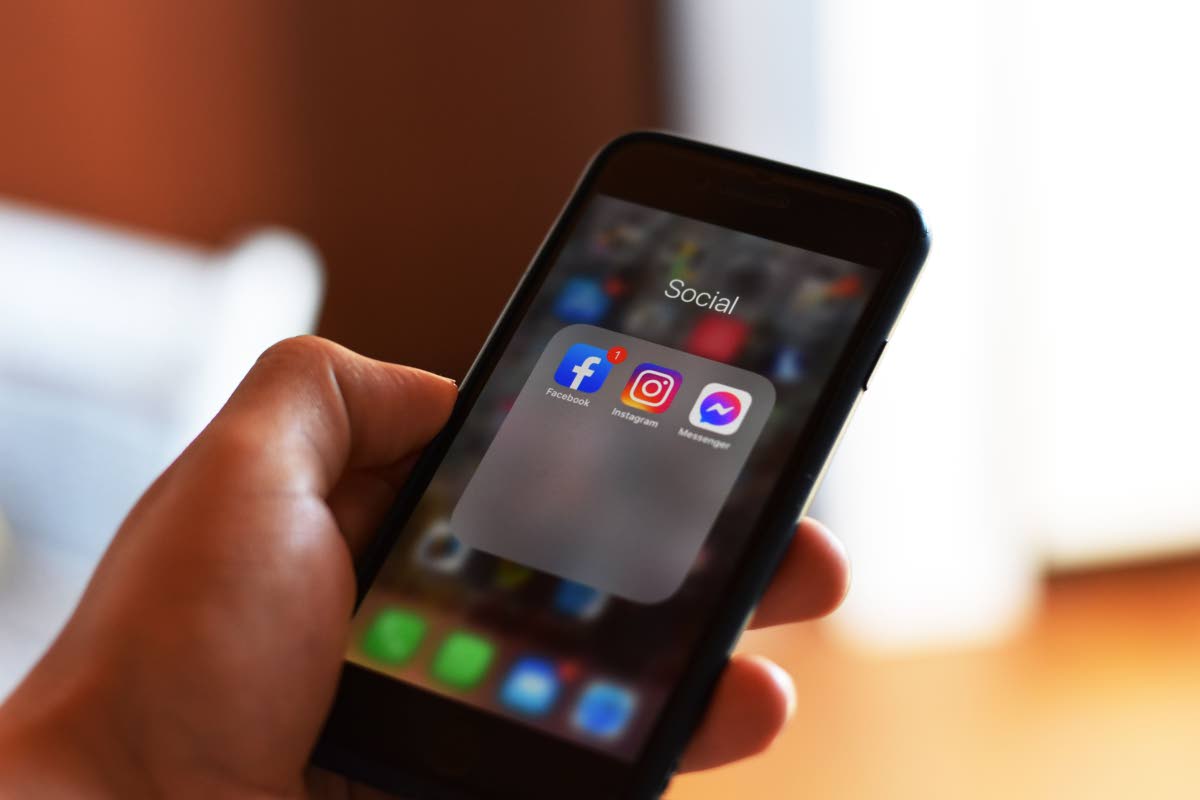 Representational image of social media apps on a mobile phone. Photo - Brian Ramirez / Pexels
Jamaica has always recognised the need to protect its children offline, and now the call has been placed on us to protect them through their screens.
Parents, teachers, youth workers and policymakers are seeing how social media exposes children to cyberbullying, exploitation, harmful content, misinformation, privacy violations , and unhealthy comparison. These are real child protection concerns, and the Minister of Health, Dr Christopher Tufton is right to prioritise these concerns with utmost seriousness.
However, seriousness should not lead to blanket decisions. Many youth advocates call for the protection of children online without restricting their individual rights. The issue is not whether children should be protected but how they ought to be. The issue is whether a blanket ban for persons under 16 is the most effective, evidence-based and rights-respecting way to do so.
CHILDREN HAVE RIGHTS
A rights-based approach begins with the Convention on the Rights of the Child (UNCRC). UNICEF which says that children are not simply objects for whom adults make decisions; they are human beings with their own rights, including the right to be heard, to access information, to privacy, to expression and to protection from harm. The child friendly version of the convention also affirms children’s right to share what they learn and feel, join groups, access information from the Internet, and be protected from violence and exploitation. These rights must be balanced, not treated as competing excuses to silence youth.
General Comment No. 25 (2021) is explicit: the UN Committee on the Rights of the Child states that children’s rights must be respected, protected and fulfilled in the digital environment. This means Jamaica’s response should not be built only around removing children from social media. It should be built around making digital spaces safer, more accountable and more appropriate for children’s development.
DO SOCIAL
MEDIA BANS WORK?
It can’t be assumed that a ban will be the most viable solution to this issue. According to recent research conducted by The University of Queensland, Australia, one of the first countries to ban social media access for children under 16, 85% of children were still using social media, despite the ban. Oxford Internet Institute scholar, Victoria Nash, similarly warned that bans may push determined teenagers into rule-breaking or riskier spaces, while cutting them off from news, learning, support and participation. In plain terms, while a ban may create the illusion that “protection is happening”, the issue may still be festering under the surface.
LISTEN TO YOUNG PEOPLE
Youth voices should also be heard, because nothing about us should happen without the youth, ‘’anno so it works’. The experience of a teenager in rural Clarendon may differ from that of a student in Kingston, a youth entrepreneur, a child with a disability, or a young person facing bullying. This does not mean there should be no limits. Jamaica needs age-appropriate protections, strong school policies, clear consequences for cyberbullying, better reporting pathways, stronger enforcement against online exploitation, and child-friendly privacy settings by default. But these safeguards should be part of a child-centred digital safety framework, not a blanket exclusion policy.
STRONGEST SAFEGUARD
Our response as a nation should be embedded in education, more specifically digital literacy and resilience among youth. Students must understand how algorithms influence what they see, how to identify misinformation, how to report abuse, how to protect their privacy, and how to separate online popularity from real life worth. At the same time, we must make provisions to support the home.
Parents and guardians need tools and not shame. Many adults are trying to supervise technology they did not grow up using, and may not fully understand their children’s virtual realities. They deserve practical workshops and school community partnerships so that they can be armed to guide and protect children.
Technology companies must be compelled to take responsibility. Platforms should be legally required to strengthen child safety design, privacy protections, moderation, reporting tools and algorithm transparency. Often, children are told to “be careful” while companies benefit from designs that keep them hooked. The social media ban has not proven to be the most effective shield.
People have the opportunity to change the narrative: to make the Internet safer for children, rather than removing children from social media. Protection without empowerment can become control.
Young people should not be silenced in the name of saving them, they should be equipped, listened to, and powerful platforms held accountable.
The youth do not need to be removed from the digital world. They deserve tools, rights, and safety by design platforms.
Termario Daniels is youth policy committee member at the Fi We Children Foundation (FWCF). Send feedback to info@fiwechildren.org or follow them: @fiwechildrenja on Instagram.