Mark Wignall | Deep Look at the Real UHWI Transformation Needed
Loading article...
-
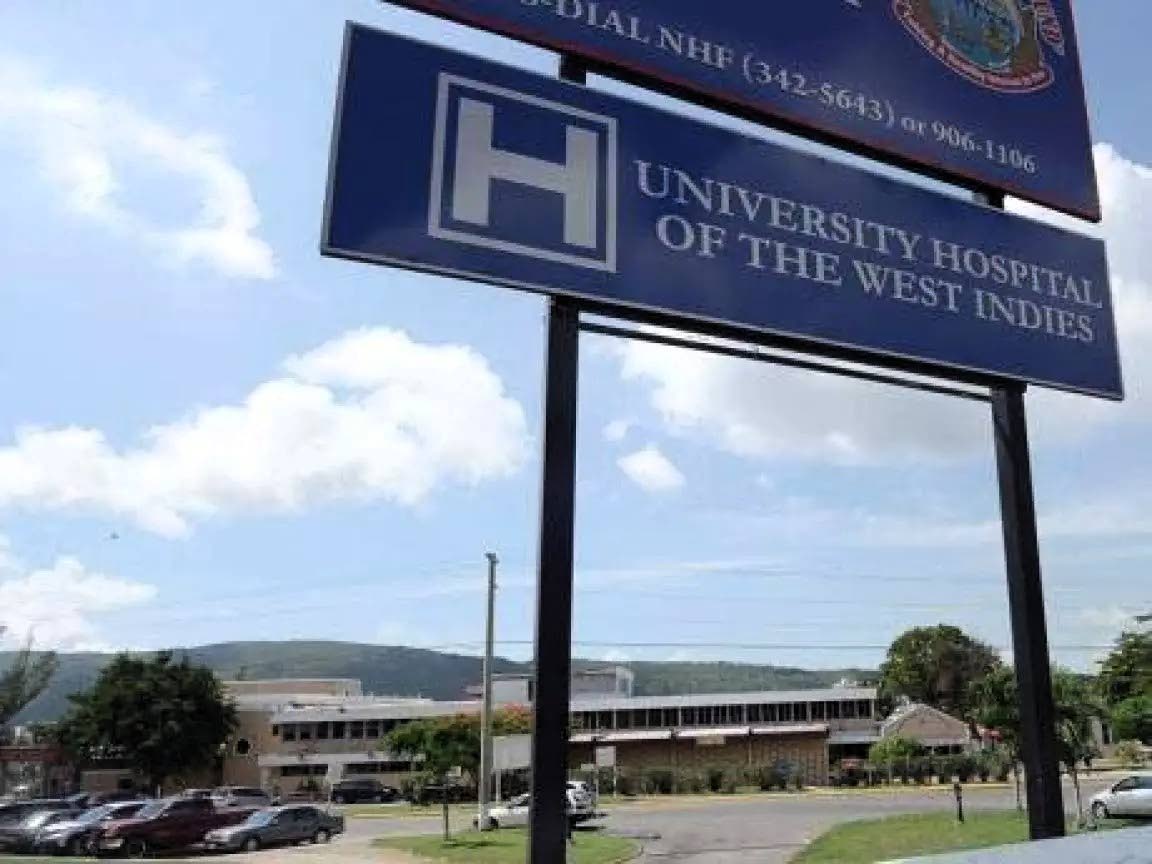 The University Hospital of the West Indies.
-
 Mark Wignall
As some readers know, I recently spent six days at the University Hospital of the West Indies (UHWI) and attempted to script a piece purporting to generate a somewhat crude description of the health system. It was in fact restricted from an uncomfortable hospital bed and fell far short of the rigorous critique that was needed.
I am extremely grateful to an international specialist in health management who has stepped up to set the record straight, especially in the many areas where I fell short.
The following comes from the specialist. “The UHWI appears to be entering a period of transformation. There is growing discussion about new facilities, modern equipment, upgraded infrastructure and a renewed vision for one of Jamaica’s most important healthcare institutions.
The transformation is necessary and should be welcomed. UHWI is an ageing hospital serving patients with increasingly complex medical needs. It is also a teaching and research institution responsible for helping to train many of the doctors, nurses and other healthcare professionals who serve Jamaica and the wider Caribbean.
But a new building, attractive waiting areas and modern medical equipment will not, by themselves, transform the experience of patients.”
The more difficult question is this. What is being done about customer service? Based on the experiences repeatedly shared by patients and relatives, customer service at UHWI appears to be at an alarmingly low point. Complaints commonly involve poor communication, unanswered calls, dismissive interactions, long periods without information, inadequate follow-up and patients or relatives being made to feel as though they are an inconvenience.”
These concerns should not be dismissed as superficial complaints from demanding members of the public. Customer service in a hospital is not about smiling mechanically or applying private-sector hospitality language to healthcare. It is about dignity, responsiveness, empathy, communication and respect.
Proper healthcare is not limited to the relationship between a doctor and a patient. It includes every interaction a person has with the institution, from the security officer at the entrance and the clerk handling registration to the nurse answering a call bell, the porter transporting a patient, the administration responding to a complaint, and the doctor explaining a diagnosis.
The US Agency for Healthcare Research and Quality defines patient experience as the full range of interactions patients have with doctors, nurses, hospital staff and the wider healthcare system. Its standard hospital surveys therefore assess matters such as communication, staff responsiveness, care coordination, cleanliness, discharge information, and whether patients would recommend a hospital.
In other words, service is not optional, it is part of healthcare quality. The World Health Organization (WHO) says quality healthcare must be effective, safe and people-centred, while also being timely, equitable, integrated and efficient,
Poor-quality care is associated with between 5.7 million and 8.4 million deaths annually in low- and middle-income countries. The WHO also reports that 4 in 10 patients living with chronic illnesses do not trust their healthcare systems, with that trust closely connected to their personal experiences of care.
Very important. Any new leadership and board should commit to measurable reforms, including mandatory service training, published patient-service standards, response-time targets, independent satisfaction surveys, and clear consequences for repeated misconduct or non-performance.
There are legitimate concerns about staff morale at the UHWI. Persons familiar with the institution have described employees as being overworked, frustrated and insufficiently supported. These accounts should be formally assessed rather than casually repeated or ignored. Low morale cannot excuse the mistreatment or neglect of patients, but neither can hospital leadership expect excellent service from employees who are exhausted, disengaged, poorly supervised or inadequately trained.
Health Minister Dr Christopher Tufton has spoken about assessing services and improving the patient experience across public health facilities.
Research involving 178 hospitals found that most measures of a positive patient-safety culture were associated with better patient experiences. This suggests that how employees are treated, managed and supported can directly influence how they interact with patients.
Any meaningful transformation at the UHWI must therefore address both sides of the equation; the experience of the patient and the working environment of the employee. Reports that staff across clinical, administrative and support departments receive little or no structured customer-service training should concern the hospital’s leadership.
A disturbing account was recently aired on a popular radio programme involving a young man living with cancer who reportedly said that he was left in a solid diaper for more than an hour while awaiting assistance with a stool sample. According to the account, he repeatedly asked a nurse for help. The details of that allegation should be independently verified and investigated by the institution.
The true measure of transformation will be found in the everyday experiences of patients, including when the important and often problematic billing system is navigated.
Is the telephone answered? Is an elderly patient given a clear explanation? Is a frightened relative treated with compassion? Does a dependent patient receive help when it is requested? Are employees trained, supported and held accountable?
Are the elderly being treated with care and monitored closely?
The reality is, the UHWI has adopted, in the modern era, the facets of a private institution and bill-paying/collecting group. All of its standards must be uniquely elevated to reflect that present status.
The UHWI does not simply need a new building or new equipment. It needs a renewed culture of care. Until customer service, staff development, accountability and patient dignity become central to the hospital’s transformation, the institution may look different without truly becoming better.
Mark Wignall is a political and public affairs analyst. Send feedback to columns@gleanerjm.com and mawigsr@gmail.com