Jalil Dabdoub | The imperative of principled leadership
Loading article...
-
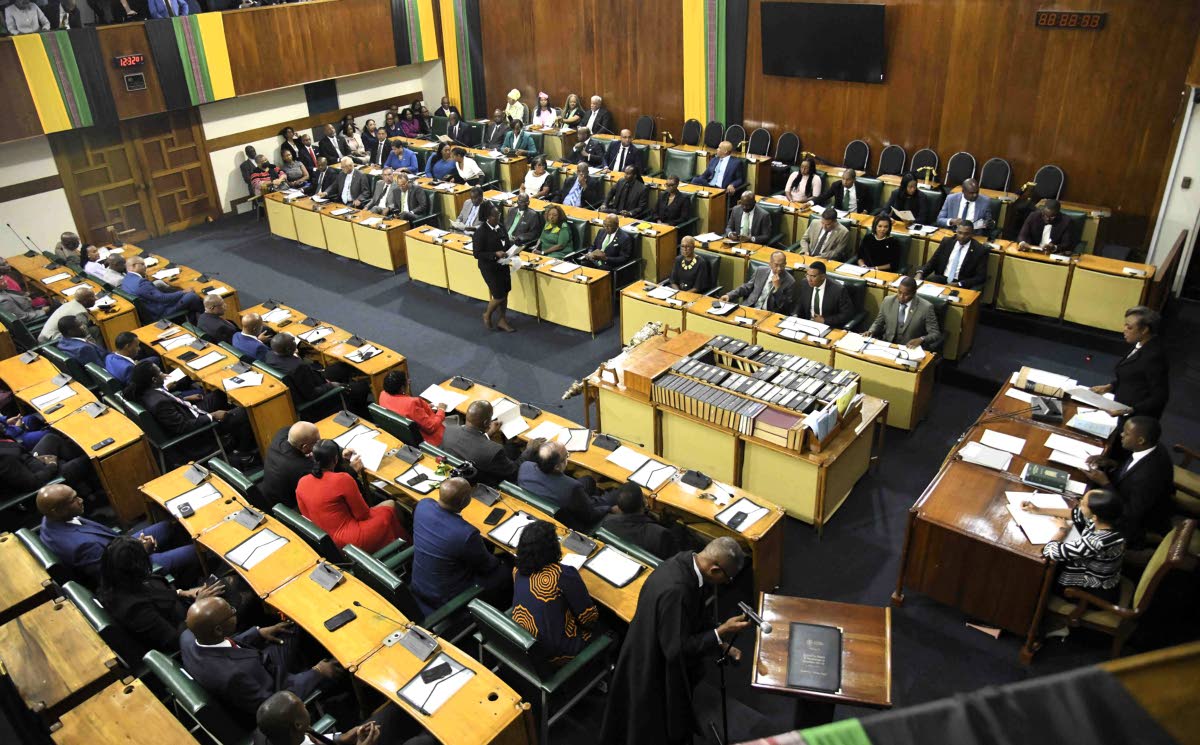 Members of Parliament before at the swearing-in ceremony for members of the upper and lower houses of Parliament held on September 18, 2025 in Gordon House.
-
 Jalil Dabdoub
An interesting online comment by Dennis A Minott, on my recent column Holness’ Quagmire suggested that the analysis identified the wrong problem. He argued that the real issue is not whether the PM finds himself in a political quagmire but whether Jamaica’s constitutional institutions consistently uphold due process, transparency, and equal treatment under the law.
On that main proposition, we can agree. Institutions, including the Integrity Commission, must be subjected to scrutiny. Their procedures should be examined, their decisions debated, and their fairness examined.
But acknowledging the importance of institutions does not diminish the role of leadership. Institutions alone cannot guarantee good governance. They remain dependent upon leaders who choose to respect them, defend them, and submit themselves to the standards those institutions demand.
It is precisely because institutions are important that ethical leadership is also important.
Institutions do not operate in a vacuum. Constitutions do not enforce themselves, nor do laws apply themselves automatically. Every institution ultimately depends upon the integrity, competence, and judgment of the people entrusted with administering it. If laws and constitutions alone guaranteed justice, no democracy would ever be subject to corruption, politicisation, or abuse of power.
The quality of governance is shaped not only by laws and institutions, but by the character of those who exercise authority. Leaders are often confronted with situations in which the law permits several options, yet principle demands the one that best protects public confidence. Character determines whether power is exercised for personal, partisan, or national interest.
No institutional framework is immune from weakness. Institutions succeed when leaders exercise restraint, respect constitutional conventions, and place the public interest above partisan advantage. Without a political culture that values integrity and accountability above party loyalty, even the best-designed constitution cannot provide good governance.
That is why the PM’s current predicament deserves attention. Describing it as a political quagmire is an acknowledgement of political reality.
If the PM disregards adverse findings concerning a minister, he risks reinforcing the perception that political accountability is optional. If he acts decisively, he must also demonstrate that equivalent standards apply consistently, including in relation to his own long-standing controversy with the Integrity Commission.
The point is not that allegations alone should determine guilt or compel resignation. Due process must be respected. But political responsibility is not equivalent to criminal liability. A PM may legitimately conclude that pending the resolution of serious allegations, the public interest requires temporary action to preserve confidence in government.
That is the essence of a political quagmire. Every course carries political costs and invites scrutiny of the decision maker’s ethical standards. It reminds us that constitutional governance exists within a political environment where credibility and public trust are indispensable.
We cannot separate constitutional principles from political legitimacy. Westminster systems depend not merely upon legal rules but also upon constitutional conventions, public trust, and political self-restraint. Much of what keeps such systems healthy is not only judicial enforcement but the willingness of political leaders to act honourably when the law does not compel them to do so.
Jamaica’s political culture, therefore, should be closely scrutinised. Too often, public officials assess their conduct solely through the standard of legal liability rather than political responsibility owed to the citizenry. The assumption appears to be that unless a court compels resignation or Parliament removes an office-holder, no political consequence need follow.
That is not how mature democracies should operate.
In the UK, ministers have resigned for ethical lapses or conduct that undermined public confidence, even without criminal conviction. The resignations of Suella Braverman in 2022 and Angela Rayner in 2025 illustrate that political accountability may require consequences beyond the law. Jamaica, however, has yet to fully embrace this distinction, often treating the absence of criminal liability as a shield against political responsibility.
Such resignations are not necessarily out of honour. Rather, they reflect a political culture in which the loss of public and party confidence can make a minister’s position untenable. PM Starmer’s resignation in 2026 illustrates this principle: he resigned not because of criminal liability but because his political support had become unsustainable
Our political tribalism often transforms questions of governance into contests of party loyalty. Allegations are defended or condemned depending largely upon which political colour we support. At that point, constitutional principle becomes less important than partisan interest.
Strong institutions require more than statutory powers. They require politicians willing to respect institutional independence even when it proves inconvenient, citizens prepared to apply consistent standards irrespective of party affiliation, and leaders who understand that preserving public confidence may demand sacrifice beyond what the law mandates.
For that reason, the institutional question and the PM’s predicament are inseparable. The current controversy highlights both the importance of robust oversight institutions and the indispensable role of ethical leadership in sustaining constitutional legitimacy.
Ultimately, constitutional democracy is sustained not by documents and institutions alone but by a political culture that values integrity over expediency, principle over tribalism, and accountability over convenience. Institutions are vital, but they cannot substitute for ethical leadership.
The current controversy, therefore, tells us something far more important than the fortunes of any one PM. It reminds us that the health of Jamaica’s democracy will ultimately depend not only upon the strength of its institutions but upon the character of those entrusted to lead them and the willingness of citizens to demand consistent standards from all who exercise public power.
Jamaica’s democracy will be judged not only by the strength of its laws and institutions but by whether its leaders uphold standards of integrity beyond what the law can compel but which constitutional legitimacy requires.
That is a challenge confronting Jamaica today, and it extends far beyond this PM.
Jalil Dabdoub is an attorney-at-law. Send feedback to columns@gleanerjm.com.