Dennis A Minott | Can another MoU alter Jamaica’s geography?
Loading article...
-
 Dennis A Minott. Photo - File
-
Dennis A Minott. Photo - File
-
Every generation confronts a defining policy test. Ours may well be whether Jamaica chooses to build its future upon engineering reality or political optimism. The recent memorandum of understanding between the Jamaican Government and Canadian federal nuclear institutions has, once again, placed Small Modular Reactors (SMRs) before the public as though nuclear power were the inevitable, glamorous next chapter of our development. It is not. An MoU is neither a feasibility study nor an engineering design. It is not a geological investigation, a financial close, or a licence from nature to suspend the laws of physics.
Scarcely had the latest enthusiasm emerged than nature issued a brutal reminder that geography remains stubbornly indifferent to political aspiration. On June 24, Venezuela experienced devastating twin earthquakes measuring magnitudes 7.2 and 7.5 less than one minute apart. Entire communities west of Caracas were devastated, thousands were killed, and critical infrastructure was reduced to rubble. Although hundreds of kilometres away, the catastrophe carries sobering lessons for Jamaica.
The significance of the Venezuelan disaster lies not simply in the magnitude but in the sequence. Engineers speak of “design-basis events”—the maximum hazards for which facilities are designed. Yet nature repeatedly demonstrates that reality exceeds design assumptions. Jamaica and Venezuela occupy different margins of the same Caribbean Plate. Venezuela lies where that plate grinds against the South American Plate, while Jamaica sits where it interacts with the North American Plate through the active Enriquillo-Plantain Garden Fault System. The Venezuelan earthquakes formed a devastating “double-tap” event. The first shock compromises structural integrity. The second arrives before inspection or emergency response can begin, transforming damage into collapse. Modern nuclear facilities incorporate remarkable safety systems. However, containment structures, cooling circuits, and emergency systems remain mechanical systems subjected to violent and unpredictable stress. Planning for a single-design earthquake while assuming nature will stop there is an uncomfortable gamble.
No MoU alters plate tectonics. No Cabinet decision repositions fault lines. No investment announcement negotiates with geology.
DOESN’T ABOLISH RISK
Supporters note that SMRs incorporate passive safety features and represent decades of learning since Fukushima. Yet improved engineering reduces risk. It does not abolish it. Nor does reactor size alter fundamental physics. Radioactive material requires permanent containment irrespective of whether a reactor produces 100 MW or 1,000 MW. The central question is not whether an SMR can theoretically operate safely. It is whether an earthquake-prone island of fewer than three million people can prudently accept the consequences of an exceptionally low-probability but extraordinarily high-impact failure. In a continental nation, a severe nuclear accident may become a regional disaster. On Jamaica, it could become an existential national one. A substantial exclusion zone would cut through entire parishes. Agricultural lands, freshwater aquifers, tourism infrastructure, and coastal ecosystems could all become casualties of a single catastrophic event. The adjective “small” refers only to electrical output. Engineering complexity, regulatory demands, and long-term waste management remain immense.
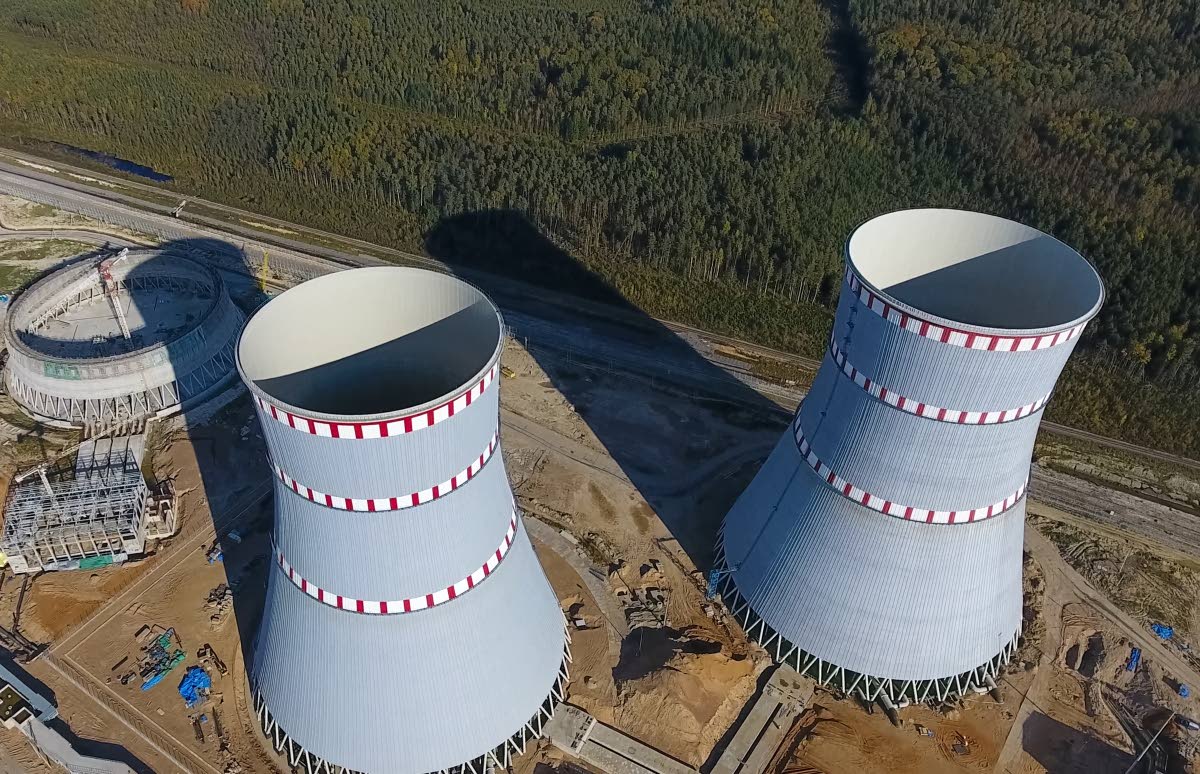
An SMR depends continuously upon a stable grid, reliable cooling-water systems, functioning roads, emergency services, and disciplined operational management. If these supporting systems fail during a major earthquake, the reactor transforms from an energy asset into a demanding national emergency. During an emergency shutdown, or SCRAM, fission stops almost immediately, but decay heat continues. The plant, therefore, changes from producing electricity to consuming it, requiring continuous power to operate essential cooling systems. On Jamaica’s island grid, whose peak demand remains below 700 MW, the sudden loss of a 100 MW generating unit represents a major operational shock.
The island-wide blackout of June reminded us that electrical systems respond to engineering discipline, not speeches. If routine grid management remains challenging, introducing one of the world’s most unforgiving technologies magnifies systemic risk.
Government understandably seeks reliable, low-carbon electricity. Yet technology cannot outrun institutional culture. The earthquakes in Türkiye, and now Venezuela, demonstrated how regulatory weaknesses and poor enforcement can transform natural hazards into catastrophes. Many Jamaicans question whether our present regulatory culture can supervise one of the world’s most technically demanding industries over decades. That concern deserves serious consideration.
REDUCE OUTPUT
An equally important issue has received remarkably little public attention. Several European thermal generating stations, including nuclear plants, have been forced to reduce output or shut down because rivers and cooling-water sources have become excessively warm. These reductions occur precisely when electricity demand peaks because populations require air conditioning during extreme heat. Every nuclear reactor is fundamentally a thermal power station operating within the constraints of the Rankine cycle and the Carnot limitations governing every heat engine. It must reject enormous quantities of waste heat into an environment capable of accepting it. As cooling-water temperatures rise under climate change, those thermodynamic margins become progressively smaller. No corporate partnership, investment agreement, or government announcement can repeal the Second Law of Thermodynamics.
The more important question becomes this: What precise problem is Jamaica attempting to solve? If the objective is lower electricity prices, distributed renewable technologies continue to decline in cost while avoiding imported uranium and multigenerational waste obligations. If the objective is energy security, resilience is achieved not through concentration but through diversification. Thousands of distributed renewable installations — combining solar photovoltaics, wind, farmed biomass, batteries, and intelligently managed microgrids — are inherently more resilient than concentrating national generation within one highly specialised facility. Following hurricanes or earthquakes, distributed systems allow hospitals, water supplies, and emergency centres to continue operating even while parts of the wider network are repaired. A centralised nuclear facility facing a cooling crisis creates the opposite problem.
Jamaica possesses abundant sunshine, excellent wind corridors, considerable biomass opportunities, and rapidly improving battery technologies. Investment in these industries also creates employment across all 14 parishes for electricians, engineers, technicians, leucaena biomass farmers, and entrepreneurs instead of concentrating expertise within a single foreign-dependent enclave. Infrastructure should always be designed for the realities most likely to confront it rather than for assumptions policymakers hope will prevail.
NATIONAL JUDGEMENT
Earthquakes do not respect ministerial portfolios. Heatwaves do not postpone themselves until electricity demand falls. Fault systems neither recognise investment announcements nor honour political timetables. Nature negotiates with no one. Before asking whether Jamaica can build an SMR, we must first ask whether we should build one. The first question concerns engineering capability. The second concerns national judgement.
The latest MoU should, therefore, be welcomed only if it stimulates rigorous debate rather than premature celebration. Jamaicans deserve evidence before enthusiasm, engineering before aspiration, and realism before prestige. Nature has spoken through Venezuela’s shattered cities and Europe’s overheated rivers. The question is whether Jamaica’s policymakers will listen before another memorandum of understanding becomes a profound misunderstanding with geography and geology.
Governments may sign agreements with investors. No government has ever signed an MoU with the Earth’s tectonic plates — or with the Second Law of Thermodynamics.
Dennis A Minott, PhD, is the CEO of A-QuEST-FAIR. Send feedback to: a_quest57@yahoo.com or columns@gleanerjm.com.