Lance Neita | Lest We Forget Marcus Garvey
Loading article...
-
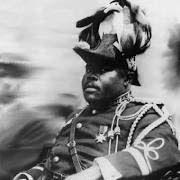 Marcus Mosiah Garvey
-
 Lance Neita
The month of June passed without much, if any, homage being paid to our first National Hero, Marcus Garvey. The month is significant because Garvey died on June 10, 1940, and suitable acknowledgment is customarily paid to our national heroes on their respective anniversaries.
Disturbingly, this milestone passed with muted observances for a man whose life and work shaped not only Jamaica but the global black experience.
I may have missed any national observances, including the traditional wreath-laying ceremonies at his monument. If so, I apologise. Sadly, however, there was an unbelievable lack of activities recorded around the island.
We tend to hang up our national heroes in a closet and take them out during Heroes Week, dust them off, recite the salutations, and put them away until the following year.
Jamaica is well served by national awards and decorations, national holidays, the National Heroes Park, and other institutional landmarks, but in my opinion, it lacks the deliberate and focused attention to public education that places importance on history and immortalises legends and achievements.
That being the case, Garvey’s home parish, St Ann, deserves credit for commemorating the Garvey legacy through a public lecture series presented each year at the parish library on the Friday closest to the anniversary of his death.
The fact that the event never fails to pack the lecture hall with students, Garveyites, educators, parish leaders, and members of the general public indicates an eagerness to hear different perspectives on Garvey’s life through presentations delivered by a distinguished panel of scholars and public figures.
The annual lectures are open to the public and have contributed significantly to studies, debates, and an understanding of Garvey’s relevance and role in the evolution of Jamaica’s economic, political, and social structure.
The St Ann Parish Library is, admirably, positioned to highlight Garvey’s legacy, with an imposing statue of the national hero standing in the library courtyard.
An interesting story, retold at each lecture ceremony, tells of a cut-stone wall constructed behind the statue, bearing Garvey’s words: “We declare to the world Africa must be free.”
Over time, and after several public functions had been held at the site, observers noticed that one stone at the top of the eastern section was missing. Questions were raised, and when the contractor, Hezekiah Green, was quizzed, he explained that the humble workmen who built the wall had requested that the stone be laid only when all of Africa had become free.
In the face of this moving demonstration of loyalty to the African cause thousands of miles away, the request was upheld and gladly supported by the parish council.
Then, on August 17, 1994, following South Africa’s first multiracial elections, which elected Nelson Mandela as president, a small ceremony was held at Garvey’s statue beside the St Ann Parish Library. The Nigerian High Commissioner, His Excellency Professor Emmanuel Ugochukwu, did the honours. Garvey’s message was repeated, and the last stone in the wall was laid.
The annual celebration of his life by his St Ann family never fails to remind us of the contribution Garvey made and of the debt generations, past and present, owe to him.
A Garvey living in the United States today would be a marked man, “hunted and penned in an inglorious spot”. Garvey was always prepared to stand up against bigotry, the denigration of the black race, and the denial of humanity to people of African descent.
In the words of the late Prime Minister, the Most Honourable Edward Seaga, “Garvey shattered the mental prison that had developed in this part of the world over some 400 years ago to let in the fresh winds of liberty and equality, which we are now able to breathe today.”
His memory deserves more than was afforded on June 10 this year.
There is some concern among the people of St Ann that Garvey is slipping off the national radar. But all is not lost.
Let me share with readers a fresh perspective on what Marcus Garvey means to the younger generation. I received it when I attended a St Ann schools’ elocution competition on the Garvey theme held in St Ann’s Bay a few years ago.
Here is what 11-year-old Bianca Rose of Discovery Bay All Age School had to say:
“Just as important as the roots are to the tree, so is the knowledge of our past history, culture, and origin to us. We are sustained, supported, and exist because of the knowledge of our ancestry.
“A Yoruba proverb reads, ‘If we stand tall, it is because we stand on the backs of those who came before us.’
“Therefore,” asked little Bianca as she stared her audience in the eye, “how can we, children of African descent, stand tall with so little knowledge of our past?
“The knowledge of our ancestry,” she went on to say, “is what can bring us wealth, health, prosperity, peace, and stability.”
And in case we, the adults, ever forget, let us take comfort in the admonition and challenge issued by another student, 11-year-old Ajanae Boswell of Columbus Prep.
“Marcus,” she said, “does not want his African brothers and sisters to forget their roots. He envisioned the rise of his African brothers and sisters as world beaters not only in athletics and music but also as philosophers, scientists, writers, and innovators.
“So why should the black man not be aware of his roots? This is Garvey’s message to our generation. Without our roots, we may become squatters because we do not know that royal blood runs through our veins.”
Lest we forget.
Lance Neita is a public relations specialist and author. Send feedback to columns@gleanerjm.com and lanceneita@hotmail.com.