Elizabeth Morgan | The US Constitution’s ideals and US reality
Loading article...

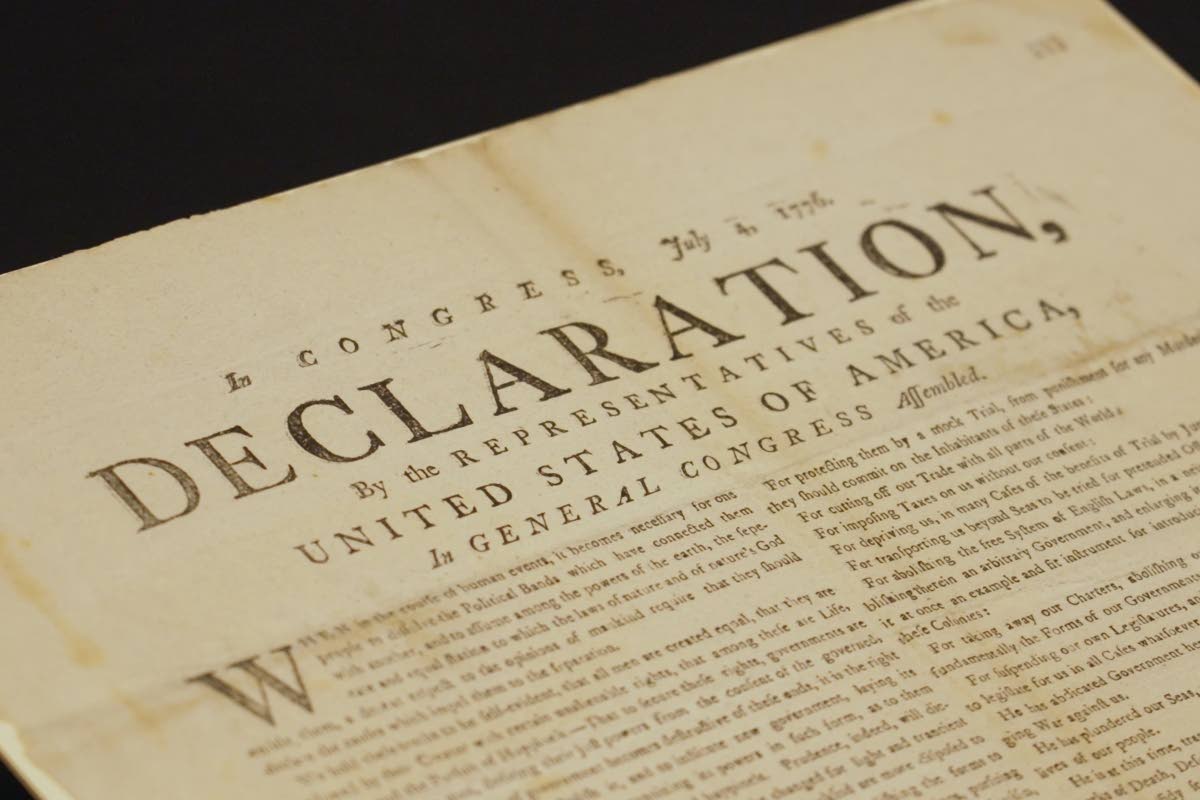
We the People of the United States, in Order to form a more perfect Union, establish Justice, insure domestic Tranquility, provide for the common defence, promote the general Welfare, and secure the Blessings of Liberty to ourselves and our Posterity, do ordain and establish this Constitution for the United States of America
Preamble of the US Constitution
On Saturday, July 4, 2026 the USA celebrated its 250th anniversary of independence. There was at least one article in this newspaper reflecting on the ideals of the US Constitution and the example which it has offered to the world for governance in a republic. The US Constitution was adopted in Philadelphia, Pennsylvania, on June 21, 1787 and became the governing law on March 4, 1789. With its reference to “We the People…”, it signalled that power resided with the American people, and it also promoted the separation of powers among the Executive (the President), the Legislature (the Congress – the House of Representatives and the Senate), and the Judiciary, the Supreme Court. The Congress is to provide checks on the Executive.
Many of us in Jamaica, especially those attending high school in the 1960s and ‘70s, were not taught the history of the USA. What we know of US history came from television, movies, and novels. We have the Hollywood version of US history from movies like Gone with the Wind, the John Wayne westerns, and the Clint Eastwood spaghetti westerns. The Americans, the white guys, were often the good guys; the Indians, the bad guys; and blacks, Latinos and Chinese were servants/labourers – second- and third-class citizens.
Many of us first saw the stark reality of slavery in the USA in the 1970s television miniseries, Roots.
THE MEANING OF “WE THE PEOPLE”
Now, knowing much more about US history from travel, documentaries, and studies, it is very clear that the US Constitution, when it was drafted, reflected big ideas, a wish for what the USA could be as a country – promoting justice, equality, people’ rights, and democracy. The reality in 1787, however, was that “we the people” referred primarily to the white men attending the Constitutional Convention and others of influence. There were about 1.7 million free white men in the USA at the time. Women, nearly 1.6 million free white women, were not a factor. About 700,000 enslaved people of African descent also did not count, except as labour. The indigenous people within the then US borders did not matter at all.
Several of the founding fathers of the US Republic were slave owners, including George Washington, Thomas Jefferson, James Madison, and Patrick Henry. They were not about abolition of slavery in spite of all their talk about liberty and justice.
In the 1780s, the states of the USA determined who could vote and some northern states allowed a few free white women and free black men owning property to vote. Generally, mainly white men owning property or paying taxes could vote. They were about six per cent of the population.
The Civil War, 1861-1865
The issue of slavery in the USA led to a brutal, bloody civil war, which started on April 12, 1861, when the Confederate slave states of the south sought to secede from the Union. They wanted to maintain their way of life and economy, which meant maintaining slavery. Other states of the north and west had abolished slavery from 1777 to 1858. In the war, the Union was led by President Abraham Lincoln, who recognised that it had to have a greater moral objective – and this was the abolition of slavery. On January 1, 1863, President Lincoln issued the Emancipation Proclamation abolishing slavery in Confederate states. Slavery was not fully abolished in the USA until December 6, 1865 with the adoption of the 13th Amendment to the US Constitution. Citizenship for black Americans, Latinos, and anyone born in the USA was granted under the 14th Amendment of the US Constitution (birthright citizenship) adopted in 1868.
A TRAIL OF TEARS FOR INDIGENOUS PEOPLE
The indigenous peoples (Indian tribes) within the borders of what is today the USA had to fight long and hard for their survival, as their lands were confiscated and allocated to mainly white settlers, as the US borders were expanded westwards. The indigenous peoples found themselves betrayed and confined to reservations. The US-Indian wars actually ended in 1924 and US citizenship was offered to the indigenous population.
The struggle for civil rights
In 1865, President Abraham Lincoln was assassinated and the hope of liberty and justice for black Americans died with him. One hundred years was spent rewriting the history of the US south and denying the rights of black Americans. Racial segregation (apartheid) was formalised and made federal law on May 18, 1896. There were designated areas in which black Americans could live, have businesses and social and cultural institutions. Black Americans were subjected to terrorism. Those of us who grew up in the 1960s are very much aware of the civil rights protests led by Martin Luther King. The Civil Rights Act abolishing segregation was passed in 1964.
All men were allowed to vote by the 15th Amendment of the Constitution in 1870, but black men were restricted and denied. In August 1920, the 19th Amendment to the US Constitution enabled women to vote. The 1965 Voting Rights Act enabled all black Americans to vote. These rights were secured nearly 100 years after the abolition of slavery.
It has taken many amendments to the US Constitution and adoption of various laws to bring the USA closer to realising the ideals of its Constitution.
PRESENT REALITY CHECK
Today, there is a movement within the USA to reverse many of the civil rights gains, including voting rights, achieved under the US Constitution, its Amendments, and related laws.
The US project to create a federal republic of the people, for the people, and by the people, and to make “we the people” include all the people regardless of race and ethnicity, remains a work in progress. It is still not reality.
Elizabeth Morgan is a specialist in international trade policy and international politics. Send feedback to columns@gleanerjm.com.