Dangerous delay
Loading article...
-
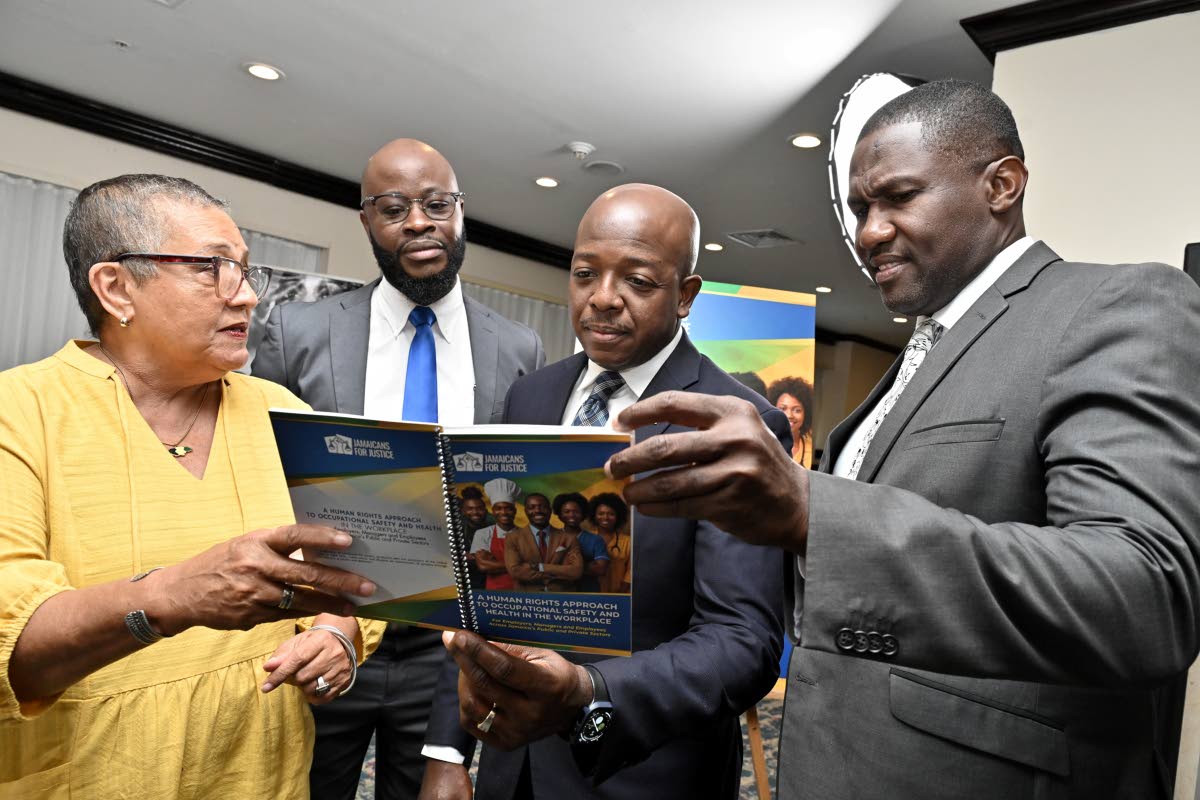 Pearnel Charles Jr (second right), minister of labour and social security, examines the Jamaicans for Justice (JFJ) publication, ‘A Human Right Approach to Occupational Safety and Health in the Workplace’, with (from left) Ruth Jankee, board director of JFJ; Patrick Lalor, policy and advocacy officer of Jamaica AIDS Support for Life; and Wavell Hinds, Opposition spokesperson on labour and sport, at the JFJ policy forum, ‘Addressing Gaps in Workplace Health Policies: Moving Beyond an HIV/AIDS-Only Approach to a Comprehensive Health Framework’, during The Jamaica Pegasus hotel in New Kingston last Wednesday. Photo - Rudolph Brown/Photographer
-
Pearnel Charles Jr (second right), minister of labour and social security, examines the Jamaicans for Justice (JFJ) publication, ‘A Human Right Approach to Occupational Safety and Health in the Workplace’, with (from left) Ruth Jankee, board director of JFJ; Patrick Lalor, policy and advocacy officer of Jamaica AIDS Support for Life; and Wavell Hinds, Opposition spokesperson on labour and sport, at the JFJ policy forum, ‘Addressing Gaps in Workplace Health Policies: Moving Beyond an HIV/AIDS-Only Approach to a Comprehensive Health Framework’, during The Jamaica Pegasus hotel in New Kingston last Wednesday. Photo - Rudolph Brown/Photographer
-
 Police and firefighters at Balcombe Drive Primary and Junior High School in Olympic Gardens, St Andrew where the section of a building collapsed, killing a man and injuring another on September 1, 2026.
-
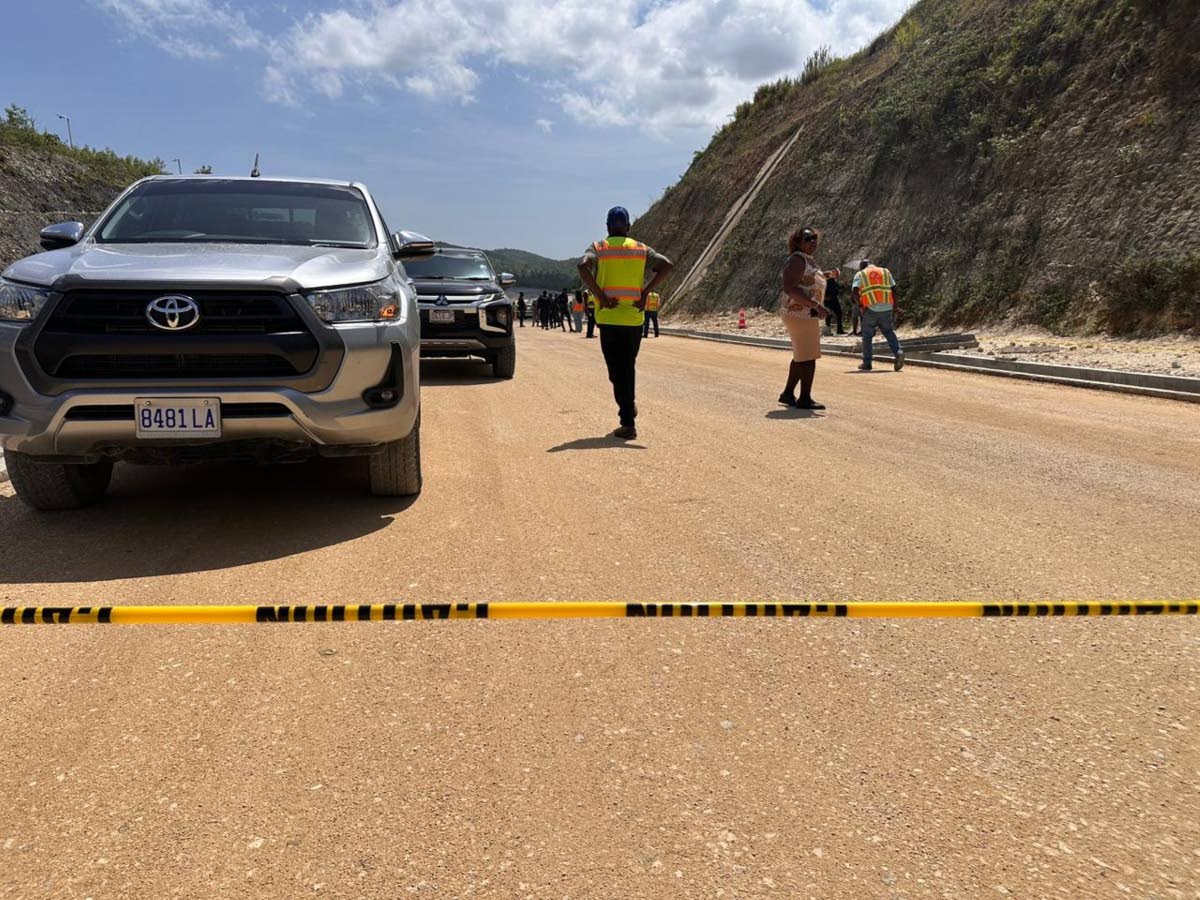 Scene of an accident on the Montego Bay Bypass project near Granville, St James, where engineer Clifton James was crushed to death by a truck. Photo - Ashley Anguin/Photographer
-
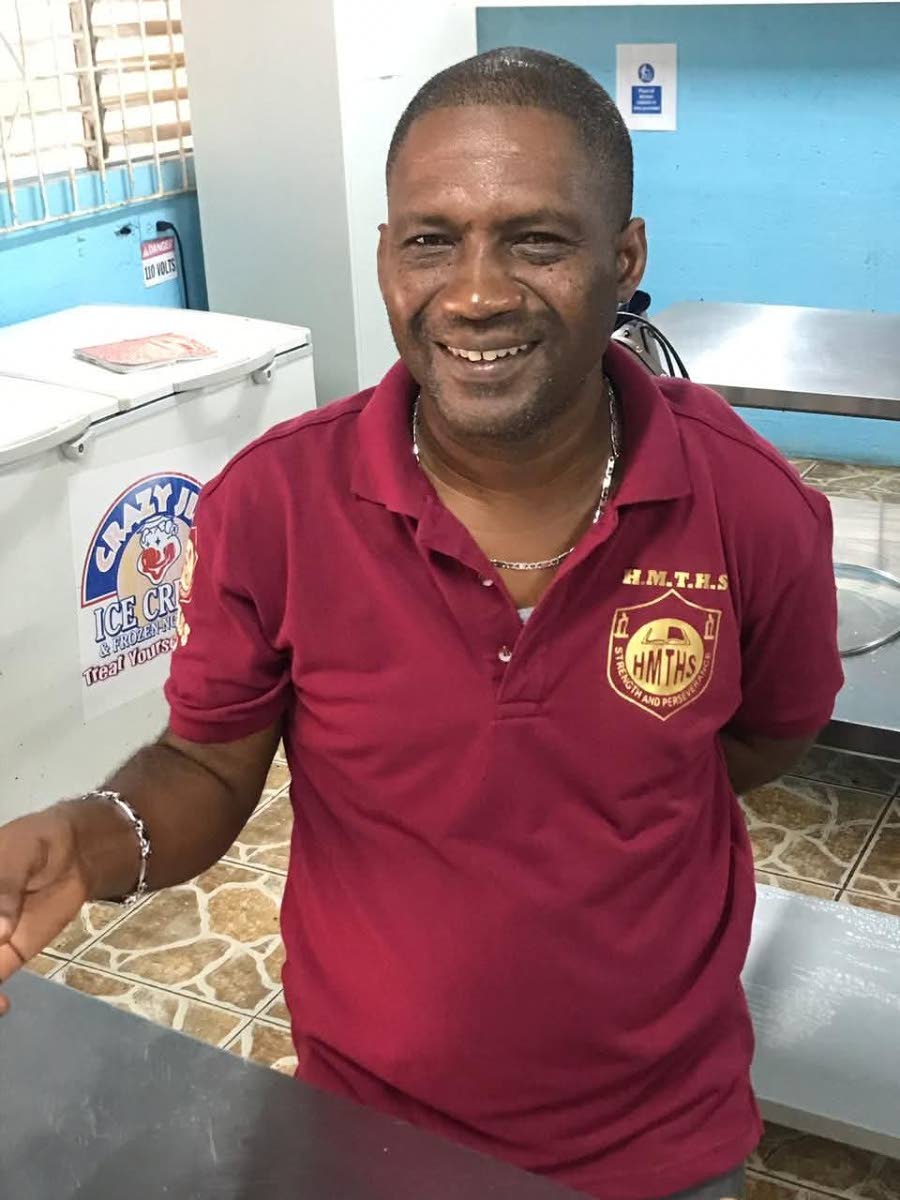 Clifton James. Photo - Contributed
While the tragic workplace accidents that claimed the lives of Shine Johnson, Everton Campbell and Clifton James recently gripped Jamaica, their deaths serve as a stark reminder of the potential health and safety risks associated with the daily grind and making ends meet.
Johnson died and his colleague was seriously injured on September 1, when a concrete structure on which they were both standing collapsed at Balcombe Drive Primary and Junior High School in Kingston.
Two days later, James was killed after a construction truck reversed into him while he was working as an engineer on the Montego Bay Bypass. Campbell lost his life a month later after being struck by a falling crane at a construction site, also in Montego Bay.
In additional to sudden workplace incidents is the silent crisis of thousands of citizens battling terminal lifestyle illnesses spurred by occupational safety and health (OSH) hazards in the workplace.
OSH legislation addresses workplace safety by establishing a comprehensive legal framework aimed at preventing accidents, injuries and occupational diseases.
However, Jamaica’s critical OSH Bill has languished for nearly a decade since its introduction, leaving large segments of the island’s workforce exposed under colonial-era laws.
Caught in a cycle
First tabled in Parliament in 2017, the bill has been caught in a cycle of seemingly endless reviews as legislators, government lawyers and employers have struggled to find common ground.
Speaking at the launch of a handbook on workplace health by Jamaicans for Justice (JFJ) last Wednesday, Labour and Social Security Minister Pearnel Charles Jr said the bill would return to the House of Representatives before the end of the fiscal year.
The Government is Jamaica’s largest employer, with more than 100,000 direct employees, and Charles Jr told The Sunday Gleaner that he considers himself the chief advocate for workers’ protection and well-being.
“Since being there (labour ministry), I have advocated for their health. We have a new gym, we have targeted some of the areas where I saw some concerns in terms of safety, and significant investment has been made to either repair or improve those conditions. And we have a philosophy, if we are the ministry that is promulgating OSH for the entire country, we ourselves have to be in a condition that is respected and can be seen as an example. It is a part of our strategic plan to make sure that we’re not just talking the talk, but we’re walking the walk.”
The passage of the OSH legislation cannot come soon enough for government workers, two of whom spoke with The Sunday Gleaner on condition of anonymity.
“Please declare that I work in government. The building is old. I have to be constantly dodging pigeon faeces, AC (air condition) water is always dripping on me. The cleaners are ineffective as they do not clean the areas properly. Cobweb, lizard, some areas are desperately in need of paint. Some computers are old and take forever to be replaced. There is no operational cafeteria. Sometimes the sewer will overflow if it has been raining often and hasn’t been cleared over time. The ACs will stop working at the drop of a hat and the elevators even more often. Weekly individuals get locked in.”
The concerns, however, extend beyond physical conditions to include workers’ mental health.
“They just now started doing some staff engagement activities but it fails to capture a majority of the staff. The offices that are out of town feel isolated because they rarely get an opportunity to participate in mainstream activities,” another government employee bemoaned.
The 2022 amendment to the International Labour Organization (ILO) Declaration on Fundamental Principles and Rights at Work added a safe and healthy working environment as the fifth core pillar of fundamental workers’ rights, alongside established principles concerning freedom of association, forced labour, child labour and workplace discrimination.
According to the ILO, employers are encouraged to make appropriate arrangements for establishing an OSH management system to create and maintain a safe and healthy working environment and comply with national laws and regulations.
The system should contain the main elements of policy, organising, planning and implementation, evaluation, and action for improvement.
JFJ Executive Director Mickel Jackson told The Sunday Gleaner that the COVID-19 pandemic forced workers to pay closer attention to their rights on the job.
Broader workplace issues
“People were concerned about the ergonomics, whether they would be getting support with remote working. Do you have the right desk? Do you have the facilities on your computer screen to reduce the risk to your eyes? So people are very concerned about the broader workplace issues that we hope will be in the final provision of the OSH Bill once it’s presented before Parliament.
“So, I think it’s a consideration that, while we wait on the bill to be put before Parliament, that private sector has to move forward with implementing with greater focus based on best practices. So, I think the public is aware, they’re concerned. Whether or not they are aware of the provisions in the bill is another conversation, but people know what they want and they know what they’re privy to... and the law needs to ensure that it meets some of those concerns.”
The OSH legislation is therefore seen as a critical anchor for protecting workers.
“I was happy where he indicated that the OSH Bill will be put before Parliament and that is something I want to reiterate, to call for, because remember, OSH has been languishing for quite some time, and we don’t have sufficient laws to deal with the comprehensive workplace issues that we made mention of.”
The OSH Unit at the Ministry of Labour currently oversees workplace safety, but JFJ does not believe the existing arrangements provide adequate legal protection.
“Policies can never supersede law, and we must ensure that the legislative framework is there not, only to be punitive in nature, but also to ensure that it actively promotes and encourages the private sector, the government as an employer, and other sectors to get on board with the comprehensive workplace issues,” Jackson told The Sunday Gleaner.
Opposition Spokesperson on Labour and Sport Wavel Hinds, who is also president of the West Indies Players Association (WIPA), stressed that alignment with the ILO also extends to the field of play and speaks to the decent work agenda as a minimum standard.
Those policies are enforced by the various international sports associations and governing bodies.
“We’re trying to get a global standard so that we don’t have to be fighting at the base level for international standard, so we maintain ourselves through the global standards and we try and hold Cricket West Indies accountable through the decent work agenda to ensure that the safety of players are good. Not just on the field, but when they travel, at their hotels, and even when they’re in their personal spaces that they have coverage if there’s an accident or there’s an incident that they can look after themselves,” the former West Indies and Jamaica player told The Sunday Gleaner.
Among other things, the OSH Bill would assure workers the right to stop working and refuse unsafe tasks if they perceive a serious and imminent risk of harm; the right to know about workplace hazards and receive appropriate personal protective equipment; and protection against discrimination based on their physical and mental health.
Employers would also be required to maintain workplaces free from recognised hazards and comply with modern safety standards, with exemptions provided where workers deliberately misuse supplied safety equipment.
Once enacted, the bill is intended to repeal and replace the more than 80-year-old Factories Act, which was strictly confined to industrial-type workplaces and manual labourers.
The need for its replacement is driven, in part, by present-day realities that demand a broader understanding of workers’ rights, including protections for mental health and physical and emotional well-being.
karen.madden@gleanerjm.com