‘Rastafari Beliefs’ addresses Rasta’s claim to historical authenticity
Loading article...
-
 Cover of the book, Rastafari Beliefs by Rev Clinton Chisholm.
-
 Members of a Rastafarian group gather.
-
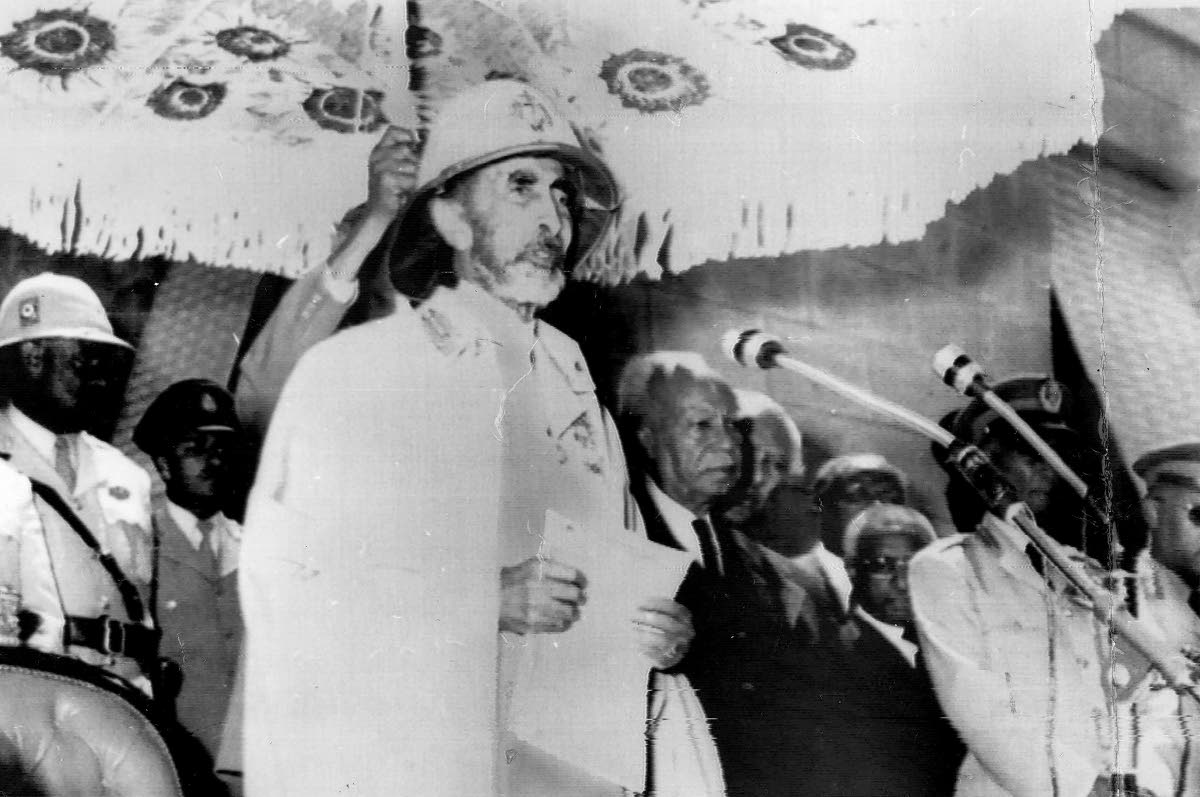 Emperor Haile Selassie I, at microphone.
Recently, the Caribbean nation of St Kitts and Nevis (SKN) recognised, in law, the Rastafari movement, which originated in its sister CARICOM nation of Jamaica. It was widely reported that SKN is the first Caribbean nation to officially recognise Rastafarianism.
Days later, Jamaica’s Minister of Culture, Olivia Grange, countered that claim. In a Gleaner article, ‘Jamaica rejects St Kitts’ claim of first legal recognition of Rastafari’, published on Tuesday, April 7, Grange is reported as saying, “Jamaica, in our Charter of Fundamental Rights and Freedoms, recognises all religions, and we have always identified Rastafari as a religion.”
The Gleaner article further notes: “ The Charter, enacted in 2011, strengthened constitutional protections for religion and human rights. Although it does not name individual religions, its provisions guarantee equal protection to all faiths practised in Jamaica, including Rastafari, Christianity, Islam, and Judaism.”
Rastafarianism is said to have originated in the 1930s through the teachings of Leonard Howell, a staunch Garveyite. From its inception, Rastafari has been mired in controversy and subjected to various forms of persecution. Over time, however, it has evolved, attracting people from diverse religious, cultural, and racial backgrounds, many of whom have become some of its staunchest proponents and devoted practitioners.
Rastafari is a folk religion with beliefs and practices that differ significantly from those of mainstream Christian denominations in Jamaica. This divergence has contributed to the tension and mistrust that have long existed between Rastafari adherents and other religious groups. Numerous books, newspaper articles, and academic papers have been written on Rastafari, with Emperor Haile Selassie I of Ethiopia placed at the centre of its belief system.
ADDRESSES SIGNIFICANT LACK
One of the latest books on the subject is Rastafari Beliefs – A Critical Analysis by Reverend Clinton Chisholm, with a foreword by Billy Hall, a veteran journalist, radio commentator, and former philosophy tutor at The University of the West Indies, Mona.
“Why another book on Rasta? What qualifies the author to write such a book?” Hall asks in the opening of the foreword. “These questions arose logically and deserve fulsome answers. Another book is necessary because almost all previous books have a significant lack that this book addresses. To respond to the second vital question, the author is peculiarly qualified because of his special studies and research diligence in addressing that lack.”
Hall identifies the central deficiency as the failure to adequately confront Rastafari’s claim to historical authenticity. He concludes the foreword by stating, “The answer, hopefully, will satisfy the most discriminating readers who take the time to read this book carefully.” But what, precisely, does the book contain?
The 142-page paperback includes a preface, an introduction, an epilogue, and 10 chapters: Rastafari and Problems in Origins; Rastafari and Ignorance about the Emperor’s Names and Titles; Rastas and Translation Problems with Ethiopia and the Kebra Nagast; Rasta’s Pronunciation Problems with ‘Jesus’ and ‘Jah’; Rastas See Jesus Christ as Black and Dreadlocked; Examining Rastafari Vis-à-Vis Christianity; Views on Religion and Christianity – The Emperor versus Rasta; Views on the Bible – The Emperor versus Rastas; Afrocentricity and Black Consciousness – Bold Challenges; and Rasta Sympathiser Professor Rex Nettleford and the Jesus Ossuary.
BELIEFS CHALLENGED
In its analysis, the book challenges several Rastafari beliefs, offering what the author considers evidence in support of his perspectives. In Chapter Five, Rastas See Jesus Christ as Black and Dreadlocked, for example, Chisholm writes: “ Evidence is also provided that none of the monarchs, Solomon, David, or Haile Selassie I, was a black man, that is, a Negro. Associated with this chapter is Chapter Ten, which documents our radical views on black consciousness and Afrocentricity.”
The physical image and racial identity of Jesus, as perceived by Rastas, is one of the reasons Christianity - and perhaps other religions - has been reluctant to fully embrace Rastafari as a legitimate religious faith. This reluctance is also cited as a factor in Rastafari’s lack of official recognition in many quarters.
“Chapter III highlights the mistaken belief that modern Ethiopia is mentioned in the Bible and points out additional weaknesses in the Kebra Nagast that have contributed to the belief that modern Ethiopia is depicted in the Bible,” Chisholm explains in the introduction. “In Chapter IV, we chide Rastas on linguistic grounds for their fussiness about the pronunciation of ‘Jesus’ in light of their pronunciation of ‘Jah’.”
Despite his criticisms, Chisholm ends the preface on a conciliatory note: “ Finally, despite my critical analysis of aspects of the Rastafari movement, it is beyond controversy that, to its credit, the movement has instilled in many of us, over its lifetime, a sense of ‘at easeness’ with, and pride in, our African ancestry and an appreciation of the cultural expression spawned by that ancestry.”
Official recognition or not, Rastafarianism appears to be here to stay. It remains one of Jamaica’s two folk religions - alongside Revivalism - and has captured the imagination, hearts, souls, and minds of people across the globe.