
Frazer-Binns wants regulations to make buildings climate smart
Published:Friday | October 14, 2022 | 12:07 AMSashana Small/ Staff Reporter
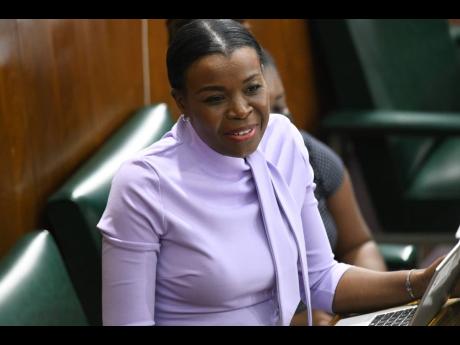
Opposition Spokesperson on Land, Environment and Climate Change Sophia Frazer-Binns is calling for the regulations that govern zoning and building in Jamaica to be fast-tracked to allow for the construction of environmentally sustainable buildings able to withstand the impact of climate change.
Frazer-Binns said that although the Building Act was passed in 2018, the regulations which would allow for its enforcement are still not in place.
She lamented that the country is relying on regulations from more than 20 years ago to support a modern piece of legislation.
“That regulation, when it was designed, did not consider issues of climate change. It did not consider issues of rising sea levels and coastal communities and how we’re going to have to treat with that. It is my view that in 2022, we have not done enough as a country, we have not gone far enough to incorporate concerns or issues of climate change in our building, in our development and in our zoning,” she told The Gleaner.
The Building Act of 2018 outlines provisions for the construction of environmentally friendly and energy efficient buildings.
Frazer-Binns believes this is important, especially in combating the issues that arise from climate change such as the water scarcity.
“With climate change comes the real consequence of water shortage and with these high-rise buildings and multifamily homes that are [being constructed], there is no real consideration that is given to how so many persons in such a small space will be able to adequately have use of potable water and that is something that, in my mind, is at the heart of climate change,” she said. “We hear discussions about rainwater and the need for water-harvesting and the importance of developers optimising that, but there is nothing that compels them to do that.”
Rising temperatures is another issue that Frazer-Binns believes needs to be considered when building.
A recent study in the journal Communications Earth & Environment predicts spiking summer temperatures and humidity that feel like 103 degrees Fahrenheit (39.4 degrees Celsius) or higher to happen 20 to 50 times a year by mid-century.
“It is not going to be surprising that more and more persons are going to be impacted by the heatwave that we experience this summer and we continue to experience,” she said. “It is going to become a public health issue because the buildings that are being done now, in my mind, are not being done in a way that considers the effects, considers the need for proper ventilation, and considers the effect of proper air quality.”
Meanwhile, deputy chairman of Natural Resources Conservation Authority/Town and Country Planning Authority, Christopher Whyms-Stone, said in order to address climate change in zoning, the country must first work on enforcing its building code.
“Buildings are drawn one way and approved one way, but there’s no guarantee that when it comes to building them, that they are built that way. You can approve all the best buildings in the world, but when it’s been built somebody takes shortcuts and misses out a detail here that is relevant to safety,” he said.