Dennis Minott | Hopefuls: Waitlist illusion, real opportunity awaits
Loading article...
-

-
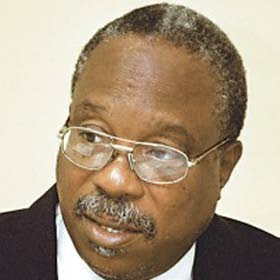 Dennis Minott
Somewhere in the Rupununi of Guyana, far from the ceremonial gates of elite universities, an A-QuEST sixth-form Docling, a boy at a modest technical high school has been quietly solving a problem that kills.
He does not speak in the language of rankings. He has never seen the inside of an Ivy League lecture hall. But he has watched, more than once, the stillness that follows a sudden cardiac arrest in a place where help arrives too late.
So he began to build.
His first insight was not elegant, but it was practical: green energy is everywhere - if one knows where to look. In the creeks and slow rivers near his home, electric eels discharge bursts powerful enough to stun prey. To most, they are a curiosity. To him, they became a question.
Could that energy be captured – stabilised, regulated, stored – and used for something else?
What followed was not a straight path but a series of improvisations. A salvaged control board from his late grandfather’s discarded prosthetic device. Basic sensors repurposed. A casing assembled from available materials. Hours of trial, error, and recalibration.
The result, still rough but functional, is a portable defibrillator powered through a hybrid system – bioelectric input supplemented by stored charge. It responds to voice prompts. More importantly, it contains a simple but critical safeguard: it analyses cardiac rhythm and will only deliver a shock when a “shockable” condition is detected.
In other words, it is safe enough to be used, in an emergency, by someone who is not a doctor.
Versions of the device now sit in two public spaces: a small airstrip and a community gym. It is not yet a product. It is not yet a paper. But it works.
And it saves.
Now imagine that this same boy, having done all this, applies to a highly selective university abroad. His grades are strong. His recommendations speak of ingenuity and persistence. His project, if properly presented, would not be out of place in a first-year engineering design course.
He is waitlisted.
Here, the story could take a familiar turn. He could begin to wait – checking his email, replaying the decision, wondering what more he might have done. His teachers might advise patience. His family might hold on to hope.
After all, he is “close”.
But close to what?
The uncomfortable truth is that the waitlist, in such cases – these ICEy trumpian days – often has little to do with the student’s demonstrated capacity to think, build, or contribute. It is a feature of institutional choreography – a way for universities to manage uncertainty in their incoming class. It is not a queue ordered strictly by merit. It is a reservoir, drawn upon only if and when needed.
To mistake it for a near-admission is to misunderstand its function.
Meanwhile, other offers may already sit on the table. Institutions – some less adorned in global rankings but rich in laboratories, mentors, and opportunity – are ready to admit him. Places where he could, within months, refine his device, formalise his design, test it rigorously, and, perhaps, even patent and publish.
Yet the psychology of the waitlist exerts a quiet pull. It suggests that the “real” opportunity lies elsewhere, deferred, conditional, pending someone else’s decision.
This is the illusion.
The boy in the Rupununi has already demonstrated something more important than admission to any particular university. He has shown the capacity to identify a problem rooted in his community, to mobilise the resources available to him, and to produce a working solution under constraints.
That capacity does not wait.
It does not improve with hesitation. It grows through use.
If he chooses to step forward – into a university that will give him access to tools, guidance, and intellectual community – his trajectory will accelerate. His device may become more robust, more scalable, more widely deployable. It may save not tens but hundreds of lives.
If, instead, he suspends action in deference to a waitlist, he risks losing something less visible but more valuable: momentum.
There is a broader lesson here for families across our region. We have, perhaps unwittingly, allowed the language of prestige to obscure the substance of education. We speak of institutions as destinations rather than as platforms. We measure success by admission rather than by what follows.
But education, at its best, is not conferred. It is constructed – through inquiry, experimentation, failure, revision, and contribution.
The student who understands this will not be immobilised by a provisional status. He will recognise that the work itself is the point and that the right environment is the one that allows that work to deepen.
Pathways remain open. A student who excels in his first year – who continues to build, to question, to produce – may still find doors opening later whether through transfer or postgraduate study. The academic world is far more permeable than our anxieties often admit.
What matters is not where one begins but how one proceeds.
In the end, the most important question is not whether the boy is eventually admitted from a waitlist. It is whether he continues to build.
For in a small workshop in the Rupununi, with a pair of electric eels and a salvaged circuit, he has already done something that no admissions committee can confer.
He has begun.
Dennis A. Minott, PhD, is a physicist, green energy consultant, and long-time college counsellor. He is the CEO of A-QuEST. Send feedback to columns@gleanerjm.com.