Peter Espeut | Remembering the Kendal crash
Loading article...
-
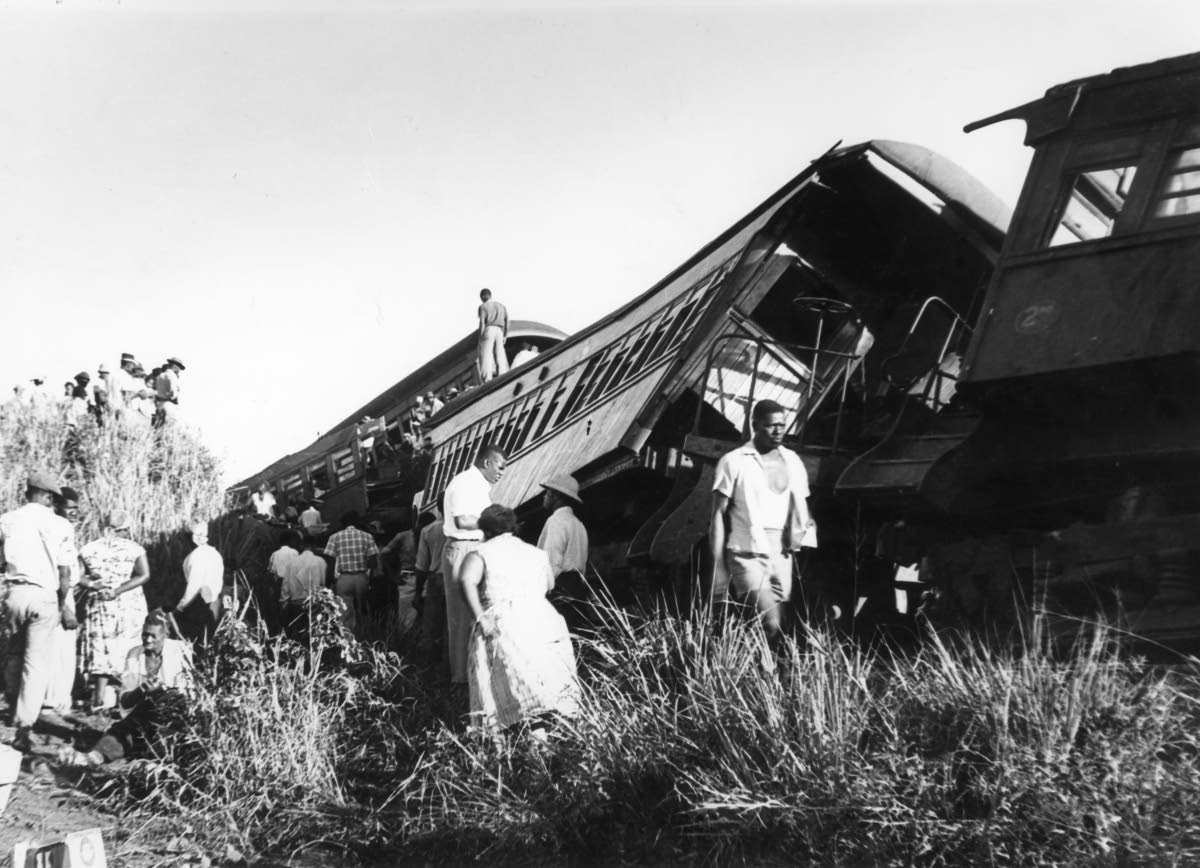 Kendal Train Disaster.
-
 Peter Espeut
September 1 was the 69th anniversary of Jamaica’s worst transportation disaster: the derailment of a passenger train near Kendal in Manchester, during which no less than 187 persons died and more than 700 were injured. It was said at the time to be the second worst rail disaster in human history (although my research shows that it was actually the eighth). Today, it is ranked 20th in terms of loss of life. It remains the second worst railway disaster in the Americas, as only in the 1915 Guadalajara accident (Mexico) were more lives lost (about 600).
About 1,600 members of St Anne’s Roman Catholic Church on Oxford Street, Kingston (just behind Kingston Public Hospital) and their guests boarded railway coaches at the Kingston Train Station for an all-day excursion to Montego Bay. Their pastor, Fr. Charles Eberle SJ, had chartered a train consisting of two diesel engines and 12 wooden coaches.
A similar excursion today would require 54 30-seater coaster buses. When Jamaica lost the passenger trains, we lost the ease of holding large social events involving cross-island transportation.
On the way back, just before midnight, the train, overloaded with free riders, some of them vandals, was moving downhill from Jamaica’s highest railway station at Greenvale (1,890 feet above sea level) when the brakes failed; eight of the 12 wooden coaches were wrecked, with the dead and injured inside, underneath and on top; bodies and body parts were strewn over a wide area. Some persons died on impact, many died from being spiked by splinters from the wooden coaches, and others from various injuries.
It was a national disaster and an unspeakable tragedy for St Anne’s Catholic Church and dozens of families who lost loved ones.
The Commission of Enquiry later attributed the cause of the accident to the closure of an angled wheel (brake) cock, probably the result of vandalism. As a consequence of the crash, all the wooden railway coaches in Jamaica were replaced with metal coaches, and the Jamaica Government Railway (JGR) was reconstituted and renamed the Jamaica Railway Corporation (JRC).
Messages of sympathy poured into Jamaica and to the Church from all over the world. The Pope sent a representative to convey his personal distress, and the Governor of Jamaica, Sir Hugh Foot, visited the Church to offer condolences and unveiled a plaque in memory of the victims, which can still be seen today.
Memories of the event are vivid in the minds of survivors, friends and relatives of the victims, and the people of Kendal and surrounding districts, who rallied around to rescue the living and recover the bodies of the dead in the dead of night.
On the third day, a mass funeral was held at the place of the accident and some 88 or more unidentified dead, along with miscellaneous body parts, were laid to rest in graves prepared along the tracks, with the appropriate funeral rites. The crash site is holy ground, the final resting place of beloved church members, friends and relatives.
On the 50th anniversary of the crash, my wife and I travelled to Kendal with some of the survivors, including Monsignor Kenneth Mock Yen who, as a young man, was on the train. We placed an altar table on the tracks, overgrown with bush even then, and celebrated the memorial of the death and resurrection of the Lord Jesus for those who had perished.
How we longed for a permanent memorial to our beloved dead!
I have taken a special interest in this matter as, until recently, I held pastoral responsibility for St Anne’s Church.
For some years now, the Manchester Municipal Council has staged a memorial event on September 1 at Kendal. They are to be commended as no resident of Manchester died in the crash, and their efforts to remember those who died, strangers just passing through, are lasting testimony to the good-heartedness of the people of Manchester.
Olivia ‘Babsy’ Grange, minister of culture, gender, entertainment and sport, has taken a special interest in the establishment of a fitting monument of remembrance. In 1957, she was a member of St Anne’s Church and was to have been on the excursion; but her seamstress mother was busy preparing back-to-school garments and they missed the train on that fateful morning.
Through her efforts, in 2024, the Governor-General of Jamaica, Sir Patrick Allen, proclaimed September 1 as National Day of Remembrance of the Kendal Crash in perpetuity. A representative of the ministry presented a copy of the proclamation to the congregation at St Anne’s Church.
On September 1, 2025, a very tasteful stone monument was unveiled at the Kendal crash site by Minister Grange, on which are inscribed the names of the known victims.
This year, at the invitation of the ministry and the Manchester Municipal Corporation, it was my honour to bless and dedicate the monument to our beloved dead. I also laid a wreath on behalf of St Anne’s Church. Addressing the gathering were the Custos of Manchester, Lt Col Garfield Green; the former custos, Sally Porteous; Mayor of Mandeville, Donovan Mitchell; and permanent secretary in the ministry, DeanRoy Bernard.
In her remarks, Porteous shared her memories. She recalled that, when her mother heard of the crash and of the many injured, she ripped the bedsheet of young Sally into strips to use as bandages and took them to bind up the wounds of the injured.
This is just another example of the selfless support provided by noble people of Manchester to the strangers in their midst.
Next year will be the 70th anniversary, and the crash site is to be developed into a memorial garden and pilgrimage site, with a permanent altar on which the Eucharist may be celebrated, and where eventually a museum is to be established.
A fitting memorial to those who died, and a testimonial to the goodness and hospitality of the citizens of Manchester.
The Rev.Peter Espeut is a Roman Catholic deacon. Send feedback to columns@gleanerjm.com