Christopher Burgess | Reconstruction accountability: Public participation and the press
Loading article...
-
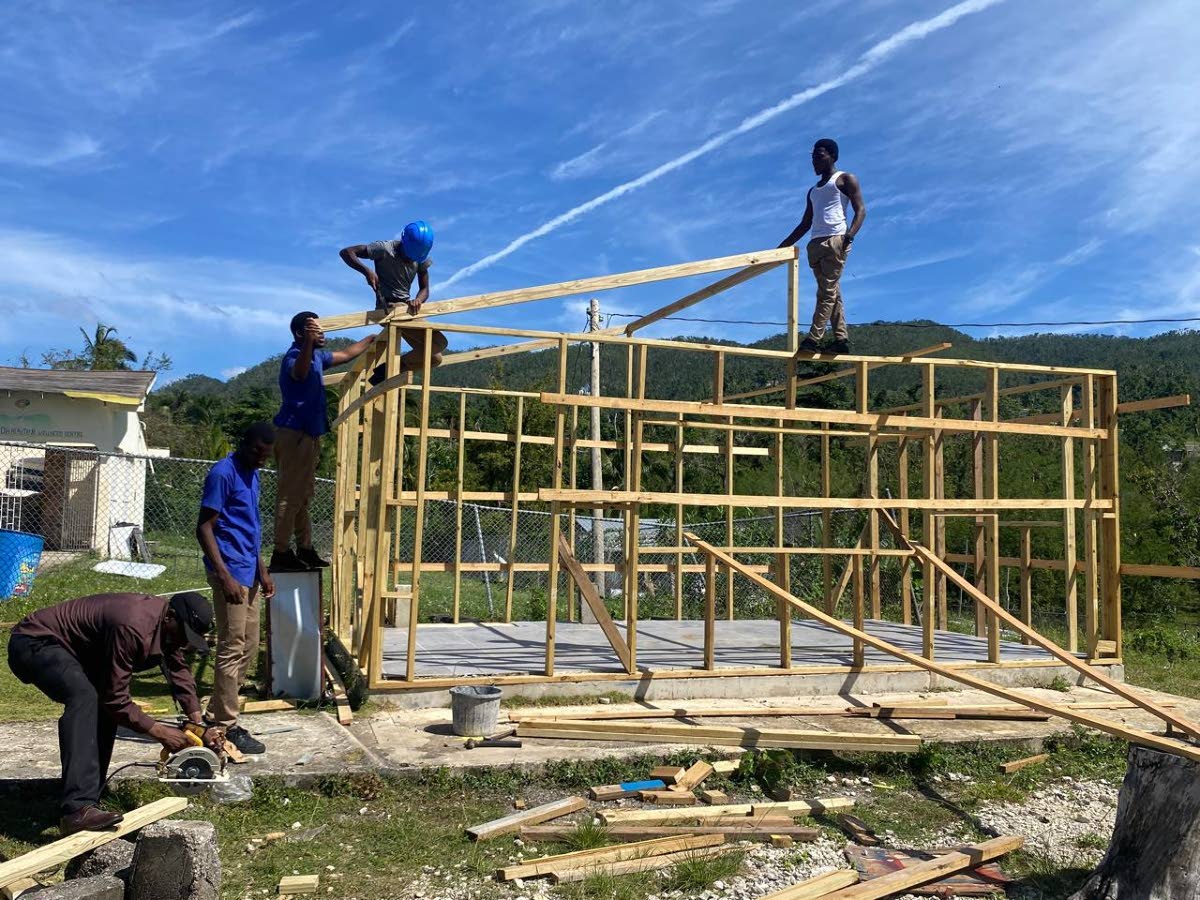 Students and staff at Aberdeen High School in Aberdeen, St Elizabeth, advance reconstruction of the institution’s tuck shop, which was decimated by Hurricane Melissa.
-
 Christopher Burgess
In around eight weeks, it will be a year since Hurricane Melissa hit Jamaica, and the public still does not have a clear picture of the reconstruction programme.
We’re also four months into the 2026 hurricane season. While this year’s hurricane season is forecast to have below-normal activity, the 2027 and 2028 seasons hold no such promise.
There have been announcements and interviews, but limited reconstruction beyond the Restoration of Owner or Occupant Family Shelters (ROOFS) programme, repairs to some schools and restoration of the electricity network. The minister of education and most of us are facing disappointment with the slow pace of coordination and the contractors. With the opening of the new school term in less than a week, only 45 of the 308 priority schools are reportedly completed. The roofless Burnt Savanna Primary School in Santa Cruz, highlighted last week, does not engender confidence in the reconstruction process.
The public needs to know what reconstruction will look like, what it will cost, and whether it will make Jamaica more productive.
The extraordinary power of the National Reconstruction and Resilience Authority (NaRRA) over a proposed multibillion-dollar reconstruction programme naturally requires oversight and accountability. Accountability should mean consultation before major decisions, reporting to the public, and openness to scrutiny.
CONSULTATION BEFORE DECISIONS
It is critical to communicate with citizens, which informs them what has been decided. Consultation allows them to participate and gives them a voice before decisions are made. National and international standards increasingly require and promote meaningful public consultation.
Locally, the National Environment and Planning Agency (NEPA) has standards for public consultation that the NaRRA could adopt, including ensuring adequate public notice, independent chairing of public meetings, and formal recording of public meetings. The World Bank-financed Jamaica Social Investment Fund (JSIF) Port Royal Street shoreline protection project demonstrated the value of this approach. Engagement with fisherfolk identified practical issues involving beach access and pedestrian movement that were incorporated into the project before construction. The project was completed without public rancour.
International frameworks can also inform the NaRRA’s consultation process. The Sendai Framework for Disaster Risk Reduction 2015-2030, the global blueprint to prevent new and reduce existing disaster risk, promotes an “all-of-society” approach, public participation, and risk-informed decision-making. Similarly, the World Bank’s Environmental and Social Standard 10 (ESS10) requires stakeholder identification and making understandable information publicly available. Together, these provide useful international guidelines for a NaRRA engagement process.
Successive administrations have struggled with public engagement. For example, Minister Robert Pickersgill’s introduction of the Portmore toll road in 2005 and Marlene Malahoo Forte’s constitutional reform proposals in 2024 met significant public resistance. In both instances, the lack of meaningful public engagement was questioned. There is an opportunity to get it right with the NaRRA.
Consultation does not mean every planning and engineering decision should be determined by popular vote. It means that people who will be impacted, and who understand their communities, livelihoods, and risks, should be heard before decisions become final and irreversible.
If consultation gives citizens a voice in decision-making, public-facing dashboards provide accountability afterwards.
ONLINE DASHBOARD
Regional experience shows that public dashboards can translate complex reconstruction programmes into clear, measurable information that citizens can understand.
A permanent national resilience and reconstruction dashboard may ultimately be more useful than a Melissa-only dashboard. Hurricane Melissa followed Hurricane Beryl, and we are currently experiencing severe drought that is likely to be with us for another three months. The institutional capacity and monitoring systems developed now should survive the NaRRA’s five-year sunset, particularly in an era of climate change. Puerto Rico has taken a similar approach through its Central Office for Recovery, Reconstruction and Resiliency (COR3), using a public dashboard to track recovery across successive disasters since 2018.
The NaRRA’s dashboard could report consultations, timeline targets, social and economic returns, expenditure, construction progress and resilience benefits. Projects could receive a simple green, amber or red assessment, with Jamaica Reconstruction and Resilience Oversight Committee (JAMRROC) explaining why a project is performing well, requires corrective action or represents poor value for money.
A dashboard should report meaningful outcomes, not just spending. Neither a billion dollars approved nor a ground-breaking ceremony is an outcome. The outcomes the press should probe are houses occupied, school places restored, businesses reopened, tax revenues recovered, and agricultural production restored.
PRESS MUST ASK BETTER QUESTIONS
With hundreds of billions of dollars on the line, the press must ask better questions.
Coverage of the NaRRA and JAMRROC has so far been largely explanatory and, at times, celebratory rather than probing. Early interviews have understandably focused on explaining the institutions, the leadership and their intentions. The coverage in the reconstruction phase must become more probing.
There is a difference between easy and accountability questions. Easy questions allow officials to explain their vision and priorities. Accountability questions test those statements against outcomes and evidence.
If the NaRRA promises increased resilience, ask how it will be measured and how much risk the investment is expected to reduce. If the CEO promises speed, ask which approvals were accelerated. If a project promises economic returns, ask for the independent assessments by professionals, what alternatives were considered, and how it fits within a wider economic cluster. If the government announces a billion-dollar project, compare it to benchmarks and ask whether it represents value for money.
Democracies need journalists who are probing and respectful. Professional organisations, media houses and the Press Association of Jamaica have an important role in demanding accountability.
Accountability must be measured by transparency and outcomes. Jamaica cannot repeat the lesson of Hurricane Gilbert, when delays across two administrations allowed communities to rebuild vulnerabilities. Jamaicans should have a voice in what is built, Jamaicans should know what is being spent, and Jamaicans should be able to judge what reconstruction is delivering.
Dr Christopher Burgess is a member of JAMRROC, a registered civil engineer, vice-president of the Jamaica Institution of Engineers, climate scientist, land developer and managing director of CEAC Solutions. Send feedback to columns@gleanerjm.com