Christopher Burgess | Lessons for NaRRA: Exclusions and economics
Loading article...
-
 Christopher Burgess
-
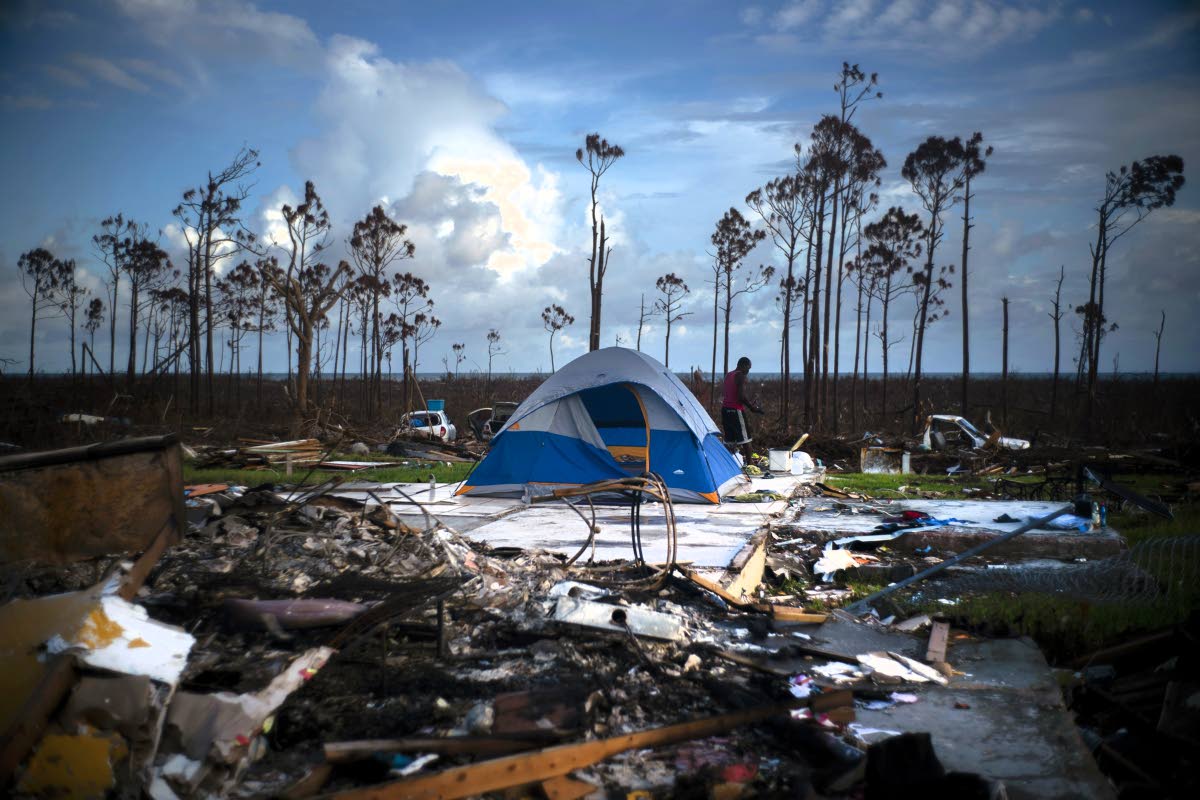 This 2019 photo shows a man searching in the rubble of his house destroyed by Hurricane Dorian in Rocky Creek East, Grand Bahama, Bahamas.
The aftermath of Hurricane Dorian that struck Grand Bahama and Abaco on September 1, 2019, resulted in US$3.5 billion in damage and destruction of over 9,000 houses. The shanty towns on Abaco were hardest hit and housed the socially vulnerable undocumented Haitian migrants.
Within two months, The Bahamas moved decisively into reconstruction, with some exclusion of vulnerable migrant groups. The response followed a two-step process. First, the Disaster Reconstruction Authority (DRA) Act (2019) was established to coordinate rapid recovery. Then the country repealed its response-focused framework, the equivalent of Jamaica’s ODPEM, and replaced it with the Disaster Risk Management (DRM) Act (2022), which integrates risk assessment, financing, and local governance in a single framework. This shift recognises disasters as recurring economic shocks rather than isolated moderate events
Jamaica now faces a similar turning point. The proposed National Reconstruction and Resilience Authority (NaRRA) must be positioned not only as a reconstruction tool but as a transition toward risk-based economic governance. The current ODPEM institutional framework was designed primarily for coordination and emergency response. However, increasingly severe events – from Hurricane Ivan (2004) to Beryl (2024) and Hurricane Melissa (2025) – show that Jamaica has entered an era of repeated, high-impact disasters. A response-based model is no longer sufficient.
UPGRADING ODPEM
The Bahamas’ reforms were driven by rapid exposure to major hurricanes. There was Joaquin (2015), Matthew (2016), Irma (2017), and Dorian (2019), all of which resulted in US$5.7 billion of damage, in current terms, or an economic loss of about 25 per cent of GDP. This level of damage was not surprising as 80 per cent of the population and infrastructure lies within low-lying coastal zones that are only 5 feet above sea level. The government established a board-led Risk Management Authority that was fully coordinated with local government. Local administrators from the various councils were empowered to manage risk and coordinate rebuilding. They were supported by technical and financial resources from the Authority.
Jamaica has entered a similar intensifying damage phase but continues to rely primarily on a response-based agency in the ODPEM and fragmented response from the Ministry of Labour and NaRRA department. This is considering that the cost of natural disasters quadrupled from an average of US$2 billion per decade before the 1980s to over US$8 billion per decade, since the 1980s, in current US dollar terms. Jamaica has, essentially, transitioned from absorbable disaster losses (≤10% of GDP) to economic shocks (>30% of GDP). This requires a shift from response-based and project-based disaster management to risk-based economic planning. The ODPEM must be restructured into a comprehensive Risk and Resilience Management Authority.
Modern disaster management is increasingly grounded in economic risk modelling. The new Bahamian legislation incorporated the role of risk assessments in the act. Risk assessments were not left as an afterthought but as a must-have tool in their decision-making. Risk assessments quantify expected losses of lives, homes, and infrastructure, and can predict future climate impacts. Jamaica could use this risk-assessment approach routinely to inform government investment decisions from post-disaster recovery to pre-disaster mitigation. For example, targeted investment of US$40 million in flood controls can prevent recurring annual flood losses of US$4 million to commuters, commerce, and warehouses. And a J$80 million investment in supervision of construction by engineers and inspectors to ensure that roofs are built properly can prevent J$10 billion in roof loss in the future. This approach improves long-term economic growth and stability.
Jamaica must reimagine NaRRA or a restructured ODPEM to be risk-informed and economically rational.
XENOPHOBIA AND INFORMAL HOUSING
Disasters amplified inequalities and xenophobia, particularly where informality and geographical vulnerability meet. Social tensions emerged in The Bahamas, particularly in Abaco, before Hurricane Dorian. Haitian migrants represent about 30 per cent of the population and provide affordable labour to the construction, tourism, and domestic market, according to the IDB. The migrants had secured an injunction, on the government, to stay evictions from the shanty towns in 2018. The evictions threatened the destruction of their homes for over 50 years. However, when Hurricane Dorian flattened The Mudd and Pigeon Peas shanty towns, it resulted in hundreds of deaths of undocumented migrants. Only two months after Dorian, then Prime Minister Dr Hubert Minnis, in reference to the Haitians in the shanty towns, announced in the House of Assembly:
“They’re a health risk, and they are unhygienic, and, therefore, I will ask the attorney general to return to court and ask that the injunction be lifted.”
Over time, the displaced population resettled in other informal areas, like the Farm shanty town, that rapidly expanded from 50 to 200 acres in a few years. A similar situation of increased criticism of the vulnerable in informal settlements was exposed in western Jamaica, following Hurricane Melissa.
Board-house settlements in Westmoreland, Hanover, and parts of St James often combine weak construction, and exposure to flooding, and extreme winds. These conditions create compounded social and geographic vulnerabilities. Unfortunately, some of the worst-hit families in board houses have faced criticism for not meeting building standards despite social and structural constraints. Addressing these challenges requires a balanced approach. Land regularisation, targeted material grants, and supervision should be an important ingredient in NaRRA’s build-back-better campaign. Neglecting and excluding the most vulnerable cannot be the answer for Jamaica.
STRUCTURED SUPERVISION
The Bahamas supervised rebuilding while Jamaica issued unsupervised cash grants. In The Bahamas, housing reconstruction was systematically monitored, with multidisciplinary teams ensuring compliance with building standards. According to the Red Cross, reconstruction teams included engineers, inspectors, social mobilisers, and administrators. This ensured that funding resulted in resilient outcomes.
By contrast, Jamaica’s ROOFS programme has largely operated as a cash-based grant system without technical oversight. While ROOFS provides immediate financial assistance, this approach lacks the oversight necessary to ensure that repairs meet minimum structural standards. Already, people are selling the material openly in markets. As a result, many households may remain vulnerable to future events just as they were after Hurricane Gilbert. Effective reconstruction requires technical guidance, and enforcement, and not just cash disbursement.
The central lesson from The Bahamas is to embrace the comprehensive legislative reform, and supervised rebuilding, and to avoid excluding housing for vulnerable groups. As disasters become more costly, Jamaica must replace coordination-based models. NaRRA presents an opportunity to repeal or restructure the ODPEM into an authority that integrates economic risk modelling into financial planning, coordination, and supervised local rebuilding. Otherwise, Jamaica risks repeating the cycle of damage and recovery that is becoming increasingly costly.
Dr Christopher Burgess is a registered civil engineer, climate scientist, land developer, and the managing director of CEAC Solutions. Send feedback to columns@gleanerjm.com.