Christopher Burgess | NaRRA and lessons from Dominica
Loading article...
-
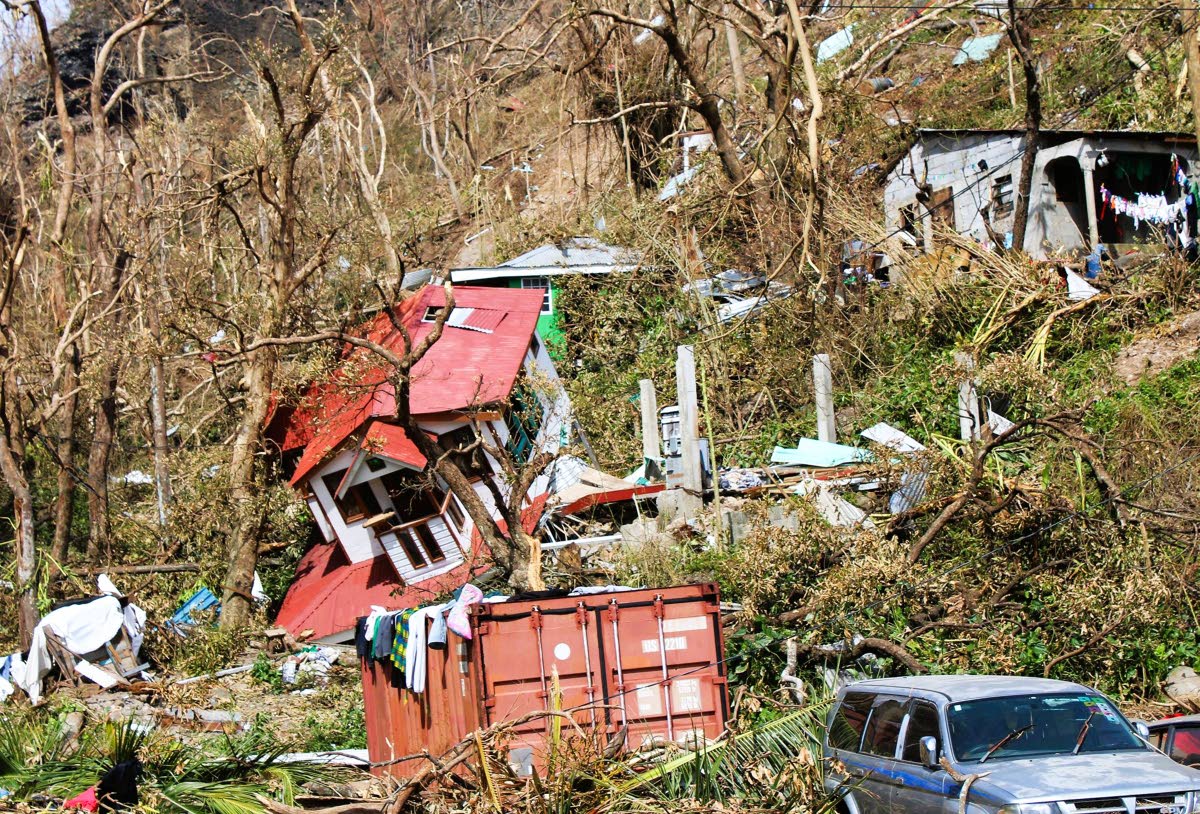 Homes lay scattered after the passing of Hurricane Maria in Roseau, the capital of the island of Dominica, in September 2017.
-
 Christopher Burgess
Jamaica now stands at a crossroads, much like Dominica did in 2017. Category 5 Hurricane Maria damaged 90 per cent of Dominica’s housing stock and caused losses equivalent to 230 per cent of GDP. The recent tabling of the NaRRA Bill signals a desire to rebuild resiliently. But can NaRRA deliver resilience for Jamaica without a climate-resilience plan and adequate financing?
Dominica’s experience with CREAD (Climate Resilience Execution Agency for Dominica) provides useful lessons for NaRRA. Following Hurricane Maria, Dominica set out to become the world’s first climate-resilient country and passed the Climate Resilience Act (2018). A strong Disaster Resilience Plan (DRS) was developed, with an estimated financing need of US$2.8 billion. It placed housing at the centre. The government increased investment in resilient infrastructure, geothermal energy, and housing under a “build-back-better” approach, rehabilitating approximately 7,000 homes, or about a quarter of the housing stock. However, limited financing capacity resulted in less than 30 per cent of the plan’s objectives being realised, nine years after Hurricane Maria. The lesson is clear: planning without financing has limits.
MULTILAYERED GOVERNANCE
Dominica’s Climate Resilience Act established a policy board that approved the Climate Resilience and Recovery Plan. Beneath the Policy Board sat CREAD as the execution arm, supported by a Supervisory Committee with donors, technocrats, and an Audit and Risk Committee to ensure accountability. This multilayered structure separated strategy, execution, and oversight, ensuring accountability.
NaRRA, by contrast, currently lacks a governance structure. Without a policy board, independent oversight, and embedded audit mechanisms, it risks becoming either politicised or inefficient. Resilience delivery requires strong institutions.
MEASURABLE PLAN
One of CREAD’s important contributions was the formulation of a climate-resilience plan with measurable targets from which projects were derived. The plan set out 20 targets. For example,
1. 90 per cent of Dominica’s housing stock is to be resilient by 2030.
2. 100 per cent relocation of Dominica’s vulnerable communities from high-risk zones.
3. Restoration of Dominica’s electrical power within three days.
Jamaica currently lacks a resilience plan with targets, and housing and infrastructure remain fragile. Over 35 per cent of the housing stock in the west suffered severe or total damage in Melissa, compared to 25 per cent in Gilbert. There are clear geographic vulnerabilities, including Black River to storm surge and West Gate and Catherine Hall to flooding-control interference and failure. While relocation may be necessary in some cases, targeted infrastructure upgrades must also be considered.
The weak performance of critical infrastructure highlights long-standing issues. It took approximately four months for the Jamaica Public Service Company to restore electricity to 99 per cent of the western parishes, with over 15,000 poles downed — comparable to Hurricane Gilbert. This indicates that three decades later, the electrical grid remains fundamentally vulnerable. While often designed for lower wind thresholds, simple improvements to the installation could significantly enhance performance.
Hospitals, schools, and water systems are similarly fragile. Water supply took two months to fully return to the west, largely due to the absence of standby power and forcing many persons to use river water, resulting in an outbreak of Leptospirosis. This was an issue identified after Gilbert. Jamaica must establish measurable resilience targets to strengthen these basic social and infrastructure systems. Jamaica has made little measurable progress in resilience since Gilbert.
NaRRA must be anchored in a measurable resilience plan, like Dominica, and not just a list of approved projects as currently implied in the bill.
HOUSING MUST BE CENTRAL
The most relevant lesson from Dominica — for Jamaica — is the importance of affordable housing. The Dominican plan recognised that resilience is determined at the level of the home and set a target of 90 per cent resilient housing stock by 2030, including 5,000 new homes. Housing strength is critical to hurricane and earthquake resilience. It determines the family’s protection, displacement risk, recovery time, and economic loss given that housing is the largest asset most families own. Dominican climate-resilient homes use block and steel. It makes no sense to rebuild fragility that eventually increases the cost of peril insurance.
Jamaica faces a complex housing challenge of fragility, scale, and informality. Hurricanes Melissa and Gilbert showed that 25 per cent to 50 per cent of the housing stock remains fragile — roughly 200,000 to 400,000 homes islandwide. Had Melissa tracked along Gilbert’s central path, over 150,000 homes could have been destroyed rather than the 30,000 homes. This systemic issue must be addressed through large-scale retrofitting. The Ministry of Labour missed an opportunity to teach the people how to build a roof properly, with both the Beryl and ROOFS grant programmes.
Housing resilience is also tied to land tenure and affordability. Despite financing constraints, Dominica’s Housing Recovery Programme delivered over 540 resilient and affordable homes in 2024, using local contractors and advancing land tenure on government lands. This is equivalent to Jamaica building over 21,000 solutions in a year. That level of housing delivery has never been done in Jamaica.
Jamaica can go further by mobilising public- and private-sector participation. Geoland Title Limited (1994), which facilitated land regularisation under Operation PRIDE, shows that structured public private partnerships can speed up delivery. Land regularisation and access to development and mortgage financing are essential to housing delivery.
BANKABLE PROJECTS
CREAD also provides a warning on financing. Dominica’s plan estimated that achieving national resilience would cost approximately US$2.8 billion over 20 years, according to the International Monetary Fund. However, only about US$0.6 billion has been spent, leaving an 80 per cent funding gap that constrained delivery, particularly in housing. Climate-resilience plans must be matched by a financing strategy.
NaRRA must, therefore, develop bankable, finance-ready projects at an early stage that attract private and international partners. CREAD’s experience also shows that international donor funding prioritised technical assistance, with physical delivery phased to manage external debt. Additionally, Dominica’s private-sector participation remained limited due to weak incentives and an underdeveloped mortgage system.
Jamaica must address the foreseeable constraints by attracting investment. Redirecting resources such as the National Housing Trust’s J$11.4 billion annual outflows towards resilient housing could provide a stable domestic financing base.
Dominica demonstrated that while a small island state can design a comprehensive resilience framework, planning alone is insufficient without adequate financing and execution capacity.
Jamaica’s key takeaway from Dominica is that resilience requires a credible plan, a focus on housing, and a mixture of international and domestic financing that we can depend on. If Jamaica gets this right, NaRRA can become the vehicle for national transformation to a resilient state.
Dr. Christopher Burgess is a registered civil engineer, climate scientist, land developer, and the managing director of CEAC Solutions. Send feedback to columns@gleanerjm.com.