Editorial | CARICOM’s new crisis
Loading article...
-
 Dr Terrance Drew, prime minister of St Kitts and Nevis and current chair of CARICOM; and Kamla Persad-Bissessar, prime minister of Trinidad and Tobago.
-
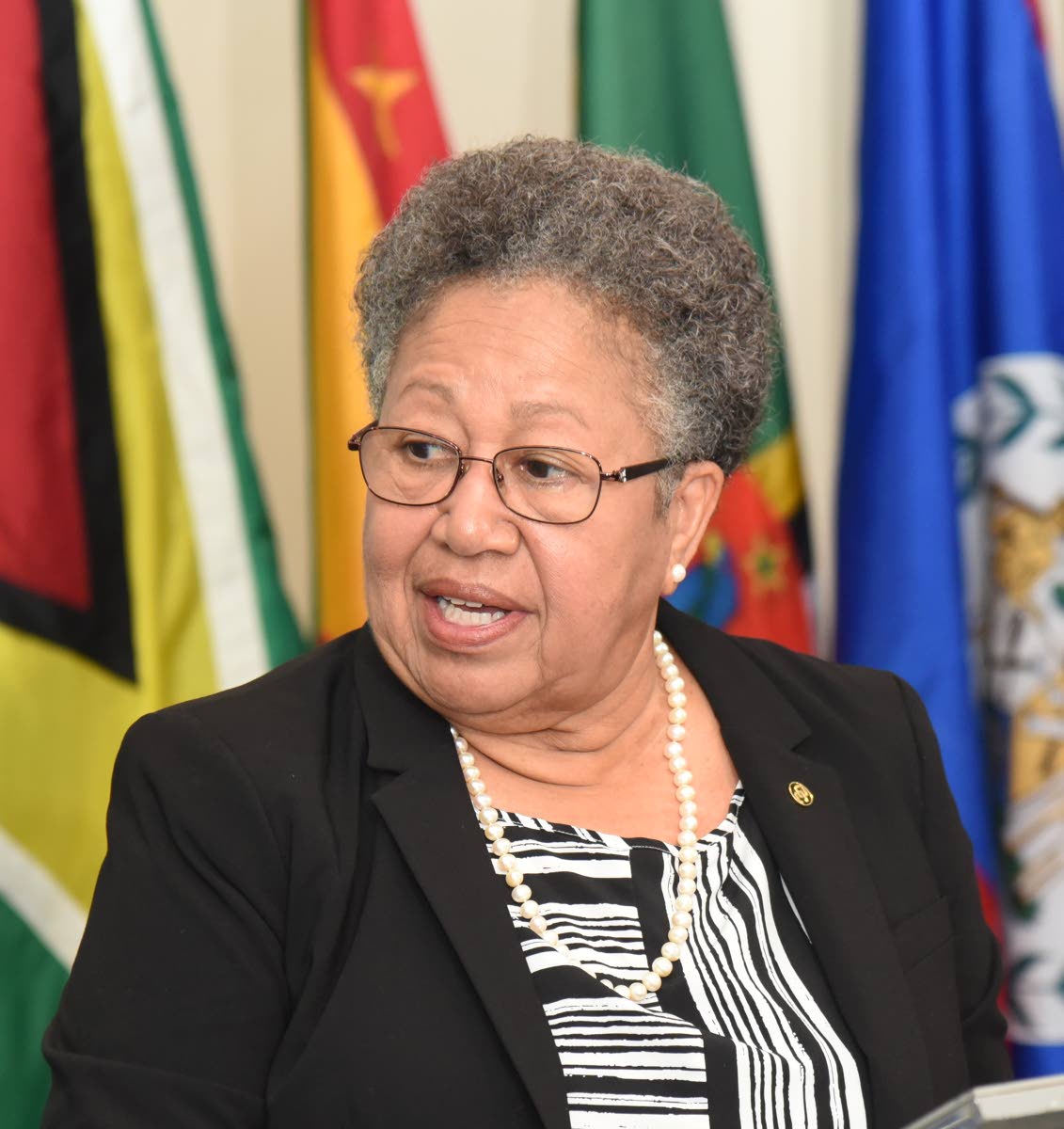 Dr Carla Barnett, secretary general of CARICOM.
Dr Carla Barnett has not been the kind of secretary general of the Caribbean Community (CARICOM) this newspaper had hoped for. She has not interpreted her mandate or fashioned her leadership as a transformative force — sometimes being ahead of heads of government, prodding, probing, and engaging the region’s citizens to get the community to do more, faster. To be that kind of secretary general, she would have needed an expansive and creative vision of her role, as established in the CARICOM treaty and set out in her job description.
That does not mean that Dr Barnett has been a failure. By all accounts, she has been a competent bureaucrat. None of this, however, is the case that Trinidad and Tobago has made against Dr Barnett’s reappointment, which Port-of-Spain claims was carried out in breach of the rules — behind closed doors, at a caucus or retreat of CARICOM leaders during their February summit, from which it says it was excluded.
This development has further deepened CARICOM’s worst crisis in more than 40 years, not since the community divided along ideological lines over the United States’ 1983 invasion of Grenada. It will also provoke debate over the interpretation of CARICOM’s decision-making statutes, including Article 28 of the Revised Treaty of Chaguaramas, which governs how heads of government constituting the conference vote.
In the face of Trinidad and Tobago’s suggestion of bad faith by its partners, CARICOM’s chairman, St Kitts and Nevis Prime Minister Dr Terrance Drew, is obliged to explain to the region the procedures followed in Dr Barnett’s reappointment and the basis on which it was done. At the same time, Jamaica’s Prime Minister, Dr Andrew Holness, who has been implicated in the presumed shenanigans, should reassure Jamaicans that he was not part of any stitch-up. The current alignments within CARICOM do not suggest that this would be the case.
Dr Barnett, a Belizean, succeeded Dominica’s Irwin LaRocque as secretary general in 2021 for a five-year term, which ends in August. It would, therefore, have been expected that either her reappointment or any prospective vacancy would have been on the agenda at the St Kitts summit. Trinidad and Tobago claims it was not and that the matter was not addressed in plenary sessions of leaders.
According to Port-of-Spain, the issue was, instead, discussed at a leaders’ caucus convened after Prime Minister Kamla Persad-Bissessar had left Basseterre, leaving her foreign minister, Sean Sobers, as acting head of her country’s delegation. Mr Sobers was reportedly excluded from that meeting as were delegates from Antigua and Barbuda and The Bahamas, whose leaders had also departed.
Dr Barnett’s reappointment was announced only last week, with Dr Drew stating that “the required majority of CARICOM heads of government agreed to reappoint Dr Carla Barnett as secretary general of CARICOM”.
Mr Sobers subsequently wrote to Dr Drew to register Trinidad and Tobago’s rejection of the procedural basis of the decision, arguing that it did not meet Article 24 of the treaty, which requires that the secretary general be appointed by the conference on the recommendation of the Community Council. It remains unclear whether the council made such a recommendation. In the face of what Trinidad and Tobago described as a “surreptitious” action, Port-of-Spain has threatened to reduce its contribution to the CARICOM secretariat.
However, Trinidad and Tobago did not address whether, or how, Article 28 of the treaty applied in this matter. The article states that “ the Conference shall take decisions by an affirmative vote of all its members”, which is usually interpreted as decision-making by consensus. It goes on to say, however, that abstentions do not invalidate decisions provided that three-quarters of member states vote in favour and that omission by a member state to participate in a vote is deemed an abstention.
Analysts may, therefore, argue that by leaving the conference early, the prime ministers of Trinidad and Tobago, Antigua and Barbuda, and The Bahamas fell within the ambit of this provision as members who had effectively abstained.
These matters need to be clearly and transparently addressed, and CARICOM’s members must decide whether they remain genuinely committed to the regional integration project and how the community should operate in the face of mounting global stresses.
At the same time, questions arise as to whether fundamental principles are driving Trinidad and Tobago’s public posture on the Carla Barnett matter or whether personal grievance and performative politics — echoing Donald Trump’s self-styled “toughest guy in the neighbourhood” braggadocio — have played a role.
In a thinly veiled rebuke of Dr Barnett at the opening of the St Kitts summit, Prime Minister Persad-Bissessar complained of having written to the CARICOM Secretariat while in opposition and receiving no reply. Trinidad and Tobago has also embraced Mr Trump’s militarisation and muscle-flexing in the Caribbean.