Jamaica, Caribbean oil supplies secure despite Middle East turmoil, says Rubis
Loading article...
-
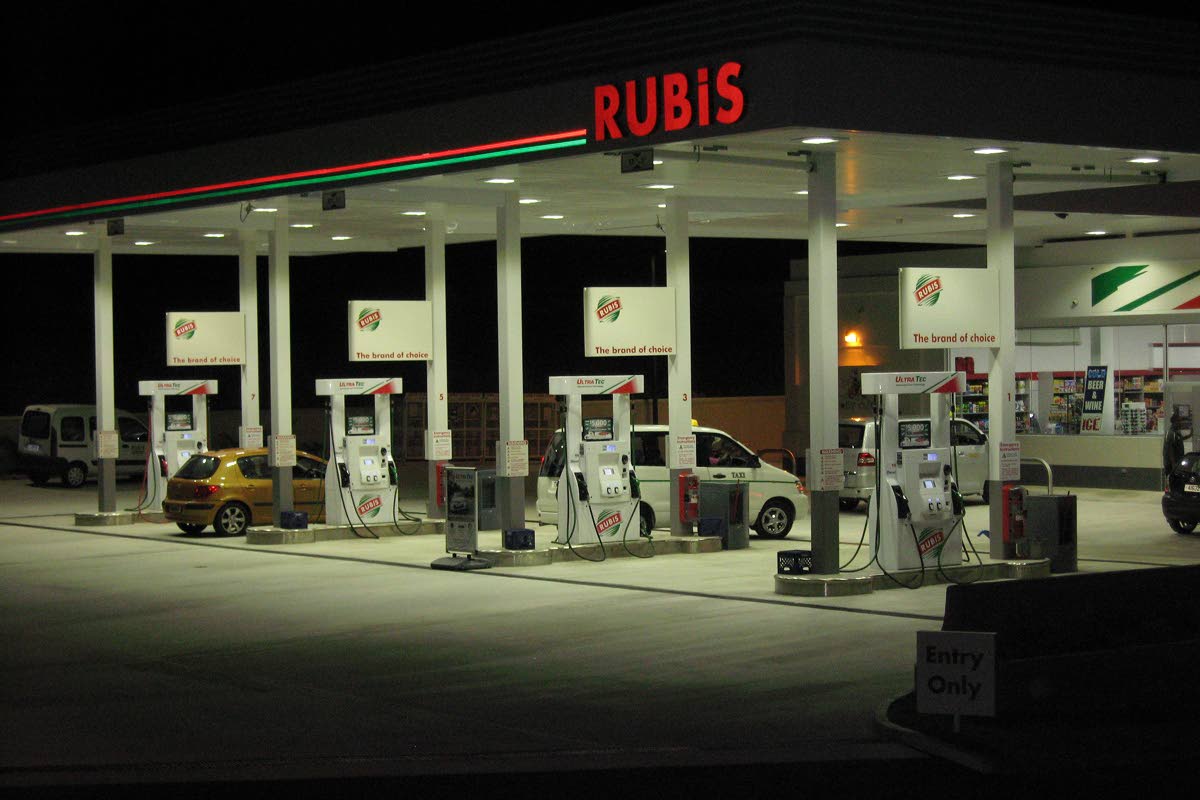 A Rubis gas station.
-
 Clarisse Gobin-Swiecznik
Jamaica and the broader Caribbean will continue generating strong profits for French energy distributor Rubis in 2026, company executives said, dismissing concerns that the Middle East conflict will disrupt oil supplies to the region.
The Paris-listed energy giant, reporting full-year 2025 results, said the Caribbean – its largest single profit centre – remained insulated from geopolitical turbulence, with management singling out Jamaica, Guyana, and Barbados as key drivers of growth in the year ahead.
“Despite the current conflicts in the Middle East, which in fact remains contained at this stage, for 2026 we anticipate that the Caribbean will continue to perform well, in particular with the recovery of Haiti, the strong dynamism of Jamaica, Guyana and Barbados,” said Clarisse Gobin-Swiecznik, managing partner, on a call with analysts on Thursday.
The company posted net income of €309 million (US$358 million) for 2025, up 19 per cent year-on-year, excluding a one-time capital gain from the prior year. Earnings before interest, taxation, depreciation and amortization (EBITDA) came in at €741 million, at the upper end of its guidance range, with the Caribbean contributing €231 million, equivalent to 56 per cent of group-wide operations by EBITDA weight. Other regions, such as Africa, contributed €188 million, and Europe, €112 million.
Rubis operates across 14 Caribbean countries and is listed on Euronext Paris.
Iran has restricted passage through the Strait of Hormuz – the narrow waterway controlling roughly one-fifth of global oil supplies. It grants safe passage to vessels from allied nations. The move cuts off supplies to many Western nations and briefly drove crude prices above US$100 a barrel. The restrictions follow escalating US and Israeli military pressure on Iran.
“So far, so good. We don’t see any negative impact so far in our businesses,” said Jean-Christian Bergeron, CEO of Rubis Energy, on the specific question of Middle East supply disruptions, at the investor briefing.
Bergeron told analysts the company had already rerouted supply chains for exposed markets – including East Africa and Madagascar – through Singapore, with no disruption to operations. He further noted that government-regulated pricing formulas in many of Rubis’ Caribbean and African markets act as a natural hedge against oil price spikes, shielding the company’s unit margins even if crude costs rise. He pointed to 2022 – when oil prices reached comparable levels – as evidence that the model holds up under pressure. “We managed, and there was no significant impact on our sales and no significant impact on our unit margins,” he said.
In Jamaica, Rubis reported solid performance in fuel distribution despite conditions it described as slightly less favourable than the prior year due to increased competition.
“The management board expects the Caribbean region to sustain its strong momentum in 2026, driven by continued robust growth in Jamaica, Guyana and Barbados. While the product mix is expected to be slightly dilutive for unit margins, volume growth and market dynamics remain supportive,” according to statements accompanying the financial results.
The company also commissioned a rooftop solar project in Jamaica last year via the Soleco Energy brand, representing 2.9 megawatts of installed capacity. Renewable energy incrementally counters its reliance on fossil fuels.
Haiti, which suffered in recent years, emerged as a growth story after Rubis introduced barges alongside trucks to supply fuel more efficiently, a logistics shift management credited with driving a significant rebound in the market.
“Haiti’s recovery is set to continue, extending the positive trend initiated in the second half of 2025,” the results added.
Barbados won a major new commercial and industrial power generation contract. Guyana and Suriname were flagged as markets with strong medium-term upside tied to the region’s oil and gas boom.
Gobin-Swiecznik, wrapping up the presentation, struck a confident tone on the group’s overall positioning. “Our seamless execution and agility delivered record cash flows, which illustrates how robust and healthy our business model is, whatever the context,” she said, adding that the company is targeting group EBITDA of €740 million to €790 million for 2026.
Rubis enters the new year with a corporate net financial debt-to-EBITDA ratio of 0.9 times, down from 1.3 times at end-2024, giving management what it described as ample firepower to invest and grow.
business@gleanerjm.com