Bridging cultures, building bonds
Loading article...
-
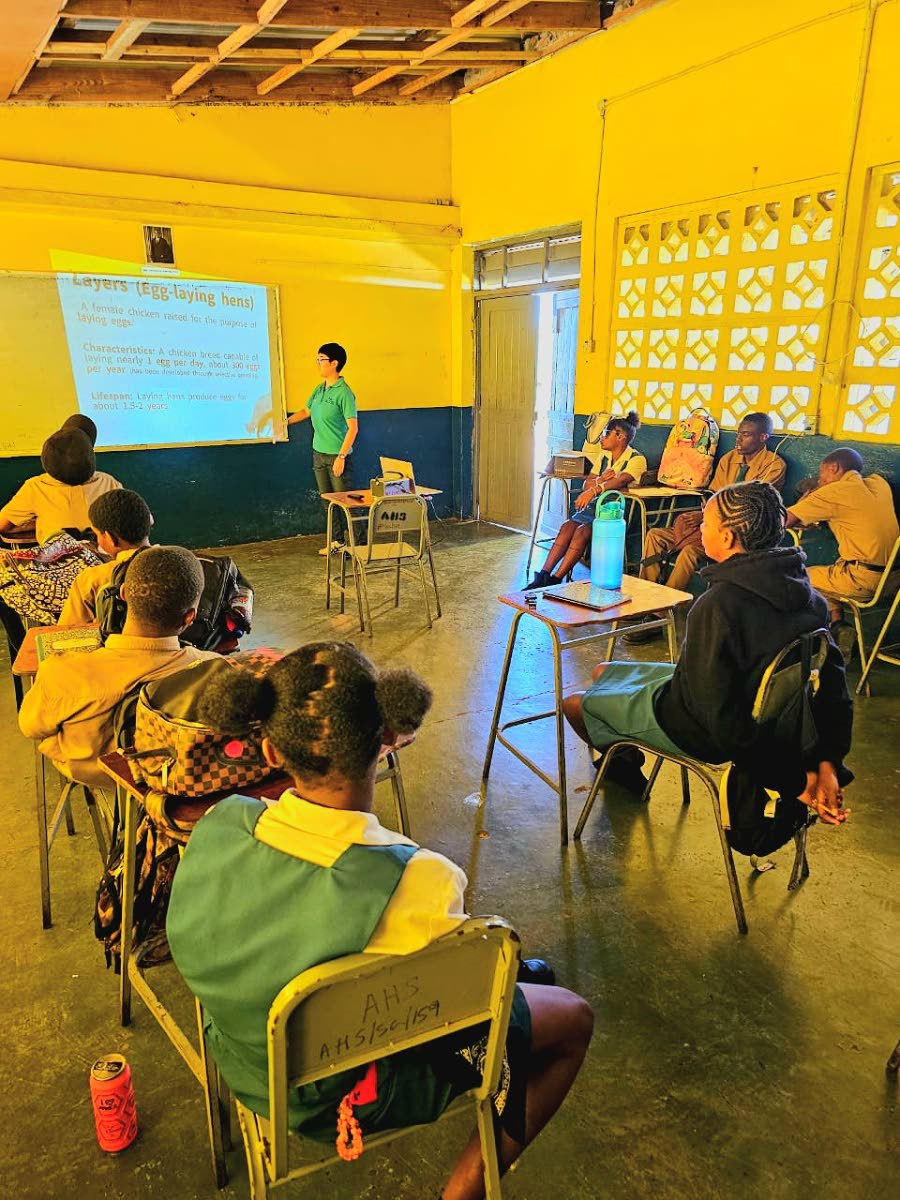 JICA volunteer Tamami Okado teaching a class. Photo - Courtesy: JICA Jamaica
-
JICA volunteer Tamami Okado teaching a class. Photo - Courtesy: JICA Jamaica
-
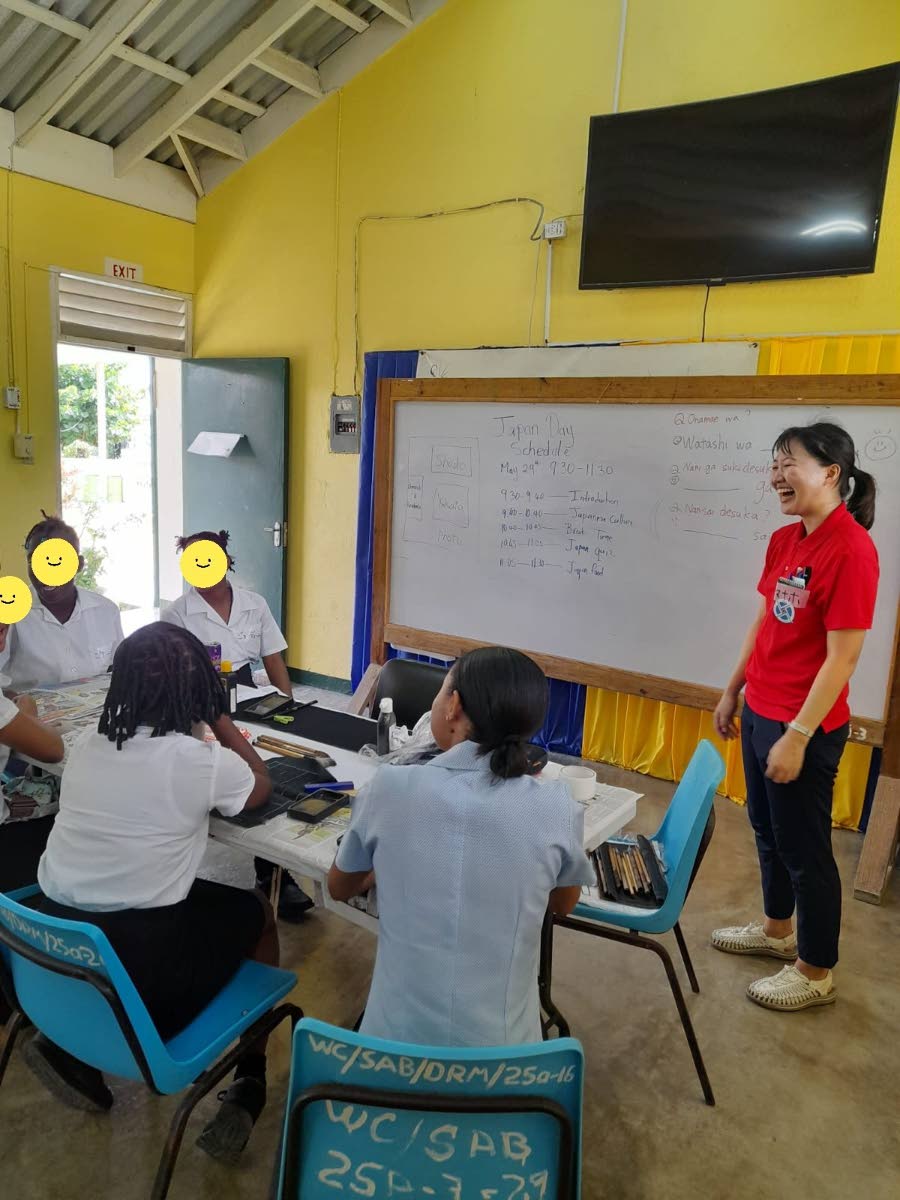 JICA volunteer Manaho Miyakazi teaching a class in St Ann. Photo - Coutesy: JICA Jamaica
-
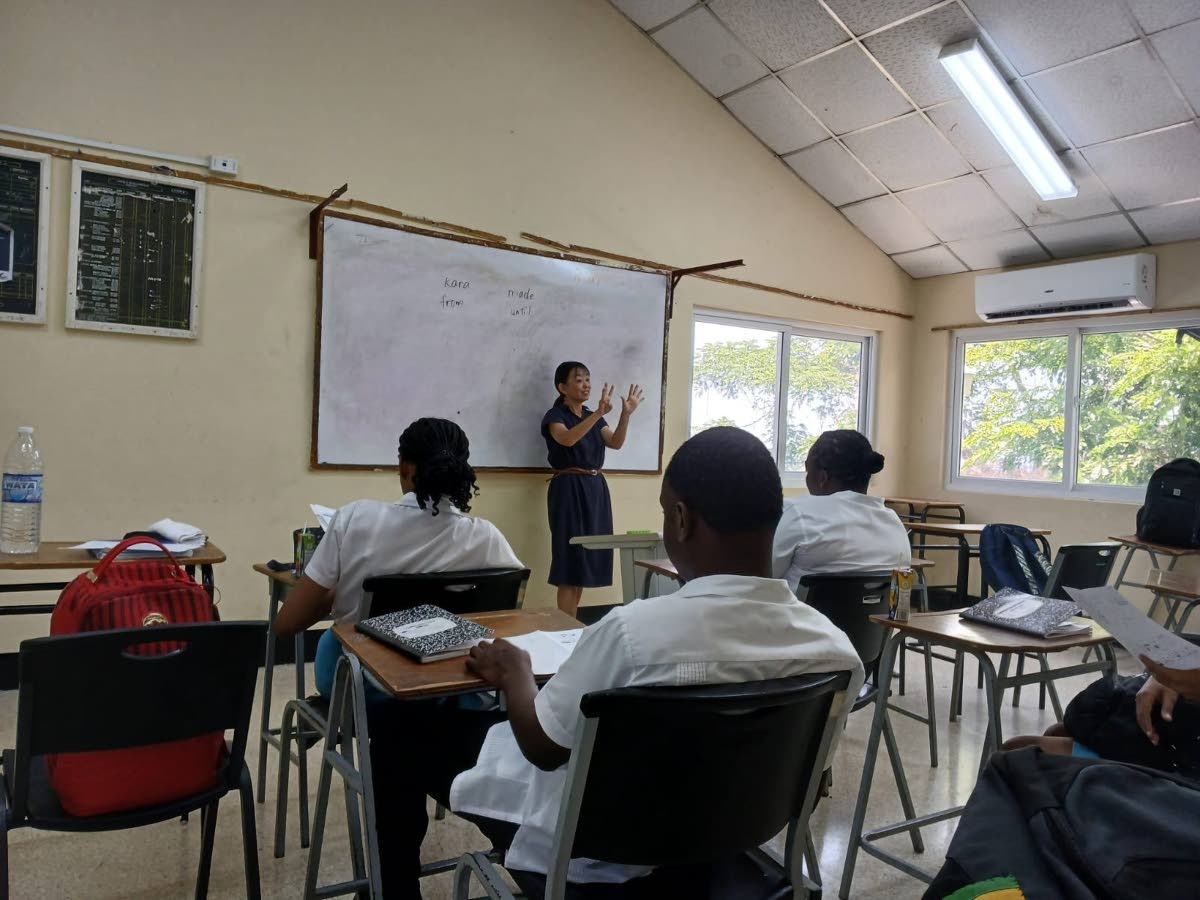 JICA volunteer Moegi Ishida teaching hospitality students. Photo - Courtesy: JICA Jamaica
On a school farm in St Ann, Tamami Okado is teaching children about the importance of developing vegetable gardens. One of the lessons is how to turn kitchen scraps into compost. In the same parish, some miles away, her colleague, Manaho Miyazaki, is helping teenage mothers to use creativity to express themselves to create decorations for seasonal events and guiding them to find purpose in their lives.
At the HEART College of Hospitality Services in Runaway Bay, St. Ann, Moegi Ishida is currently training the next generation of tourism professionals.
Neither Okado, Ishida nor Miyazaki came with any grandiose ideas to change the world. Instead, they said, they came to listen, learn, and share what they know.
The three young Japan International Cooperation Agency (JICA) volunteers have been doing their bit to empower the youngsters. For 22-year-old Okado, a university student, that journey began in April 2025.
TRAVEL AND SERVE
Currently on a leave of absence from Akita Prefectural University, where she is studying bioresource science, Okado is a community development officer with the St Ann 4-H Clubs. She said her interest in volunteerism and in travelling and in serving was inculcated in her high school years.
“I’ve been interested in international cooperation since I was a high school student, which is why I joined this volunteer programme,” she said. Okado, on most days, works between schools and communities, where she is encouraging young people to see agriculture differently.
She said that work includes promoting school gardens and composting projects, conducting sessions on agriculture and related fields, helping to establish a seedling supply programme and building relationships with farming groups across the parish.
It is, she said, practical as well as educational work.
Okado believes that agriculture is about giving young people skills they can carry into adulthood while strengthening their connection to food production and the environment.
The school gardens have become important teaching spaces where students learn not only how plants grow but also learn how to be patient, trust the process, plan, and that consistency manifests into results.
In another community in St Ann, Manaho Miyazaki is imparting some life lessons to a different group of young people. She is based at the Women’s Centre of Jamaica Foundation’s St Ann’s Bay Centre, where she is working with pregnant teenagers and young mothers.
In her classroom activities, which she says combine learning with fun, the students are given lessons in the Japanese language and are introduced to different cultures. Apart from that, Miyazaki helps the students with mathematics and English and offers basic information technology training.
She encourages delving into creative projects that involve crafts and activities for both mothers and their babies. The common thread is engagement.
“I try to make learning fun and interactive for the students,” Miyazaki said, which is evident in the range of activities she organises. Learning is not confined to textbooks. The students are encouraged to explore new ideas, develop practical skills, and discover possibilities they may not previously have considered.
For young mothers balancing education with the responsibilities of parenthood, the approach helps create an environment that feels supportive rather than intimidating.
REWARDING
Miyazaki says the experience has been as rewarding for her as it has been for her students.
Her route to Jamaica was shaped by education. Miyazaki studied English literature at university, taught English conversation to children in Japan, and volunteered as a guide for foreign visitors while also teaching Japanese. These experiences sparked a curiosity about exploring the wider world.
“Through my experience of teaching English conversation, I became interested in learning more about the world and different cultures,” she explained. “I wanted to learn more about people and cultures outside Japan and become a person who can connect Japan with the rest of the world.”
As a JICA Youth Activities Volunteer, she has found a second home in St Ann.
“Through my work, I hope to help students enjoy learning, gain useful skills for their future, and gain a broader perspective,” she said.
For Miyazaki, Jamaica is a learning experience. She said she has embraced Jamaican life with the same enthusiasm. They arrived to share knowledge, but they are also learning from the communities around them.
JICA volunteers are placed in local institutions where they work directly with communities while building cross-cultural understanding. JICA’s core objectives are to contribute to international cooperation and support the socioeconomic development, recovery, or economic stability of developing regions. And their volunteers are the brand ambassadors.
“I enjoy meeting people, learning about Jamaican culture, and eating lots of wonderful Jamaican food,” Miyazaki said.
The three volunteers are imparting knowledge, but they are also learning from the communities around them, and they said that their experiences have been enriching.
DIVERSE TOURISM MARKET
A trained Japanese language educator who has worked in Japan, China and the Marshall Islands, Ishida focuses on teaching practical Japanese language skills to hospitality and tourism trainees, equipping them to communicate effectively with Japanese visitors and better serve an increasingly diverse tourism market.
Beyond language instruction, Ishida introduces students to Japanese culture through interactive activities such as calligraphy, chopsticks etiquette and role-playing exercises based on real-life scenarios in hotels and restaurants.
“I find being a Japanese language teacher very rewarding because, through Japanese language and culture classes, I can give trainees opportunities to experience languages and cultures different from their own while also discovering the appeal of their own culture,” Ishida said.
Looking ahead, she hopes her students will become ambassadors for the island’s tourism industry. “I hope that, in the future, the trainees will work in hotels, restaurants and other tourism-related businesses and share Jamaica’s attractions, including its tourist destinations and cuisine, with Japanese visitors,” she said.
Ishida, Okado and Miyazaki said they take pride in celebrating small achievements, from a student successfully growing seedlings, a young mother mastering a new computer skill, a conversation that broadens someone’s perspective and gives them a sense of direction in their lives.
Their gratification is watching young people discover new possibilities in agriculture, and helping students gain back confidence as they are discovering new skill sets.
For now, they are building bridges in the simplest way possible – one lesson, one conversation, and one relationship at a time. Arigato gozaimasu – Ishida, Okado and Miyazaki
Background information and photographs courtesy JICA Jamaica.