Space, privacy crisis at Bellevue - Hospital turns away patients in psychiatric crisis as cramped emergency room struggles to meet demand
Loading article...
-
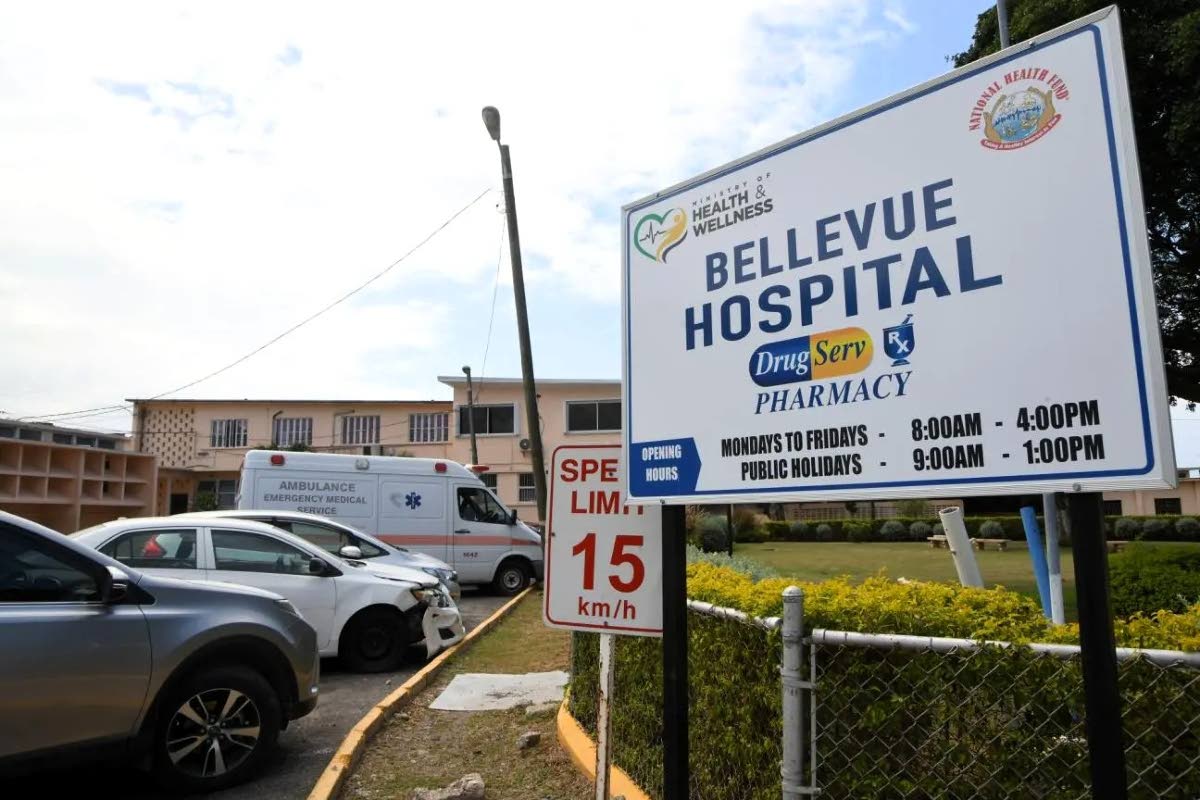 Bellevue Hospital
-
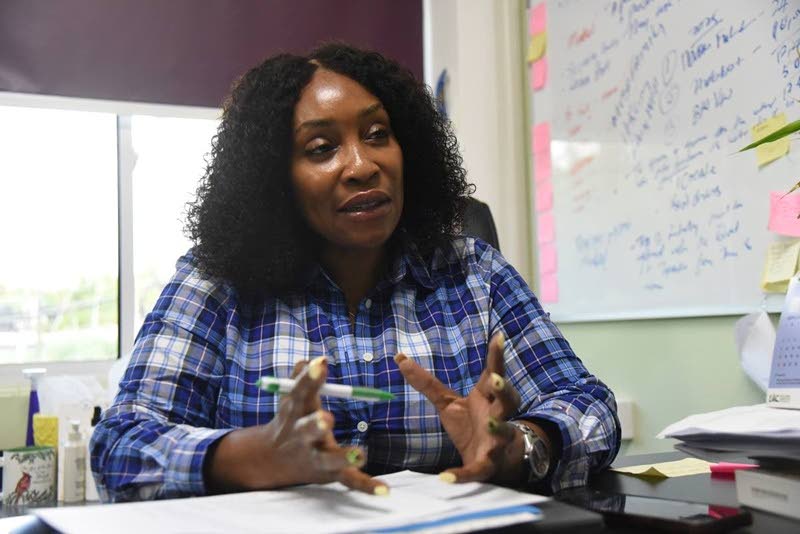 Bellevue Hospital Chief Executive Officer Suzette Buchanan says the facility is in need of expansion as it has long outgrown its emergency room.
Inside Bellevue Hospital’s emergency room, privacy is little more than a partition. Three cubicles have been carved out of a small room, allowing doctors to interview patients and relatives while others sit just a few feet away. Every conversation competes with another.
A relative describing a family crisis can be easily heard by a stranger waiting nearby. A patient discussing hallucinations or suicidal thoughts can find another family listening in. And, when the patient is manic or psychotic, there is no guarantee that even a partition will contain what happens next.
“Sometimes they come in and they are still shouting on top of their voices,” a doctor working in the emergency department told The Sunday Gleaner.
The doctor, who asked not to be named, explained that patients in the throes of psychosis or mania often cannot control their volume.
“Sometimes we have to be telling the patient, ‘Don’t speak so loudly’ but, if the patient is psychotic or manic, you find that they can’t control themselves,” she said.
The result can be distressing for everyone in the room.
“You will find the manic patient, or the psychotic patient, cursing the other patients, telling them what they heard about them during the interview,” the doctor said. “So that has always been a problem for me, and for the other doctors as well.”
But the lack of privacy is only one manifestation of a much larger problem.
Bellevue’s emergency room has been far outgrown.
And, when the beds are full, doctors sometimes have to turn away people whose psychiatric conditions are serious enough to warrant admission. It is a hard decision for staff who otherwise are bent on service, doctors told The Sunday Gleaner.
They noted that some people who arrive at the emergency room do not actually require hospitalisation. They may need counselling, medication or a visit to a health centre. Others may have missed a clinic appointment and simply need assistance until they can be seen again.
But then there are those who arrive hearing voices, unable to sleep, in relapse or fully manic – people who may be a danger to themselves or others and who doctors believe need to be admitted and stabilised.
Often, there is nowhere to put them, administrators say.
“Sometimes it is so bad that we have all the persons that present for triage warranting admission but the hospital is full, and so we can take probably two or three persons out of that. No more!” the doctor said.
Triage is the system used to sort and prioritise patients in an emergency room based on how severe and urgent their medical condition is, rather than their arrival time.
“Sometimes, we would have to reroute all of them to their nearest hospital because it doesn’t make sense to see the patient if you know that they warrant admission. You can’t just treat them and send them home, especially when they are a danger to themselves or a danger to other relatives,” the doctor said visibly distressed.
The problem is not occasional.
At least 40 people visited the emergency room during a recent seven-day period. Last Tuesday, 13 arrived for triage. Another 11 turned up on August 5, five on Independence Day, and seven the following day.
Of those assessed, 26 were admitted. But at least five others were redirected to other facilities because Bellevue simply had no space – not even for triage.
Only patients already under Bellevue’s care can be transported by its ambulance. Others – often with police assistance – must be taken by relatives, usually to nearby Kingston Public Hospital (KPH).
It is a reality Suzette Camile Buchanan, Bellevue’s chief executive officer, says reflects a system under strain at the 165-year-old institution.
“ ... we really can’t
take them”
“If you go online, a lot of people are saying that Bellevue turned away their relatives, and I don’t think we have made it clear to people why we really can’t take them,” she said.
“The same room that we are going to put your relative into to observe him is the same room that somebody is waiting for to see the doctor. You will have a bottleneck outside the emergency room, and people have no choice but to be in the corridors.
“So, you are left with a lot of disgruntled persons who have been turned away because we just can’t facilitate them,” she added.
Bellevue – the country’s only psychiatric hospital – currently has 19 female and 54 male beds in its acute-response areas. The numbers fluctuate but, on busy days, several patients can present for triage at once. The lack of space means even some patients who could be stabilised with medication and short-term observation are turned away.
For families already struggling to care for a loved one with severe mental illness, being told there is no space at Bellevue can mean returning home to the same crisis they tried to escape.
Sharon Burgess and her 73-year-old mother in Cockburn Gardens, St Andrew, know that reality well.
Burgess says her brother, who has a mental illness, has repeatedly threatened their mother and, on one occasion, allegedly sprayed her with insect spray while she slept.
Fearing for their safety, Burgess has taken him to Bellevue multiple times, often with police assistance. On several occasions, she said, she was told to take him instead to KPH because Bellevue could not accommodate him.
“Thank God he has been behaving a little better now. I can see him holding it, although sometimes you can see it is a struggle for him. But it is very frustrating because, sometimes when he gets bad, I have to hide and go for the police early in the morning to come take him, and then to reach Bellevue, only to hear we must find somewhere else to go with him. That don’t feel good at all,” she told The Sunday Gleaner.
Plans to reorganise Bellevue
The situation is unfolding against the backdrop of years of government promises to overhaul the institution.
In July 2022, Health and Wellness Minister Dr Christopher Tufton announced plans to reorganise Bellevue into two facilities, including a new 100-bed neuropsychiatric facility for patients requiring acute care and a separate facility for more than 400 long-stay residents.
The following year, Tufton announced an investment of more than $150 million in a comprehensive overhaul of Bellevue, with the proposed redevelopment intended to separate acute psychiatric care from rehabilitation and residential care.
By 2024, the Government had specifically identified the emergency room and records department for relocation and upgrading as part of the redevelopment.
Unlike other public hospitals which operate under regional health authorities, Bellevue is not part of a health region and instead receives an annual budget of approximately $3 billion directly from the Ministry of Finance.
Buchanan explained that about 65 per cent of this allocation goes to staff compensation, with the remainder covering goods and services, including food, medication, and general maintenance.
The announcement of the $150-million injection was particularly welcomed, the CEO noted, as it was expected to address some of the institution’s most pressing needs, including the emergency room.
Years later, however, the expansion remains undone.
“This has been a need for years because we have outgrown that emergency room,” Buchanan said. “The good thing is that something has started, but in terms of a when or where we are in that process, there needs to be a conversation.”
Expressed frustration
Tufton has expressed frustration with the pace of the redevelopment, pointing to repeated delays in the procurement process for the planned 100-bed mental health facility.
“I am absolutely frustrated with the procurement process. It’s close to three years now that we have been going back and forth between the Procurement Unit at the Ministry of Health and Wellness (MOHW) and the Public Procurement Commission (PPC) for the development, advertising, and consideration of a bid tendering process to award a firm to design a 100-bed mental health facility on Bellevue lands,” he told The Sunday Gleaner.
“Between my procurement unit in the Ministry of Health and Wellness and PPC, I don’t know who is the bigger culprit, but both of them have an issue,” he added.
Tufton said the matter had been returned to the PPC several times, resulting in further delays. The first procurement was initiated in 2024. A second one in April 2025 was returned by the PPC for re-evaluation in May 2026.
“Government gets a lot of bad names but, in this case, it’s not for a lack of wanting to do it,” the minister said. “The procurement process has taken a very long time. It’s frustrating with all the back and forth between MOHW procurement unit and PPC. The bureaucracy and, I suspect, fear of publicity of adverse audits and possible ignorance of the process have combined to make efficient decisions around procurement, an unusual occurrence.”
Tufton said he had asked the Office of the Permanent Secretary to meet with the PPC to determine the causes of the delays.
“That’s how concerned I am,” he said.
For Bellevue, however, the consequences of those delays are not abstract.
They are measured in crowded rooms, patients turned away and families told – sometimes after hours of waiting – that there is simply no space.
Yet, the patients keep coming.
corey.robinson@gleanerjm.com