Ruthlyn James | The bully’s uniform
Loading article...
-
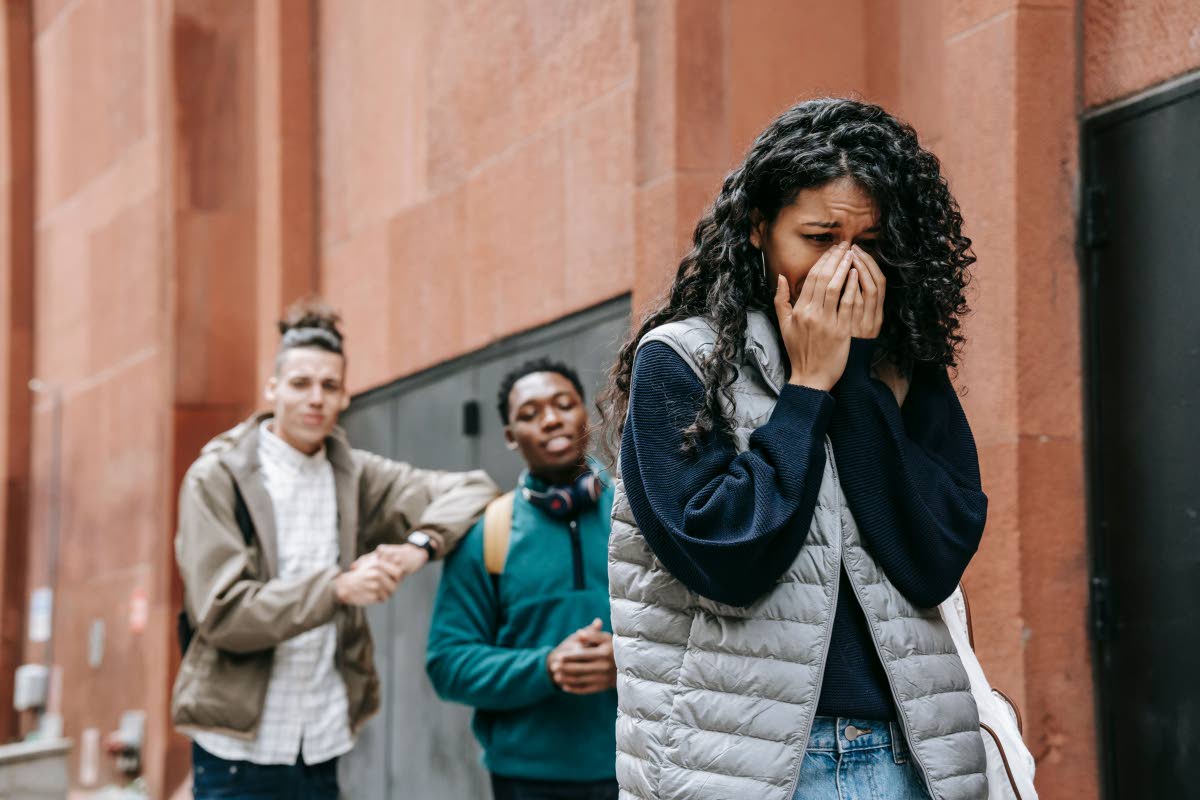 Photo - Pexels
-
Photo - Pexels
-
 James. Photo - File
A recent bullying allegation involving a student at a Corporate Area high school, which reached television news, is disturbing, beyond the alleged act itself. According to the child’s mother, faeces were placed in her son’s igloo, and she suggested that his manner of speaking Standard English and wearing his uniform according to school regulations had made him a target.
Other parents have voiced similar concerns over the years. They say their children are ridiculed and some are labelled homosexuals. But, what is happening psychologically when the child who follows the rules becomes the odd one out? Could the very standards schools celebrate be contributing to the social isolation of the children who uphold them? Here lies the greater contradiction. When conformity to institutional rules becomes an act of rebellion against adolescent culture, who is actually the non-conformist?
Adolescence is an extraordinary period of forming identity and establishing autonomy. Young people are negotiating belonging. They often measure their developing identities against peers’ approval rather than adults’ expectations. The adolescent who refuses to make these modifications may not see himself as making a statement. He is simply attending school. But his peers may see something entirely different. His neatness becomes arrogance. His diction becomes a display of superiority. His refusal to alter his uniform becomes a rejection of the group. He has broken no school rule, yet he has violated the rules of adolescent acceptance; he offended the crowd.
PEER TARGET
Schools publicly reward neatness, discipline, eloquence and adherence to uniform regulations. But, within a peer group, altered uniforms can signal popularity, friendship and trust. Adult praise may become a source of bitter resentment. Adults see discipline; the bully may see resistance or a challenge to his social identity.
His neatness may threaten another boy’s profile, not because of what he has done, but because of what he represents. When one child receives recognition for qualities that another group rejects, or worse, is rejected and punished for, that recognition may intensify perceived differences.
The compliant child becomes the visible representative of adult authority, a teacher’s pet. He is no longer simply wearing his uniform correctly. In the bully’s developing brain and distorted perception, he is wearing his privilege; he is a kiss-up, maybe an informer. Of course, this does not explain every bullying incident. Some children are targeted for reasons entirely unrelated to conformity, but it is a hypothesis worth investigation.
BULLY IS ALSO CONFORMING
We often describe bullies as rebellious children who disregard rules. But consider the teen who humiliates another boy because he speaks or dresses differently. He appears rebellious only because we are looking at the wrong rulebook. He may be defying the principal while obeying every unwritten command of the boys whose acceptance he fears losing.
The bully who punishes difference may be the least psychologically free child in the classroom. Understanding the social pressures behind cruelty does not reduce the responsibility of the child who inflicts it. Bullying remains an act of harm. Our understanding of the fear behind cruelty does not make it less dangerous, but it helps us see one of the mechanisms by which it becomes socially contagious.
“Speak properly!” has long been a familiar command from parents and teachers. Sometimes it comes with a firm hand or a stinging belt. For generations, our language has carried the weight of class prejudice. Some associate Patois with being ghetto, poor or country, while Standard English is often mistaken for wealth, intelligence and good upbringing. We punish one child for speaking Patois and another for speaking Standard English. The language changes, but the bullying remains.
UNIFORM VERSUS CHARACTER
Jamaica’s schools have devoted considerable effort to regulating children’s appearance. The measuring tape is still used as a tool of access. But clothing has become more than fabric; it is also social currency. A promotion by a local store, Trap Snacks, featuring a young man under the message “Never Judge a Book by its Cover”, stirred thoughts. Here was a young man whose appearance reflected the street culture too often seen as dunce or indiscipline. Yet, his CSEC achievements highlighted in the promotion challenged those assumptions.
What changed when his examination results were revealed was society’s willingness to recognise what had been there all along. Suddenly, his appearance, the kind that might attract a dean of discipline’s fine, became tolerable because academic excellence provided evidence for respect. But why should a young man have to prove his intelligence before we reconsider our prejudice? And what of a boy with the same appearance who didn’t pass a single CSEC subject? Is he less deserving of dignity?
Schools cannot pretend to be spectators to prejudices they sometimes reinforce. Discipline matters, but public comparisons can divide when one child’s appearance becomes the measure of another child’s worth, and even access to education. Children negotiate two systems of social approval: one governed by institutional regulations, the other by their peers’ expectations. School rules serve a legitimate purpose, but neither system should let appearance become grounds for prejudice, humiliation, exclusion, or bullying.
Ruthlyn James is the founding director of Adonijah Group of Schools Therapy and Assessment Centre. Send feedback to columns@gleanerjm.com.