Ronald Thwaites | Can Jamaica afford its government?
Loading article...
-
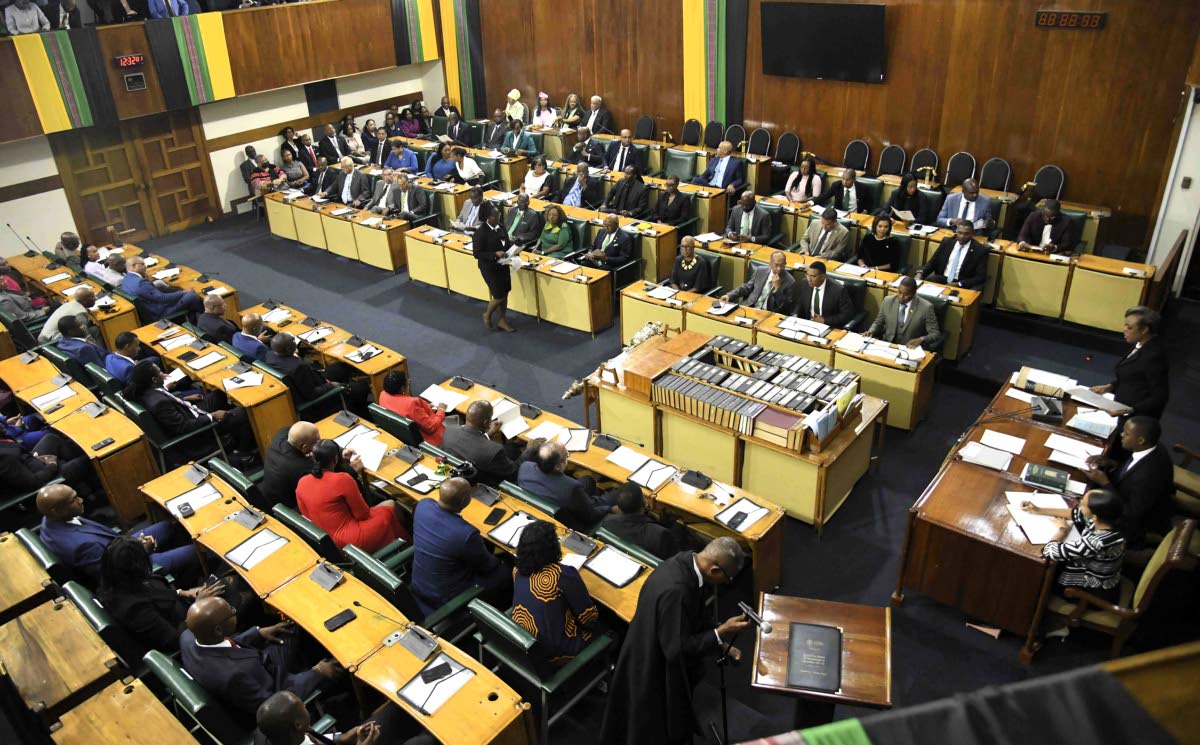 Members of Parliament before at the swearing-in ceremony for members of the upper and lower houses of Parliament held on September 18, 2025 in Gordon House. Photo - File
-
Members of Parliament before at the swearing-in ceremony for members of the upper and lower houses of Parliament held on September 18, 2025 in Gordon House. Photo - File
-
 Ronald Thwaites. Photo - File
Can the economy support the cost of the State? That was the question posed by two economists last week in this space. Their data and reasoning are convincing. Their recommendations are unlikely to be realised.
The social and political cost of aligning the cost of the State with the condition of the economy would be devastating for any single administration. It would involve layoffs, a contraction of allowances and a different work ethic.
As a people, we refuse to confront the dilemmas of our own making. So, according to these economists, in recent years, the taxpayers have afforded public servants, broadly defined, increases of up to 88% but, in return, received only 7% more output. Unsustainable. Isn’t that the same conclusion arrived at by Nettleford and the many others who have advised and been ignored on the subject in recent years?
RESTRAINT?
As if constrained by Melissa’s anniversary, in recent days, Prime Minister Holness has announced temporary restraints on the margins of public-sector spending. The announced measures, soured by an unsupported allegation of sabotage, don’t go nearly far enough to curb waste and corruption. The very construct of his top-heavy, overpaid and unaccountable executive belies his intention. Almost every MP is a minister. To what effect?
Most embarrassing of all, how can our leader expect his 54% food-insecure subjects to warm to his example of fiscal modesty by driving a 2015 car (what happened to the fleet of “crissas” kept running and refrigerated during an entire Gordon House sitting so as to avoid a drop of ministerial sweat after the exertion inside?) when the NaRRA rent and salary extravagance must have had his approval?
ZERO-BASED BUDGETING
The effort at cost containment is necessary but unconvincing. During the 2007-11 and 2016-2020 sessions of Parliament, I repeatedly proposed that every ministry, agency and department of government, on a rotating basis, say every 10 years, be subject to a comprehensive zero-based budgeting exercise. By having external and internal professionals examine the necessity and efficiency of every line item in the big yellow book, I contend that the country can achieve much more from our existing resources than at present.
My motions were never allowed to be debated. So much for the influence which a backbencher or opposition MP can have on national policy. When one is a Cabinet member, you may have more talk, but the pressure to stay within your portfolio and the heavy shadow of collective responsibility sabotage consciences.
ACCUMULATED INEFFICIENCY
My own experience in a particular ministry and observation over the broad canopy of government convinces me that between a quarter and a third of the national budget could be better spent. Of course, that estimate is anecdotal but well informed.
Here’s an example. There are close to 30,000 teachers paid by the State. A maximum of 10% are allowed to go on long leave with full pay during the school term each academic year. These vacationers have to be replaced in the classroom, thus doubling the cost. The average teacher’s pay is around $3 million. Go figure the billions spent each year on this item. There are more efficient ways to compensate teachers.
Mr Holness is so correct in proposing inner-city renewal to bring back dignity, hope and peace to scores of communities. Security of tenure is a foundational requirement for resurrecting dead assets. Despite facilitatory legislation on the books, the administrative machinery to hasten titling is constipated. Once again, a good policy will become a damp squib.
NATIONAL SPIRIT
Increasing productivity in the public service requires not only a high measure of political consensus and organisational nimbleness but a cultural and spiritual revival whereby we share motivation to expect more of ourselves and others, accord respect and fair rewards, and sacrifice for the common good. What has been said and done on cost saving, sabotage and reorganisation do not show appreciation of the complexity of the task. They smell of frustration, shallow priorities and weak cash flow.
REPLENISHING GANGS
The recent Trafficking in Persons report speaks about the seductive “lifestyle” which draws many unattached youth into deviance. In the troubled school situations I have observed, it is possible to identify the boys most susceptible to becoming gang affiliates from the early grades. The public education system is not geared to remediate their level of dysfunction. We prefer to remain in denial when treatment could rescue them and instead kill or be killed by them later on. I am pleading for the restoration of mandatory uniformed groups in all our schools as one essential ingredient of national security, peace and increased productivity.
TURPITUDE
Sheer cowardice explains the government’s abstention in the United Nations vote to condemn the decades-long American blockade of Cuba. We see through all the twisted-mouth rationalisations of the policy change. Out of craven fear and sell-out, we turn our backs on our friends and display our abandonment of principle. Our foreign policy is now a suck-up subservience to those whose explicit aim is to recolonise us. It is spiritual bankruptcy, cruelty to one’s innocent friends, masquerading as savvy pragmatism.
Contrast the integrity of Bruce Golding, P.J. Patterson and Mia Mottley. We are proving Stephen Miller right. To hell with international law, principle and, by inevitable degrees, our Charter of Rights. What counts now is authoritarian might.
In New York, Jamaican leaders proved who they are and who they want us to be – the little ‘cunny-men’ of the Caribbean. We must resist the shame they foist on us.
“Listen you who lord it over the throngs of people ... and though ministers of his kingdom, you judged not rightly ... authority was given you by the Most High who shall probe your works and scrutinize your counsels ... for the Lord does not fear greatness ... but for those in power a rigorous scrutiny impends.” (Book of Wisdom, Ch. 13)
Rev Ronald G. Thwaites is an attorney-at-law. He is former member of parliament for Kingston Central and was the minister of education. He is the retired principal of St Michael’s College at The UWI. Send feedback to columns@gleanerjm.com.