Peter Espeut | What we have, and what we’ve lost
Loading article...
-
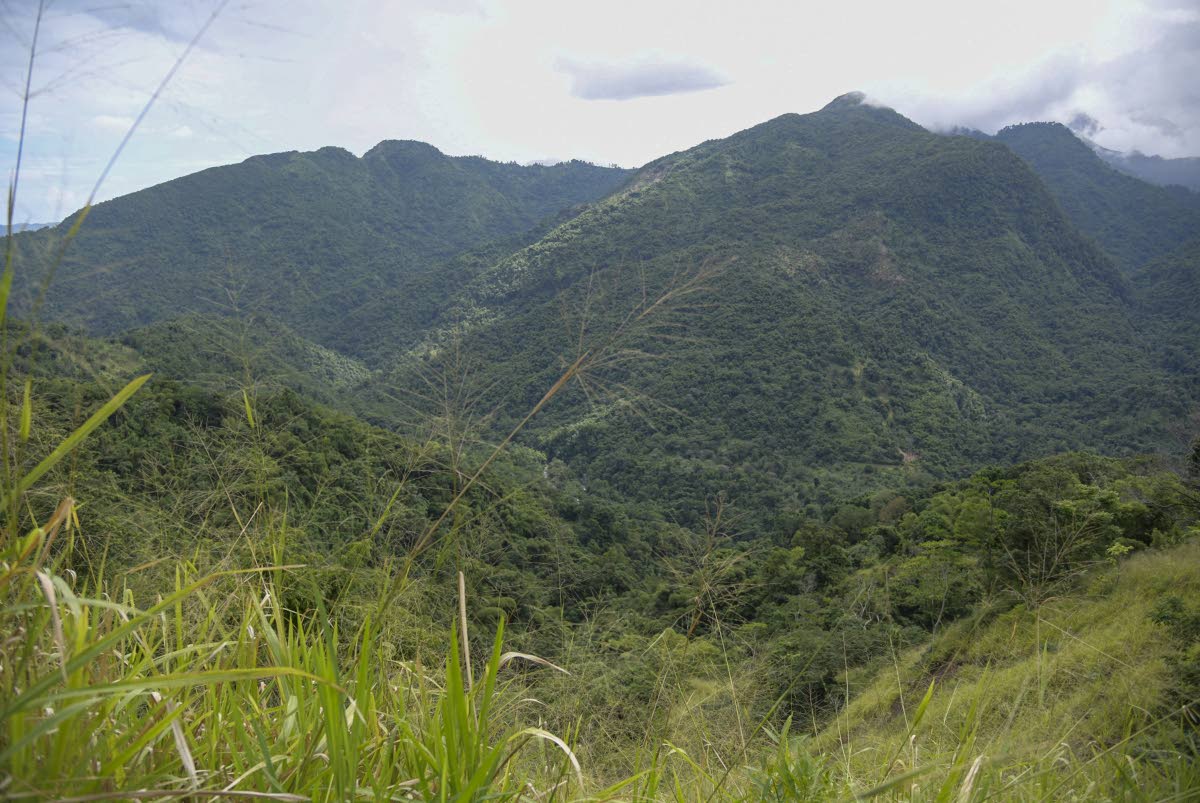 Blue Mountains. Photo - File
-
Blue Mountains. Photo - File
-
 Peter Espeut. Photo - File
As we are in National Heritage Week, my mind naturally turns to those more Jamaican than myself, those who lived on this island before even the Taínos took up residence around 650 AD.
Once Jamaica erupted from the ocean floor some 75 to 100 million years ago, thousands of types of flora and fauna drifted in and took up residence; but several hundred species evolved on or around the island that are found nowhere else in the world (i.e. are endemic). In fact, Jamaica ranks number five among the islands on the planet for endemic plant and animal biodiversity.
Over 8,000 species of plants and animals have been recorded in Jamaica; some 900 species of plants and 570 species of animals are found here and nowhere else in the world. Of our 21 native frog species, all are endemic. Of the 120 types of birds found in Jamaica, 28 are endemic. The island hosts 27 endemic reptile species and, remarkably, over 500 species of land snail here are found nowhere else in the world.
Pop quiz to all proud Jamaicans: name me 10 endemic Jamaican plants and 10 endemic Jamaican animals. If you can’t, I think you will have to conclude that there is something missing from our school curricula.
This treasure trove of natural heritage is more Jamaican than you or I. In fact, it is more Jamaican than ackee and salt fish! (Ackee hails from Africa, and salted codfish comes to us from the cold waters off Nova Scotia and Spain).
When I was in sixth form (at St George’s College) in the 1960s, the zoology club (The Mendel Society) went on a field expedition to the Blue Mountains in search of a noted endemic Jamaican animal called peripatus (Peripatus swainsonae). This rare animal is the evolutionary link between annelids (worms) and arthropods (insects). We looked under rotted logs and amidst piles of decaying vegetation, but alas! Not a peripatus to be found!
Later in life, as manager of the natural resources in the Portland Bight Protected Area (in southern Clarendon and St Catherine), I had custody of dozens of Jamaican endemics, including the Jamaican skink (Spondylurus fulgidus), the blue-tailed galliwasp (Celestus duquesneyi), the Jamaican boa or yellow snake (Chilabothrus subflavus), the Jamaican iguana (Cyclura collei), the Jamaican crocodile (Crocodilus acutus), the fish-eating bat (Noctilio leporinus), the blind cave frog (Eleutherodactylus cavernicola), and two Thunder snakes (Trophidophis stullae and Trophidophis jamaicensis).
Other Jamaican endemics include the Jamaican coney (Geocapromys brownii), the Jamaican blackbird (Nesopsar nigerrimus), the swallow-tailed butterfly (Papilio homerus), the Jamaican long-tailed snake (Hypsirhynchus polylepis), the red-spotted galliwasp (Celestus hewardii), the Jamaican snoring frog (Osteopilus crucialis), the Jamaican laughing frog (Osteopilus ocellatus), the Jamaican rumpspot frog (Eleutherodactylus andrewsi), and the Southern Jamaica Banded Sphaero (Sphaerodactylus parkeri).
Because of the limitation of space, I am only listing a few endemic animals; the plants are just too many.
The point I am trying to make during this National Heritage Week is that we have lots of natural Jamaican heritage to celebrate, alongside our heroes and our heritage in folklore, music, dance, and food. Rarely do I see any reference to our natural heritage. We Jamaicans are largely ignorant when it comes to environmental matters; or maybe I should say that we have been kept in ignorance. Whose interest does this serve?
Most of these Jamaican endemics are on the IUCN Red List (the global list of species in danger of extinction managed by the International Union for the Conservation of Nature).
In all, Jamaica has 306 species on the IUCN Red List: Critically Endangered: 79 species (facing an extremely high risk of extinction); Endangered: 108 species; Vulnerable: 119 species.
The truth is that we are in danger of losing forever some of our natural patrimony. Once a species becomes extinct, it is extremely difficult (but not totally impossible in these days of DNA culture) to get it back. I guess, if we have not even heard of the Jamaican skink, then, if and when it goes extinct, we won’t miss it.
But I must tell you that we have already lost a great deal. And, what you don’t know, you don’t miss. I will here mention only two extinctions.
Did you know that, in the early days of Jamaican colonisation, by both the Spanish and the English, Jamaican monkeys (Xenothrix mcgregori) were common on the island? They probably went extinct sometime in the mid-1700s. It is well known in the fossil record, and its DNA has been collected.
Up until the last century, pods of Pedro Seals (Monachus tropicalis) used to frolic in the waters and bays of Jamaica, and our nearshore and offshore cays. I have read first-hand accounts of the killing of some of them in the 19th century. Bloody Bay in Hanover and Manteca Bay (Montego Bay) in St James are said to have got their names because of the many seals (and whales) slaughtered there for their blubber. These marine animals were also common on Seal Cay (South Cay) on the Pedro Bank, and at Seal Cove (Scott’s Cove) on the St Elizabeth-Westmoreland border.
The last killing of a Pedro Seal by humans was recorded by hunters on the Pedro Cays in 1939. One of the final sightings of the species in Jamaican waters occurred just south of Kingston on Drunken Man’s Cay in November 1949. The very last confirmed sighting anywhere on Earth occurred a few years later in 1952 at the nearby Serranilla Bank (between Jamaica and Nicaragua).
The Pedro Seal was officially declared extinct by the IUCN in 1994. It remains the only seal species to have gone completely extinct entirely because of human causes.
Can you imagine the attraction they would be for Jamaicans and tourists alike if playful monkeys and seals were still around?
That is what happens when we are poor environmental stewards: we lose our national natural heritage.
Peter Espeut is an environmentalist and a development scientist. Send feedback to columns@gleanerjm.com