When the sea comes knocking - Erosion leaves residents in Alligator Pond fearful
Loading article...
-
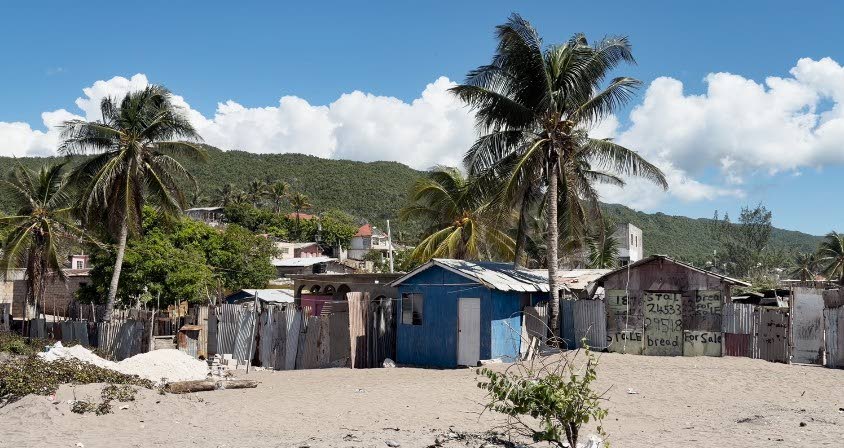 Some houses in Alligator Pond. Photo - Jeovanni Heslop/Videographer
-
Some houses in Alligator Pond. Photo - Jeovanni Heslop/Videographer
-
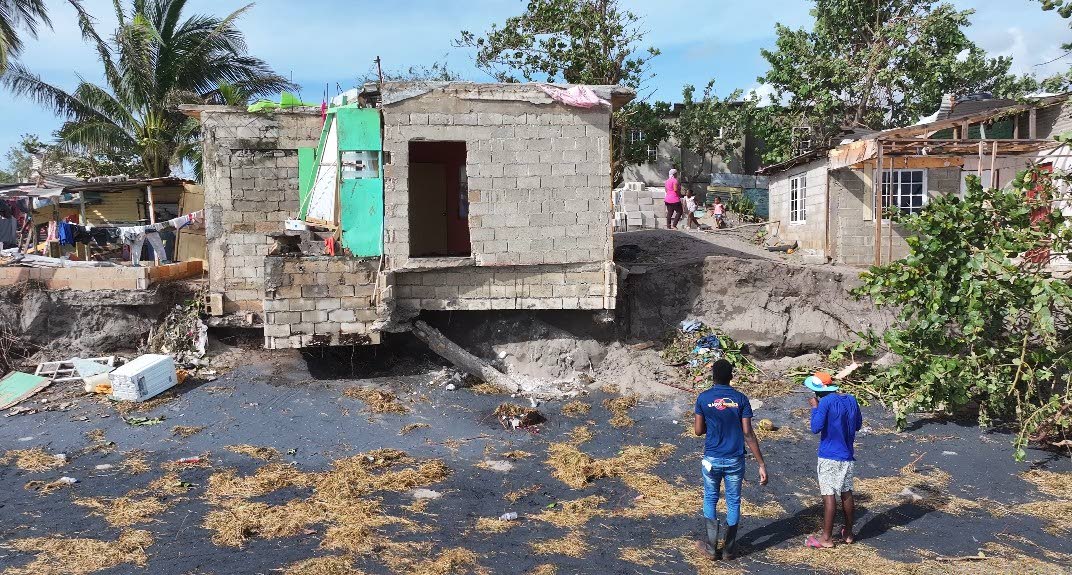 Photo - Jeovanni Heslop/Videographer
-
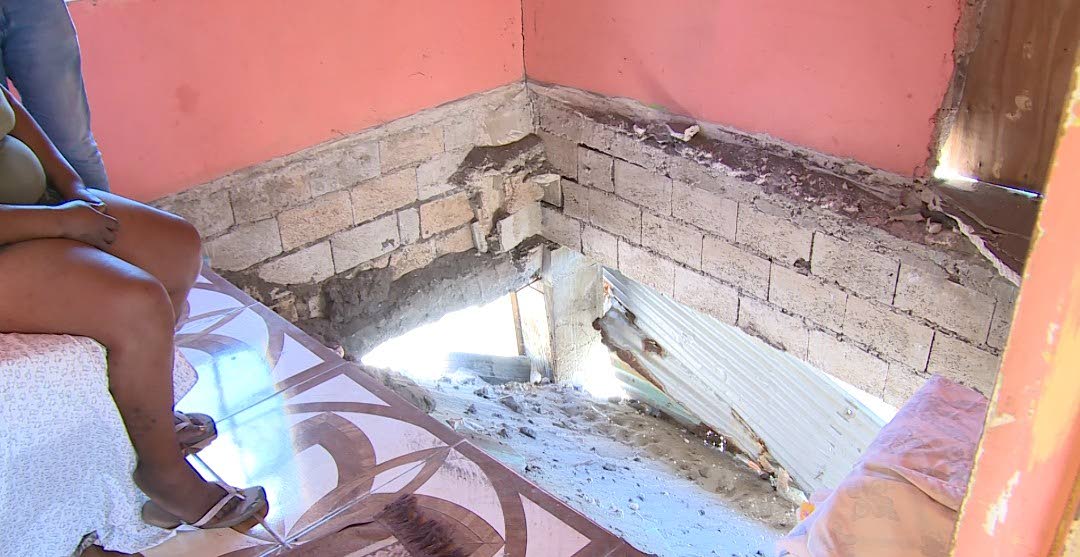 Compromised floor in Coneil Ellington’s home. Photo - Jeovanni Heslop/Videographer
-
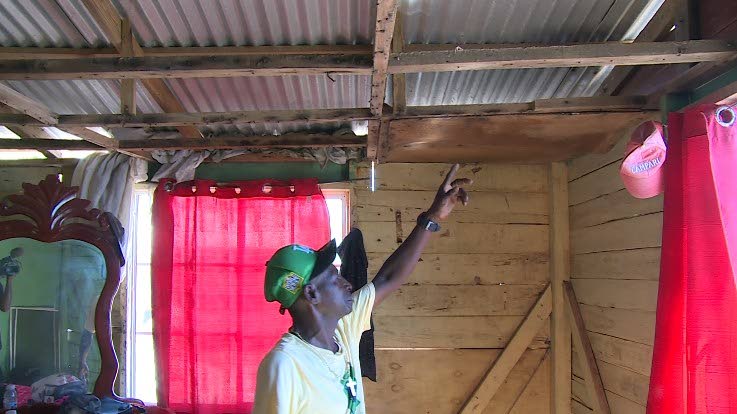 Eural Brown pointing to a section of the zinc roof at his home. Photo - Jeovanni Heslop/Videographer
-
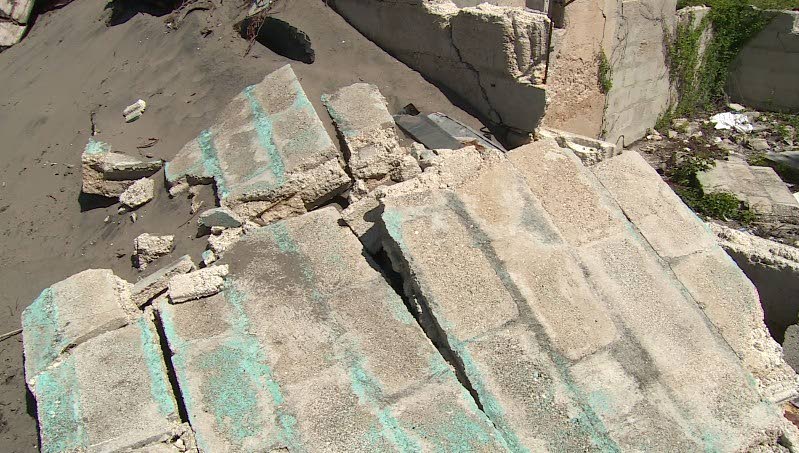 Collapsed wall in Pamela Banton’s yard. Photo - Jeovanni Heslop/Videographer
-
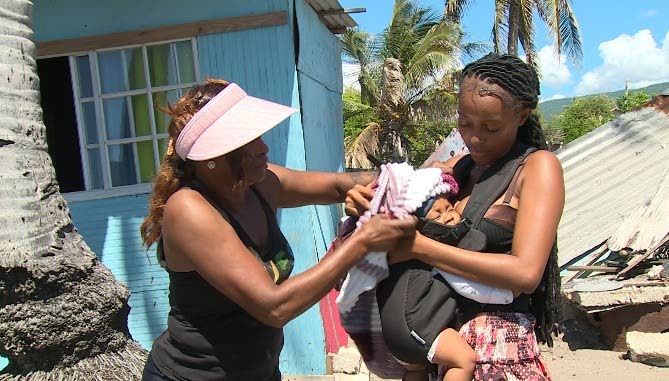 Pamela Banton, her daughter and grandson stand before rubble in their home. Photo - Jeovanni Heslop/Videographer
-
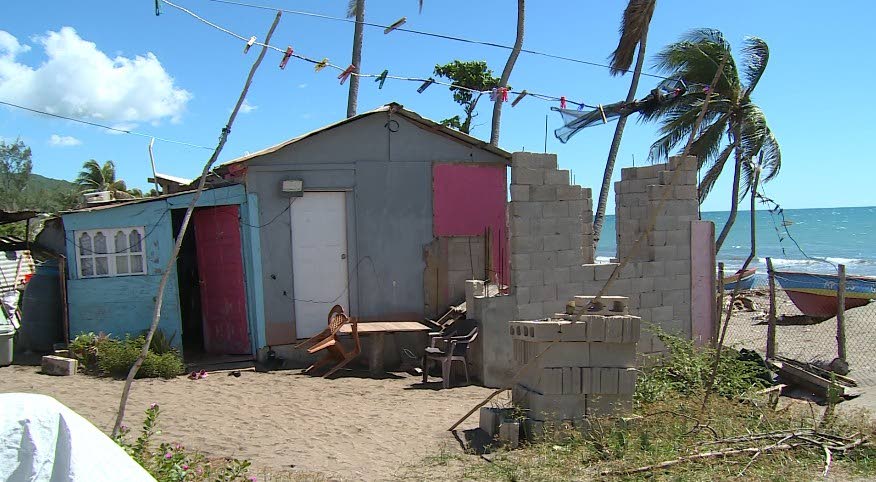 Pamela Banton’s home. Photo - Jeovanni Heslop/Videographer
-

One of the most recurring questions facing people who have lost their homes to Hurricane Melissa in Alligator Pond is: “What did you expect when you were building a home so close to the sea?”
It is a question that frustrates them.
Walking along the shoreline, surveying the damage and listening to residents, a common refrain emerges. They stress that when they built their homes decades ago, the thought of the sea crashing into their properties was never a concern because it simply was not as close as it is now.
It is not the houses that have moved closer to the sea. Rather, the coastline has been eroded, allowing the water to creep further inland. The situation has left some residents fearful that future hurricanes will bring the sea even closer and cause greater damage.
Eural Brown has lived in the coastal community for 57 years. Having experienced multiple hurricanes, he said the last two – Hurricane Beryl in 2024 and Hurricane Melissa in 2025 – caused the greatest damage.
“Beryl come first, the housetop lick right off. And I ended up having to buy some zinc and fix it back. Melissa come now and the same thing. If I didn’t tie down this place, all of it gone,” Brown told The Sunday Gleaner, standing outside a visibly weakened property.
“You can go and look if you want. Everything mash up,” he continued.
Inside what remains of his home, the roof is compromised and the floor damaged, with tiles severely cracked and affecting how he walks. The board structure is unsecured, shaking at the slightest touch, while he has taped up his windows to afford himself some level of privacy.
“It came up to the veranda”
“When the sea started coming in, it came up to the veranda. I had to get some help and take some things out of the house and carry them somewhere else. My sister’s house was a board house and the sea came and take it away,” he recalled.
Even without a storm at sea, waves can be heard crashing aggressively along the shoreline. Their constant roar is a reminder to Brown that he needs to leave.
“Mi cyaa stay here. I don’t want to stay here. If I fix the house again, it is going to cost me over and over again. If storm come again, it a guh mash up again. I want somewhere to move to and I want help,” he said.
Another resident, Pamela Banton, lives with her daughter. When The Sunday Gleaner visited her home, she pointed to the mammoth task ahead of her. One year after Melissa, she is still clearing up.
“All of this was walls from neighbours and all of them just caved in,” she said, pointing to the rubble at her gate.
Banton, visibly distressed, recalled hearing waves slam into the walls as Melissa passed.
“It was so devastating. My daughter and I had to run out in the night. All clothes got wet, sheets, mattress, everything. It was so terrible. So many things were going through our minds, but the main thing we were focused on was to save our lives.”
In 2023, climate officials warned that several Caribbean countries, including Jamaica, could permanently lose five per cent or more of their cities to rising sea levels by the end of the century if shoreline defences were not put in place.
That same year, data released by Human Climate Horizons, a collaboration between the United Nations Development Programme (UNDP) and the Climate Impact Lab (CIL), showed that the extent of coastal flooding had increased over the previous 20 years as a result of rising sea levels.
Increasingly vulnerable to erosion
As the sea advances inland in Alligator Pond, the land becomes increasingly vulnerable to erosion and flooding, threatening the coastline, nearby homes and infrastructure and, ultimately, the loss of usable land.
Hurricane Melissa brought that danger home for Coneil Ellington.
“We saw the sea come up and lick the back door and tear it off. Everybody come fi help we because the sea a break into the house. We got out most of the furniture, but some of them were damaged,” he told The Sunday Gleaner.
The floor in one room is split in two, with one section still supporting a bed while the other is exposed, revealing the rubble beneath. Outside, the damage is equally stark. A toilet has been left suspended in the air after the structure beneath it was ripped from the ground. The entire front section of the house has been swept away by the sea, leaving the interior exposed and visible from outside.
“A board house was in front of us and we saw it going into the sea. We couldn’t save anything in it. You can’t do anything. You just have to watch it going because the sea come right under the bottom of the house,” Ellington added.
He, too, is concerned about future storms. That is why he said he was “going to build over more in the back”.
Where people
choose to settle
Prime Minister Dr Andrew Holness has said that where people choose to settle is becoming increasingly important against the backdrop of a changing climate.
“If it is that people decide, without taking into consideration weather, to build in a gully course, to build on a riverbank, to build on a slope that is unstable, all of that is just setting up ourselves to be vulnerable to a hurricane or to a seismic activity for that matter. So, a part of preparing is not making yourself vulnerable.”
Holness was speaking during the commissioning ceremony for the Doppler Weather Radar Station at Cooper’s Hill in St Andrew last Wednesday.
“You are having more hurricanes, more intense hurricanes, but they are happening in a much shorter time span. The return for them is much shorter. So believe it or not, there will be, in a shorter period of time, another weather event that will have an impact on us,” he continued.
In the immediate aftermath of Hurricane Melissa, dead seagrass washed ashore, lining the shoreline for metres.
Dr Theresa Rodriguez-Moodie, chief executive officer of the Jamaica Environment Trust (JET), told The Sunday Gleaner that this was cause for concern.
“The damage to seagrass beds after Hurricane Melissa means weaker fisheries, less shoreline protection, and the loss of a major natural system that stores carbon. These impacts hit communities directly; economically, ecologically, and in terms of climate resilience.”
The loss of that natural protection could have consequences for homes close to the sea.
“It’s unlikely to just be linked to seagrass bed removal alone, but it’s a protection mechanism. So, once it’s gone, it can contribute to erosion. Storms naturally come with powerful wave energy, so it’s important to have things like seagrass and mangroves in place to protect coastlines.”
romardo.lyons@rjrgleaner.com