TCN CAUTION
Loading article...
-
 A Jamaica Urban Transit Company bus carrying third country nationals who arrived in the island on Tuesday departs from the Norman Manley International Airport in Kingston under police escort. Photo - Antoine Lodge/Photographer
-
A Jamaica Urban Transit Company bus carrying third country nationals who arrived in the island on Tuesday departs from the Norman Manley International Airport in Kingston under police escort. Photo - Antoine Lodge/Photographer
-
 Damion Gordon, lecturer in the Department of Government at The UWI, Mona. Photo - File
-
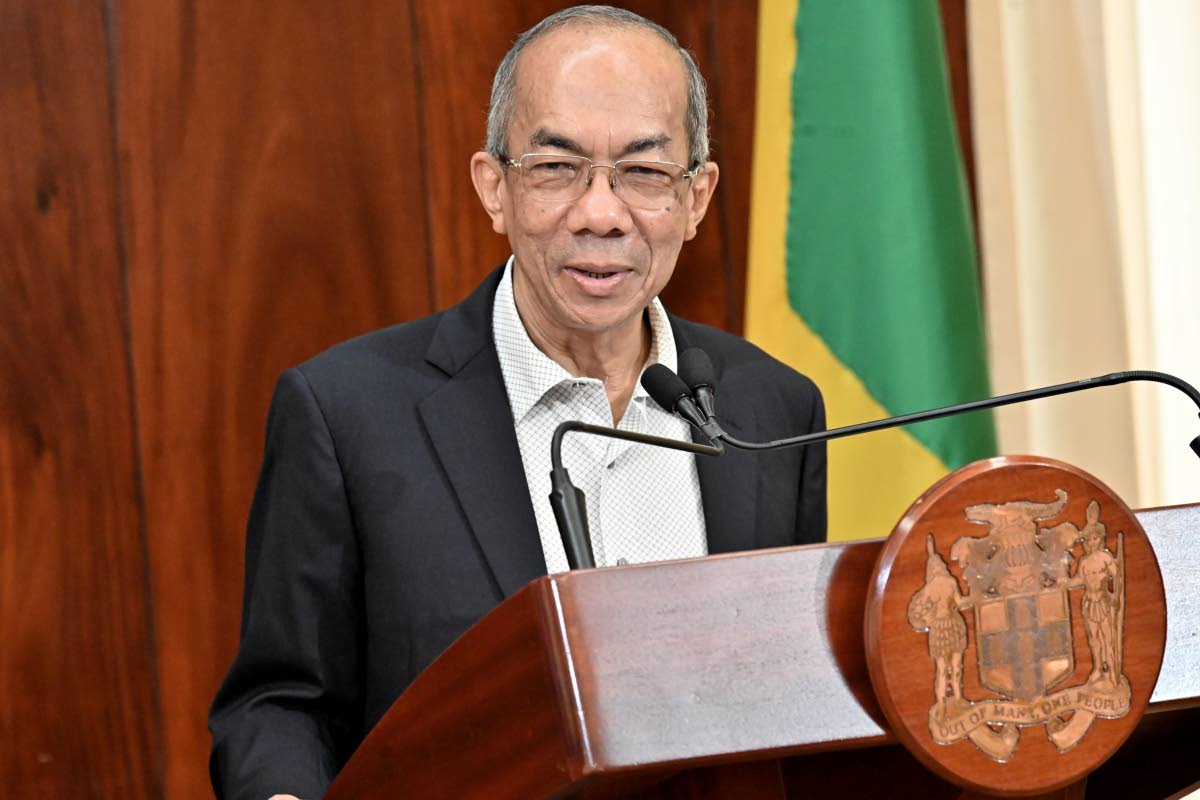 Dr Horace Chang, deputy prime minister and minister of national security and peace. Photo - File
The arrival of 22 Latin American and European migrants at Norman Manley International Airport under the controversial third county nationals agreement (TCN) has triggered a warning from one political analyst that Jamaica could face legal liabilities.
University of the West Indies lecturer in the Department of Government Damion Gordon said the Holness administration must ensure openness, and evaluate its responsibilities regarding the agreement.
“I would urge the Jamaican Government to provide greater transparency about the agreement and carefully examine the extent of our responsibilities to ensure that Jamaica is not exposed to any present or future legal liabilities.
“There are also moral implications that deserve consideration,” Gordon told The Gleaner on Tuesday, following the arrival of the foreigners deported from the United States.
National Security and Peace Minister Dr Horace Chang confirmed during a ‘Beyond The Headlines’ interview with host Dionne Jackson Miller on Radio Jamaica 94 FM that seven women and 15 men – nationals from Ecuador and a European country – arrived on a flight some time after 1 p.m. There were no children within the group.
Chang also confirmed that Jamaica rejected one of the TCNs while two were withdrawn.
The 22 men and women, five of whom speak English, were processed and granted a 90-day landing before they boarded a Jamaica Urban Transit Company bus, which left the airport with police escort for an undisclosed location.
Chang said the United Nations’ International Organization for Migration (IOM) now has full responsibility for the deportees, who are expected to return to their home countries within 14 days. If 10 opt to seek asylum, the minister said the programme would be halted, although acknowledging that a second batch should arrive in two weeks.
Chang said the Government got confirmation on Monday that the group would be coming after the IOM acknowledged that the operating procedures were “satisfactory”.
The proposed operating procedures seen by The Gleaner indicate that the Government would be given a list of deportees 72 hours prior to removal. A response to the US is expected in 36 hours.
“Everything depends on once we put in place what we call the appropriate reception. The International Organization Migration, who has some very rigid protocols, has to agree. And, they only agreed yesterday evening, a which point the Americans had sent us some information that they would like to send some this week, but we ... could not give a time or exact time or date until IOM accepted or agreed that they would provide the services,” said Chang when asked about the short notice given to the Government about the group’s arrival.
The IOM is the international body being used by the US to facilitate the process.
“The Government of the United States of America expects to compensate a competent international organization for services it provides to individuals transferred under the MOU. The Government of Jamaica intends to coordinate with the competent international organization to initiate those services and to facilitate the entry and activities of that international organization’s staff,” the proposed operating procedures outlined.
The IOM has not commented publicly on the matter.
Chang said the TCNs were medically screened and were similarly cleared following security checks with Interpol.
However, Gordon said he remains uneasy about Jamaica’s involvement in the arrangement, which is linked to a US deportation policy “that has faced serious legal challenges over due process and human rights concerns”. He said this is of concern because of how some deportations have been handled across several US states.
While the US’ lower courts had struck down third-country removal policies over due process concerns, the Supreme Court overruled those decisions to allow the deportations to continue via a temporary emergency stay, further fuelling local calls for the Jamaican Government to make public its agreement.
This allows the US government to temporarily resume sending migrants to third countries while the full legal case is being argued and reviewed on its merits.
“The safeguards announced by the Government are important, but we need assurances that the agreed limits on arrivals, the exclusion of persons with criminal backgrounds and the conditions governing asylum applications will be strictly observed. We must also be clear about what happens if individuals cannot leave Jamaica within the agreed time frame,” said Gordon.
kimone.francis@gleanerjm.com