‘This is for you my son’ - Veteran lawyer Bert Samuels dedicates African museum, legacy and future to son Safari
Loading article...
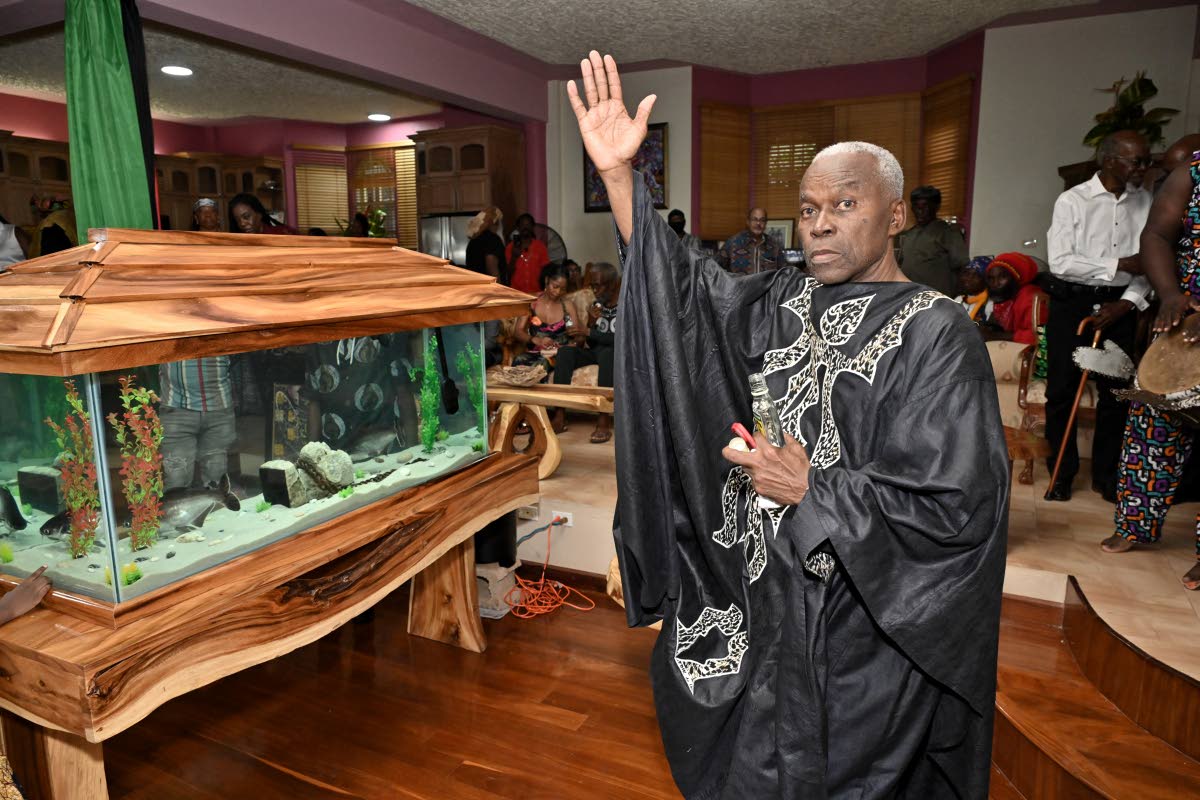
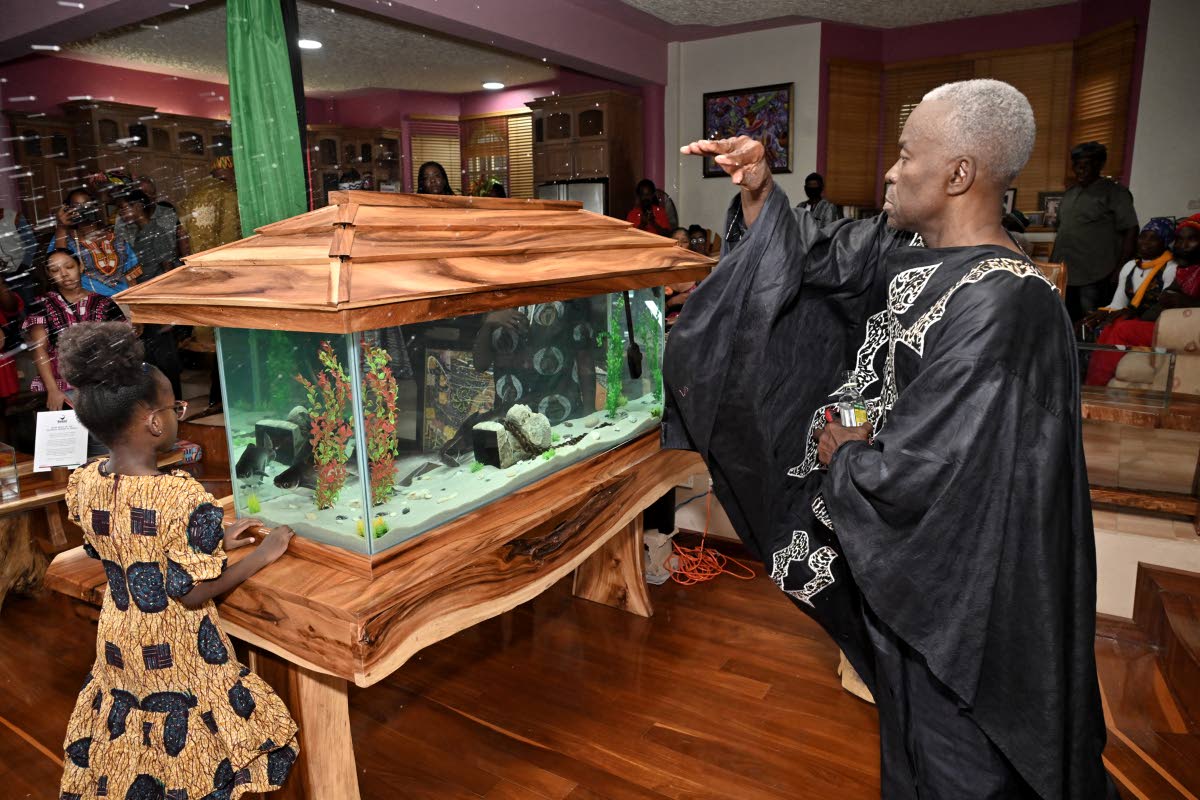
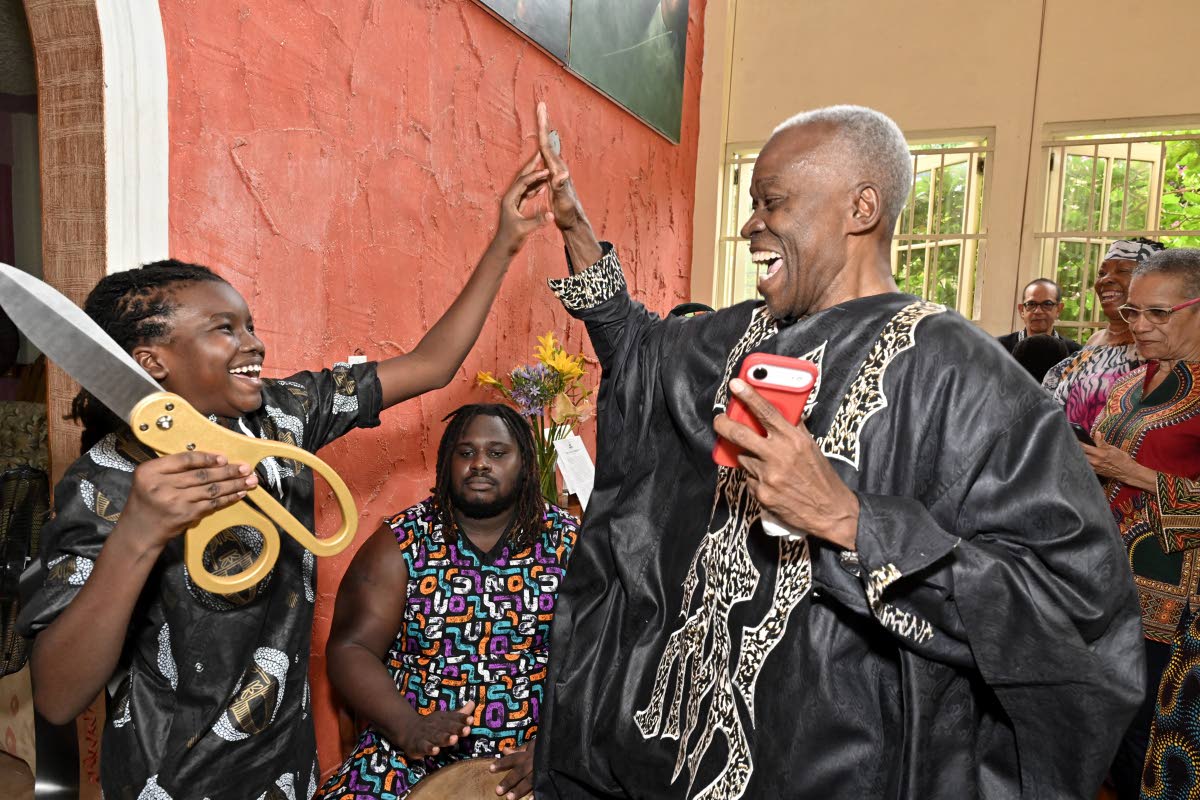
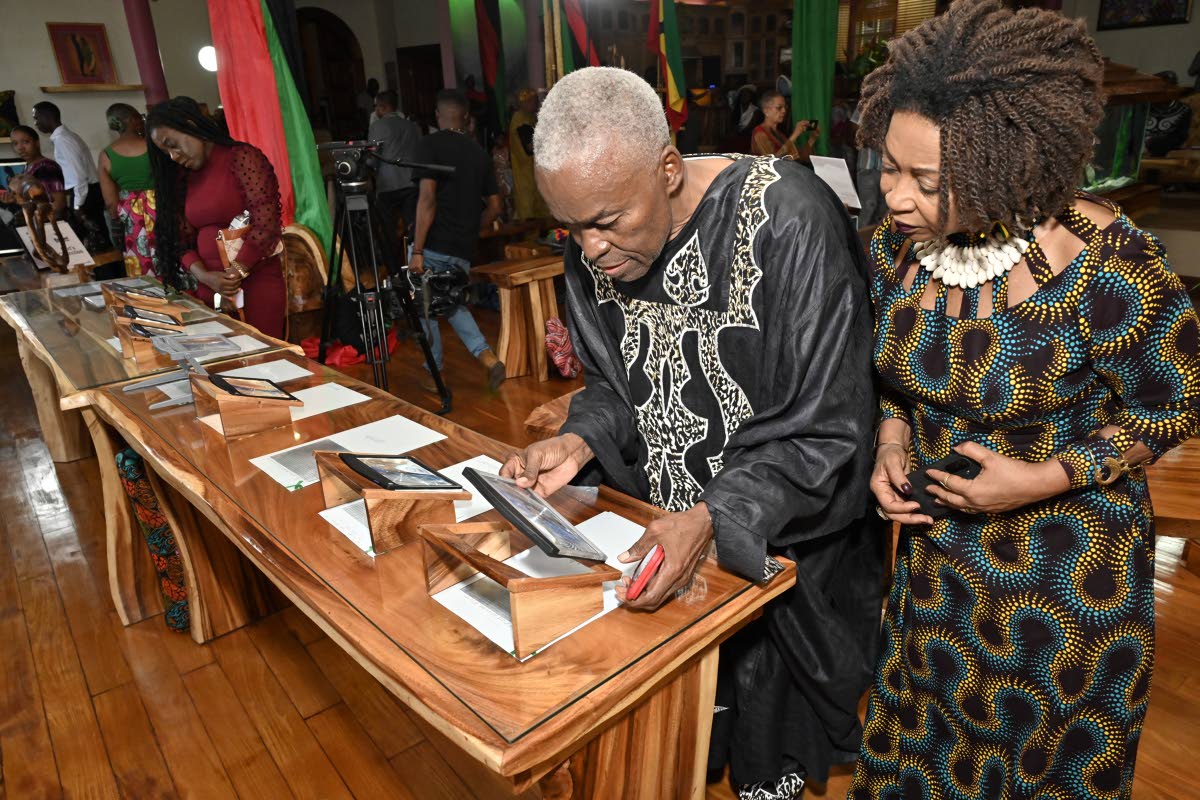
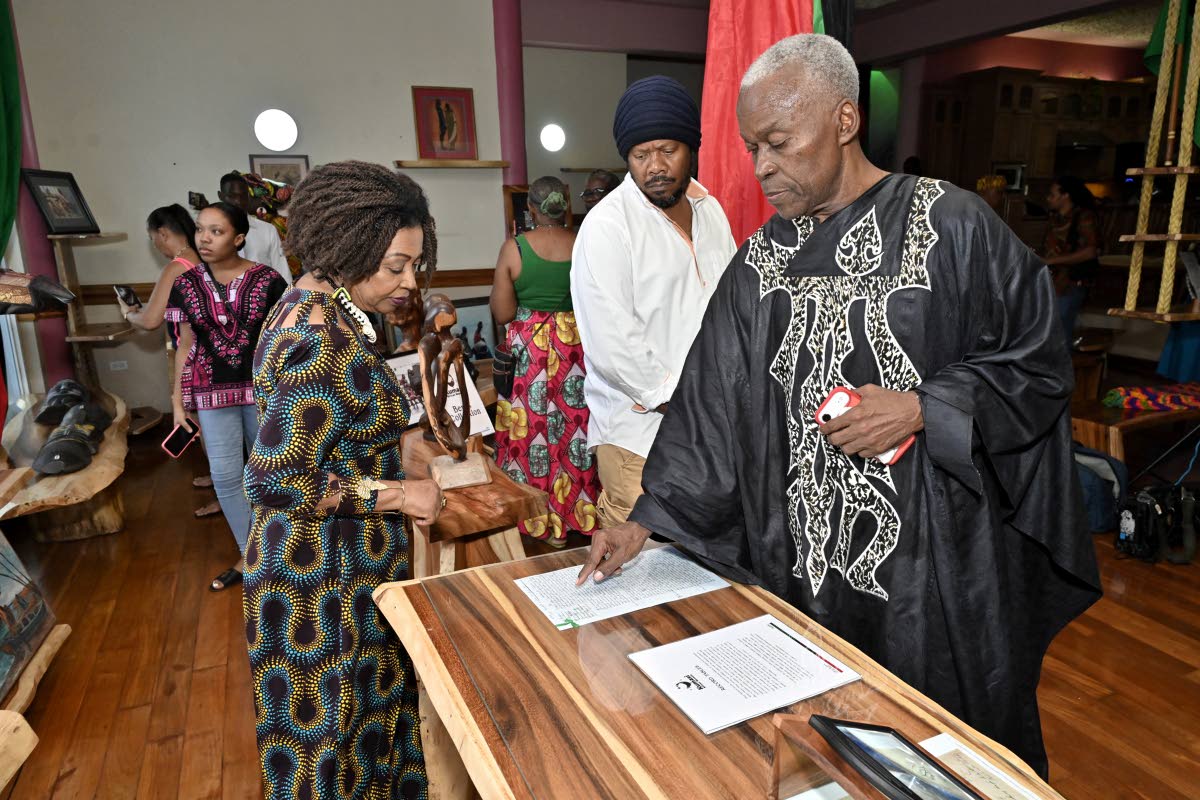
Veteran attorney and Pan-Africanist Bert Samuels on Sunday opened the Kumasi African Museum – a repository of Black history – at his Belvedere, St Andrew home and, in an emotionally charged moment, dedicated it to his young son, charging him with the responsibility of safeguarding its legacy and future.
It was a gathering of like-minded people on Sunday, embraced by the cool breeze of the hills overlooking the city. One of the routes to the venue was littered with bad roads – a fitting metaphor, Samuels suggested, for the journey to hell endured by Africans taken from the continent to the Americas.
“I’m happy to welcome you to the House of Kumasi. You’re being overseen by history in paint by Philip, who’s here with us. I commissioned him in 2003 to make a tribute in art to the House of Kumasi in honour of the people of Africa, and in particular the people of the Ashanti tribe, whom I met in 1996, and I felt so honoured to be at a place where the king looked like me ...” said Samuels in his opening remarks, before a loud shout of, “Fire bun King Charles and his ancestors and his bloodline.”
“Big up the Ashanti King every time, because, in my family, we don’t bow. We lift it up. And this is what you will see today. It’s a testimony to what was happening. When the 1st of September, Sunday night, 2024, the ancestors visited me. Shortly after, I called Kabu (radio broadcaster). And it has been one year and six months, a journey, to put together in honour of the ancestors.
“My great-grandfather, Edwards, was an enslaved boy. He gave birth to Joshua, who was born in 1865, when the British murdered our people. And my father, his name is Hubert. He gave birth, with my mother, Leonie the precious one, he gave birth in 1954 to me. I will never forget that history. And I will never forgive the British for what they have done... .”
While tracing the history of his direct genealogy, Samuels vowed never to forget that history or the history of British savagery.
It is why the museum, and what it represents, is a celebration of his ancestry.
CALLS TO DITCH PRIVY COUNCIL
Samuels, who has long advocated for Jamaica to ditch the Privy Council and replace it with the Caribbean Court of Justice (CCJ), also used the opportunity to reiterate that call.
Professor of History Dr Verene Shepherd, storyteller Amina Blackwood Meeks, and Dr Leahcim Semaj, also spoke at the launch.
Shepherd, a Jamaican social historian, academic and activist renowned for her work on Caribbean economic history, migration, gender and reparatory justice, is a professor at The University of the West Indies, where she directs its Centre for Reparation Research.
She appealed for greater advocacy to have the photo of Governor John Eyre removed from the Jamaica National Heritage Trust.
According to her, while she chaired the body, she insisted that she would not look at a photo of him every day and the image was removed. As soon as she left, however, she said it was returned.
Edward John Eyre was a colonial administrator who served as governor of Jamaica.
Stephen Golding, president of the Universal Negro Improvement Association (UNIA) and the African Communities League Jamaica (ACL), said what Samuels had done should have happened a long time ago.
“I think what Bert is doing here is in line with what should have happened a long time ago, in terms of owning our narrative, reclaiming our narrative, and repairing our narrative. Because we know the colonial culture that has come handed down to us was very inclined to sweeping some things under the rug, to downplaying some things, to forgetting some things, and outright trying to erase certain things. So, this is important. Narrative is important. Reparations is important ...” Golding told The Gleaner.
He said there were many things still to be known.
“Listen, 1526 is the year chattel slavery was commercialised by the Portuguese in the Congo Kingdom. That’s 500 years this year. Have you heard any governments talking about that? I mean, you know, in 1992, there were films being made about Christopher Columbus and the 500 years of the non-discovery of a place where people was already living,” said Golding.
Continuing, he said: “Well, 2026 marks 500 years since the first ship left Africa and trafficked Africans across the Atlantic. Not the first time enslaved Africans were brought here, don’t get me wrong. But the first set were brought from Europe. First time they decided that we’re going to cross the Atlantic with this illegal cargo, which they later made legal. It was 500 years ago ...”
START OF THE MAAFA
Golding, the son of former Prime Minister Bruce Golding, said it marked the start of what Pan-Africanists refer to as the Maafa, or “the great disaster, the African Holocaust”.
“And so Bert, is, with the unveiling of the graveyard, is really to give recognition to that part of our history. And so we need more of those things and we need our children and we need our teachers particularly to understand these things. And, if we don’t provide these spaces that can provide the kind of information they need to improve upon their own narrative as they pass it on to future generations, then we’re going to continue to repeat the past of the mistakes,” he asserted.
He reminded the audience that the trafficking of enslaved Africans and the system of chattel slavery were declared the gravest crimes committed against humanity by the United Nations in a resolution moved by Ghana.
He said it was strange “that we don’t have many slavery museums in the Caribbean, and we certainly don’t have one in Jamaica”
Golding also acknowledged the museum’s display of artefacts, including instruments of torture.
Samuels reserved high praise for Adrian, the woodwork designer, who used wood from a 140-year-old guango tree, cutting it into pieces of various sizes and shapes on which artefacts are displayed.
The museum’s centrepiece is a fish tank, built in the shape of a coffin, with sand representing the bottom of the sea and the head of a man in chains resting beneath the water – symbolising the millions who perished and now lie in the watery grave of the Atlantic Ocean.
“Adrian, is the movement behind this. I told you (Adrian) I wanted the Atlantic Ocean and he built it like a coffin, out of clay. So the ancestors have spoken to me. Most of the things in here are his, not mine,” Samuels said, also paying tribute to the cushion maker and drape designer.
During his closing remarks, Samuels dedicated the museum to his son, Safari Safir Madiba Samuels.
“I give this museum to you. I promised you. I hand it to you. Take care of it. You are so in love with Africa. You were named at the time of the passing of Mandela. In the name of the ancestors, to my beloved son. May you take care of it and may you love it,” Samuels said.
His daughter, Zoya Ase’ Madikizela (named after Winnie Mandela), the youngest of his eight children, also played a prominent role, joining Safari in unveiling the Atlantic graveyard, the museum’s centrepiece, and reciting Enslaved by Claude McKay.
erica.virtue@gleanerjm.com