Special needs students benefit from wellness session
Loading article...
-
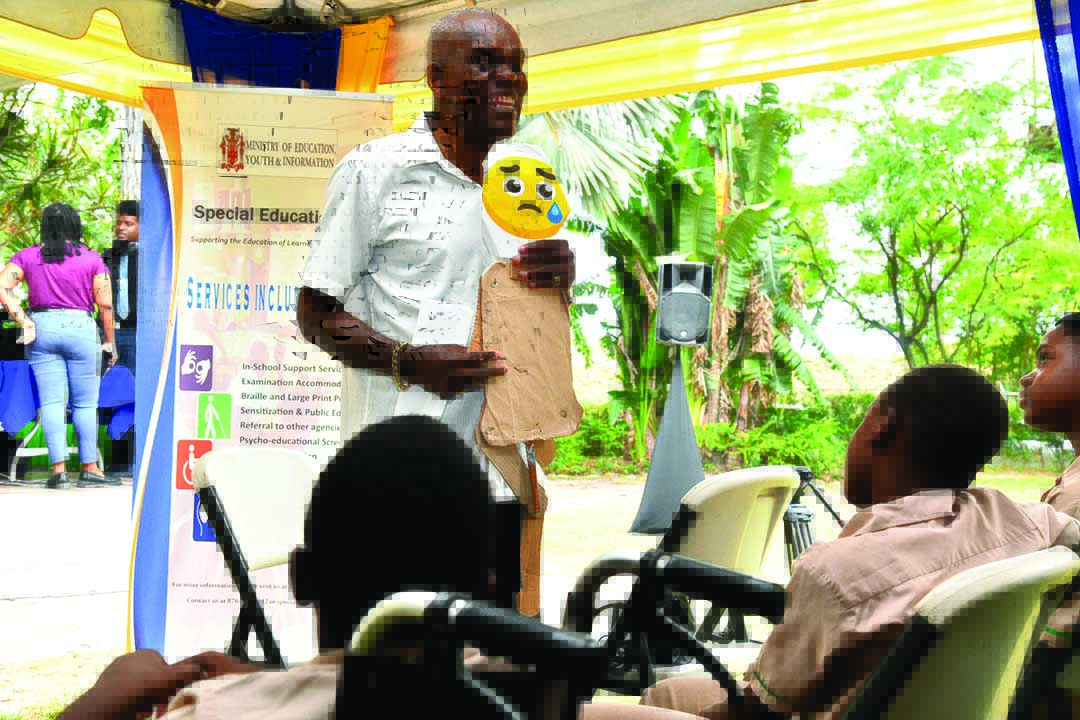
Visually impaired instructor, Dr. Hixwell Douglas, guides a session with special-needs students at the Ministry of Education, Skills, Youth and Information's Child Conversation Special Edition event.
-
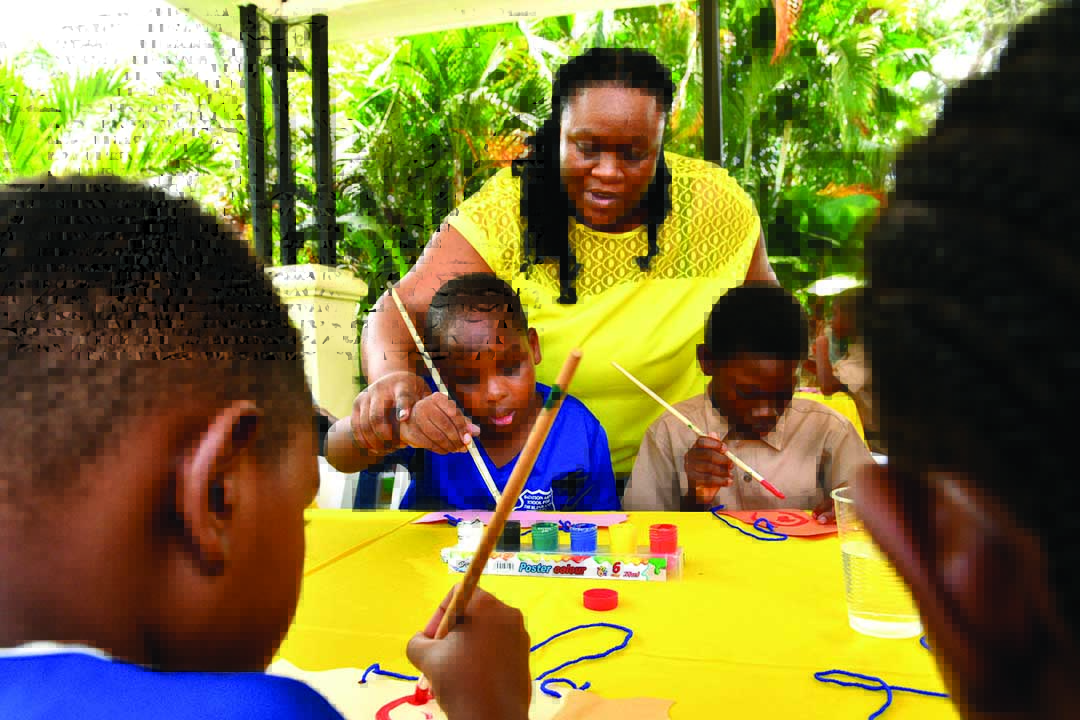
Guidance counsellor, Lister Mair/Gilby High School for the Deaf, Chavelle Leckie Reid, assists a student during a painting session at the Ministry of Education, Skills, Youth and Information's Child Conversation Special Edition event held recently at Hope Zoo, St Andrew. Contributed photos
Some 40 students from five special-needs schools in the Corporate Area benefited from a wellness session aimed at better enabling them to navigate emotional challenges and manage daily stress.
The recent session, held at Hope Zoo in St Andrew, was undertaken as part of the Ministry of Education, Skills, Youth and Information’s ‘Child Conversation – Special Edition’, in observance of Child Month.
It provided the children with a safe, inclusive space to express themselves, discuss mental wellness, unburden their stresses, and learn about their rights.
The students, who are blind, visually impaired, hearing-impaired and deaf, were chosen from the Danny Williams School for the Deaf, Salvation Army School for the Blind, Hope Valley Experimental School, Randolph Lopez School of Hope and Carberry Court Special School.
Senior director in the ministry’s Child Affairs Policy Division, Hyacinth Blair, said the day’s activities focused on teaching students to accurately name and communicate complex feelings.
She said it was about “facilitating the safety and mental well-being of the children and encouraging them to express themselves when they are not feeling emotionally well”.
“We know that the issue [of mental wellness] is something that happens in their counselling at school, but today, we gave them a little different focus. So, it’s not just talking to them and getting from them their feelings, but also naming their feelings. We want them to know key persons they can speak to when they are experiencing these feelings, and to also know what they can do [to cope],” she added.
The students engaged in interactive and engaging activities, such as drawing, dancing and blowing bubbles.
“[These are] things that they do not need a lot of money to do; things that they can do themselves to feel a little better,” Blair pointed out.
The children also benefited from tips to keep themselves safe, such as not talking to strangers on the Internet, safeguarding their personal data, and not accepting rides from strangers.