Leakage lockdown
Loading article...
-
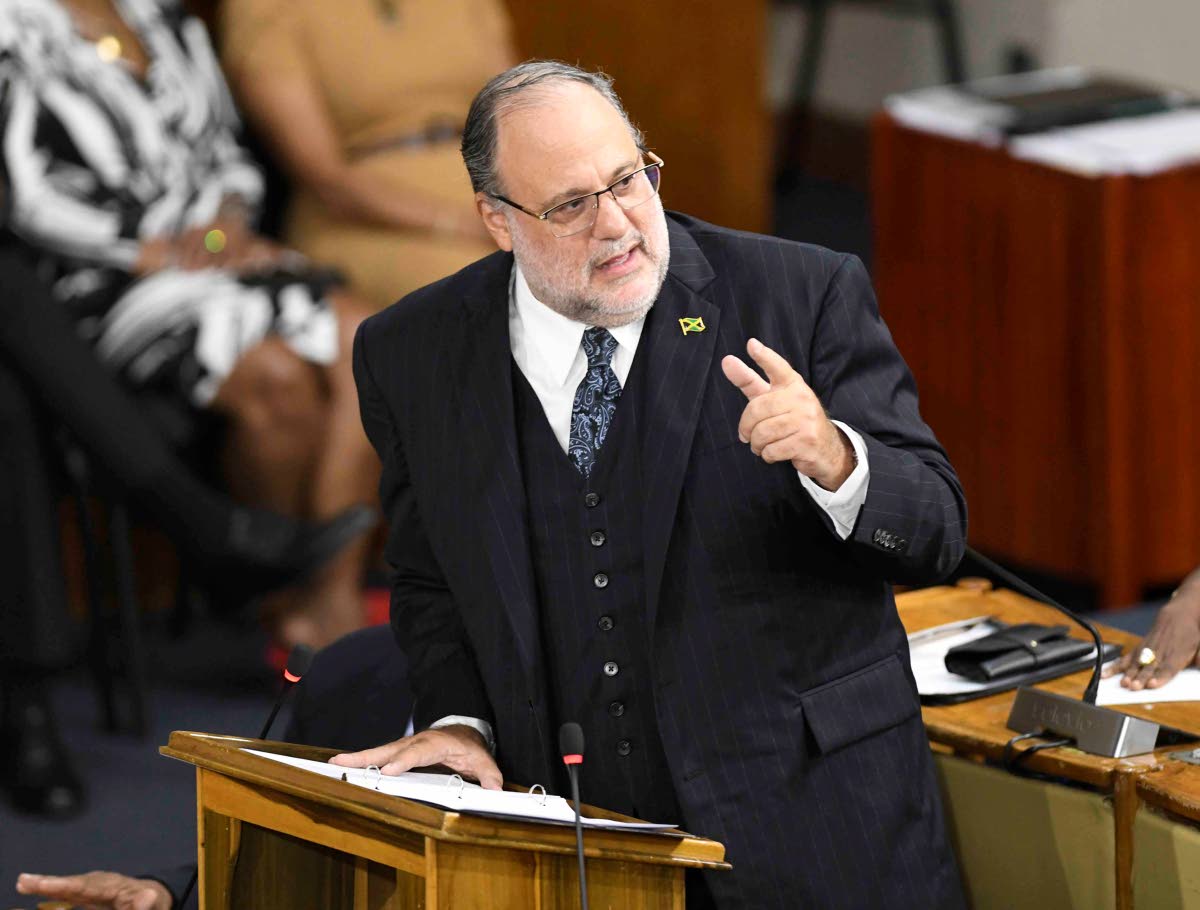 Opposition Leader Mark Golding making his contribution to the 2026-2027 Budget Debate in the House of Representatives yesterday.
-
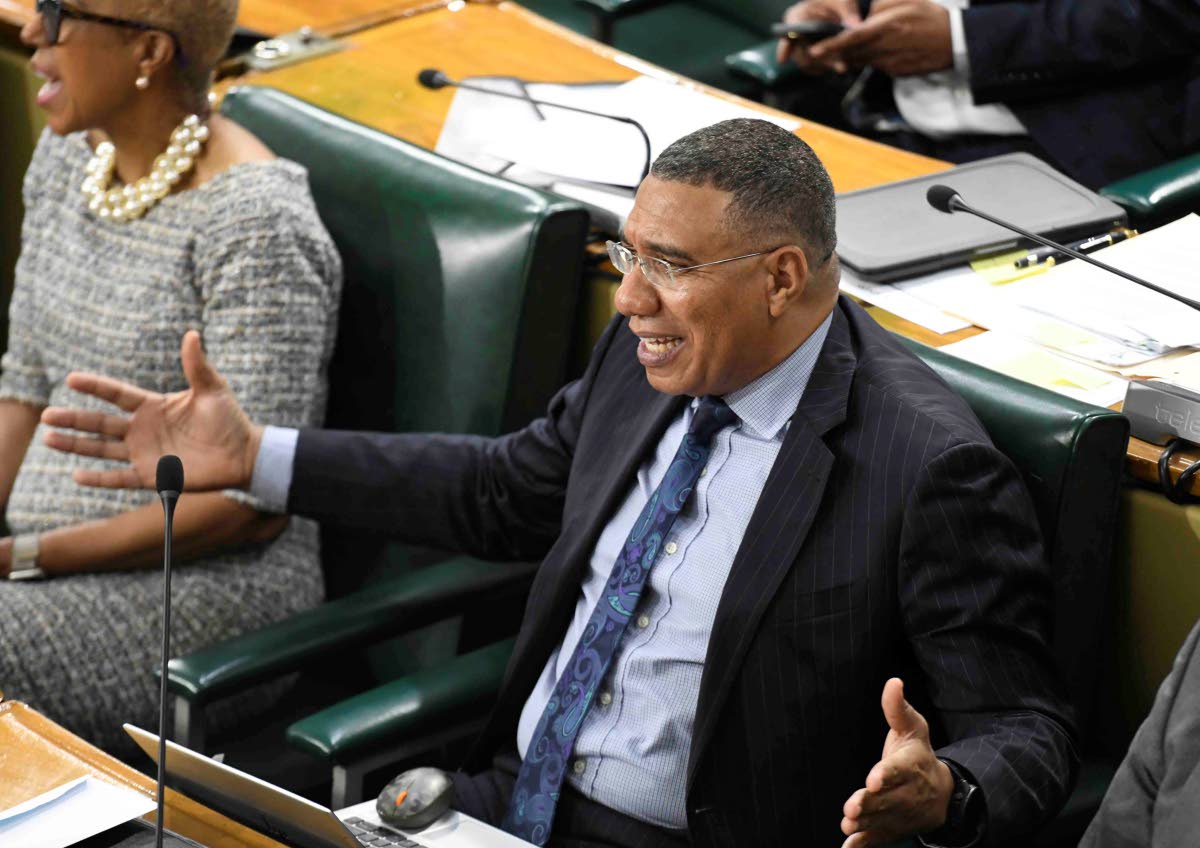 Prime Minister Dr Andrew Holness reacts as Opposition Leader Mark Golding makes his contribution to the 2026-2027 Budget Debate.
Opposition Leader Mark Golding is proposing a digital dragnet that he says could cut tax leakages and pump approximately $70 billion into the Government’s coffers while describing the Holness administration’s $18-billion tax package as “unimaginative”.
Golding, who was making his contribution to the 2026-2027 Budget Debate in the House of Representatives, said yesterday that the proposal, which “urgently needs to be pursued”, is an alternative to the Government’s incoherent plan put forward to fund the Budget.
He argued that combined, the post- Hurricane Melissa hardship, the war in the Middle East, and the Government’s tax package form a “toxic cocktail”.
“It will be bitter medicine for the Jamaican people,” said Golding.
The opposition leader said his proposal is aimed at creating an integrated digital data network designed to bridge the current silos between general consumption tax (GCT), Customs, and payroll filings.
“The design of a tax system determines its performance more than its statutory rates. Where systems are fragmented, revenue leaks. Where systems are integrated and digitally verified, compliance becomes automatic,” said Golding.
He added that “some estimates suggest that the improved realisation across key revenue categories could yield $60 billion annually without increasing statutory rates”.
Golding said the next stage of Jamaica’s economic reform should not be about increasing tax rates, calling this a “lazy, unimaginative approach” being taken by the Government.
“We say no to that. It is bad economics and will be damaging to the economy and the Jamaican people in our current circumstances. The next stage should be about ensuring that the taxes that are already on the books are fully and fairly realised,” he stressed.
EXAMPLE OF THE PROPOSAL
He pointed to Opposition Spokesperson on Finance Julian Robinson’s proposal of a $10-billion revenue plan that would rely on an electronic invoicing system to improve tax compliance, calling it an example of the proposal.
On Tuesday, the opposition leader furthered the proposal, asserting that a modern compliance system would automatically link income tax declarations to GCT turnover data, Customs imports, payroll filings, beneficial ownership records, director compliance histories, and municipal approvals.
Drawing on examples, he said income tax, which is the largest tax type, is projected to yield $342 billion in the upcoming 2026-2027 fiscal year.
He said that in this case, leakage flows from artificial loss positions, profit declarations that bear little resemblance to import volumes or sector margins, weak withholding adherence, and payroll inconsistencies.
“The fundamental issue is structural,” he said. “Tax filings are treated as isolated submissions rather than nodes in an integrated economic data network.”
Golding said aligning import data with tax declarations ensures that company turnover and profits are accurately reported, preventing artificial tax losses. He noted that a five per cent boost in effective income tax realisation through this data synchronisation would generate $17 billion in annual revenue without increasing tax rates.
Further, he said digital valuation and automated reconciliation of import and construction data can eliminate revenue leakage by flagging real-time outliers between physical activity and tax filings.
Added to that, he said integrating building permits with tax systems would benchmark project costs against reported returns, potentially yielding $11 billion annually from improved compliance.
Golding also pointed to a possible reconciliation of work permit data with payroll filings, noting that in 2024, more than 5,000 work permits were approved.
He argued that if a company holds 10 active work permits but files payroll for only 10 employees, the discrepancy should trigger an automated review.
He said fixing this could generate $250 million annually, reinforcing a simple principle that every compliance node must connect.
“…If well executed and taken together, these systemic reforms could yield additional revenue per year of close to two per cent of GDP without increasing taxes. That is not incremental reform. It represents additional fiscal space of 10 per cent of GDP over five years. It is achievable not by increasing the tax burden but by being smarter in how we utilise the architecture of the tax system,” said Golding.
“Jamaica does not need higher tax rates. It needs systems where invoices validate themselves. Where payroll reconciles with permits. Where imports reconcile with profits. Where building approvals inform tax returns. Where risk detection becomes structural rather than episodic,” he added.
He said revenue integrity should be a priority on the fiscal agenda rather than “burdening” the population with new taxes in an economic slump.
editorial@gleanerjm.com