Cannes Film Festival grapples with the rise of AI
Loading article...
-
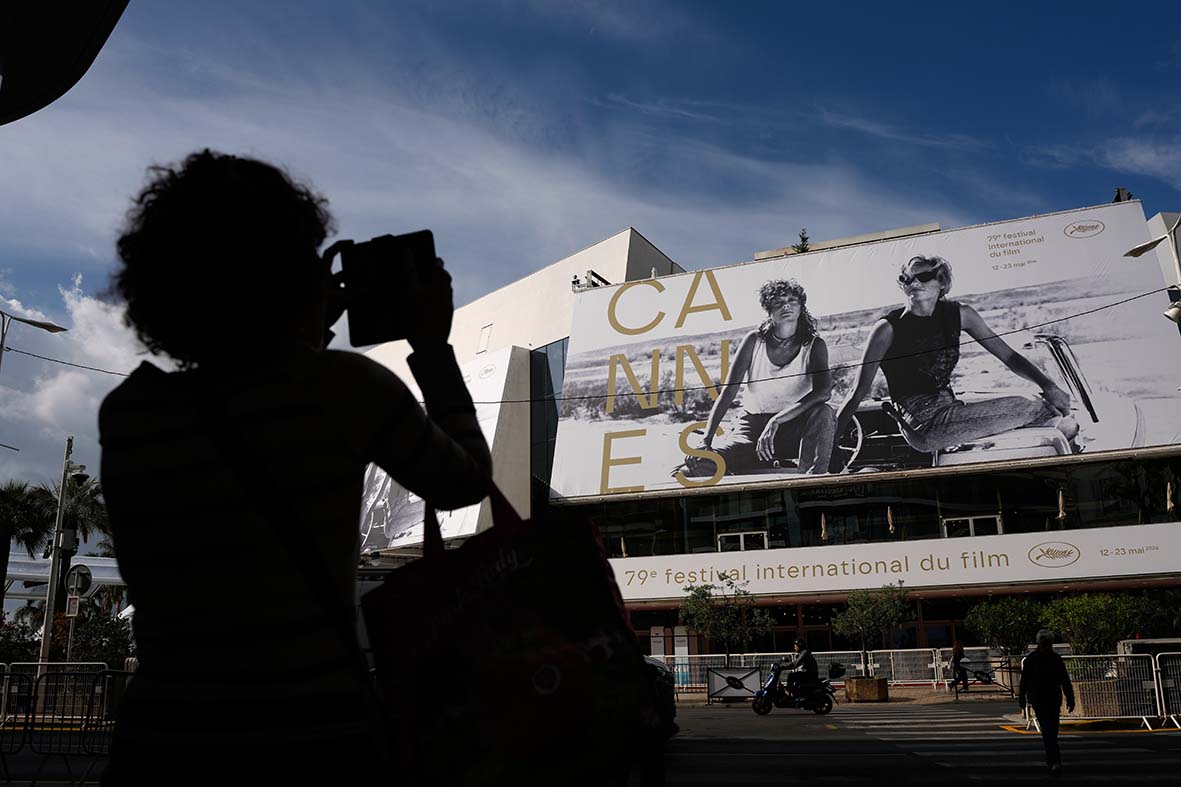
A person takes a photo outside the Palais des Festivals during preparations for the 79th international film festival, Cannes, southern France, Monday, May 11. (AP photo)
-
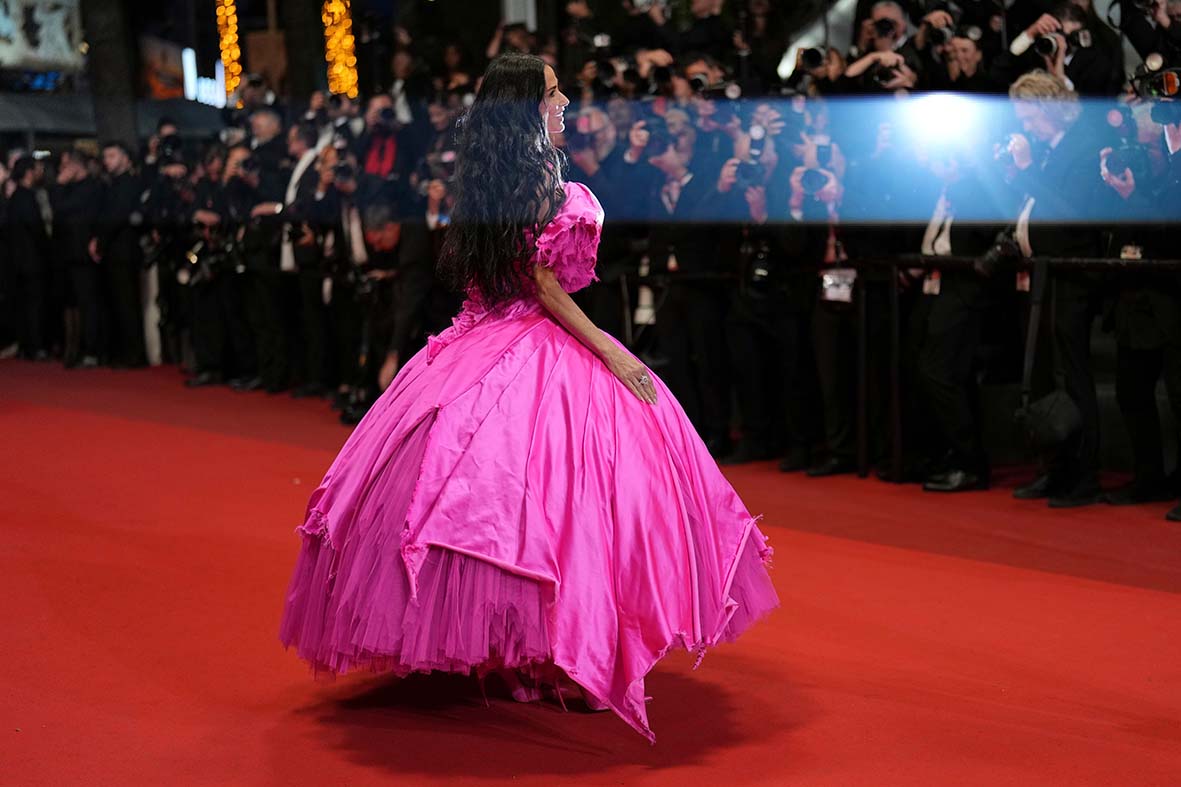
Jury member Demi Moore poses for photographers upon arrival at the premiere of the film ‘Paper Tiger’ at the 79th international film festival, Cannes, in southern France, last Saturday.
CANNES, France (AP) — The Cannes Film Festival can function like a global water cooler for movies, with prevailing issues and anxieties tending to come to the surface at the event. This year, the topic du jour is artificial intelligence.
The 79th Cannes may go down as the time the world’s grandest film festival for the first time wrestled with the onset of AI — its arrival has been felt like a tsunami on the French Riviera. Its potential to remake the movie industry, for good or bad, has been an ongoing debate since the festival opened. And
in many quarters, the tone is softening.
“The buzz in Cannes and the buzz in the industry, it does feel like it’s definitely a turning point,” said Scott Mann, co-chief executive of Flawless, a company that specialises in assistive AI programmes for post-production.
For the first time, Cannes has partnered with Meta in a new multi-year deal. The company has set up camp at the Majestic Hotel. And its AI tools were used to help produce a festival entry: Steven Soderbergh’s John Lennon: The Last Interview. The documentary is about a lengthy and insightful interview Lennon and Yoko Ono gave on the day Lennon was shot and killed in 1980. To add imagery to match Lennon’s conversation, Soderbergh used Meta’s AI programmes to create surreal graphics.
The choice brought scorn from most critics in Cannes, but Soderbergh, a highly skilled innovator who has shot movies on iPhones, believes it is time for such experimentation.
“We haven’t seen yet someone with a certain amount of creative credibility go full-metal AI on something, and see how people react. I think it’s necessary,” Soderbergh said in an interview. “How do you know where the line is until somebody crosses it? I don’t think what I’m doing crosses it.”
Filmmakers, actors and others at Cannes have been drawing their own lines, or at least making pronouncements about AI. On opening day, Demi Moore, a juror, said fighting AI “is a battle we will lose.” The next day, honorary Palme d’Or recipient Peter Jackson, said: “I don’t dislike it at all. To me, it’s just a special effect. It’s no different from other special effects.”
Filmmaker James Gray was one of the standouts over the weekend, said he is not worried.
“I don’t think in our lifetime, or even our children’s lifetimes, it will come close to mirroring the only true infinite we know, which is the soul.”
CHANGING LANDSCAPE
Cannes is unfolding in the wake of some significant new developments for AI in Hollywood. Earlier this month, the Academy of Motion Picture Arts and Science announced new guidelines, ruling that only performances “demonstrably performed by humans with their consent” will be considered for acting nominations. At the same time, the Oscar group also said AI tools “neither help nor harm the chance of a nomination”.
Some advancements have sent shudders through Hollywood. The unveiling of Tilly Norwood, an entirely AI-created so-called “actress,” sparked outrage through the industry. Earlier this year, the first look at a posthumous AI resurrection of Val Kilmer, for a film made with his family’s consent, spawned another round of debate. But while more extreme uses of generative AI continue to prompt worry, other iterations continue to make inroads.
“It is going to be a part of our business,” Kent Sanderson, Bleecker Street chief executive, said in a panel discussion. “It is going to lower production costs, and yes, you probably will be able to make something that looks like a Marvel movie in your basement in a couple of years.”