Lascelve Graham | The role of sports in public schools
Loading article...
-
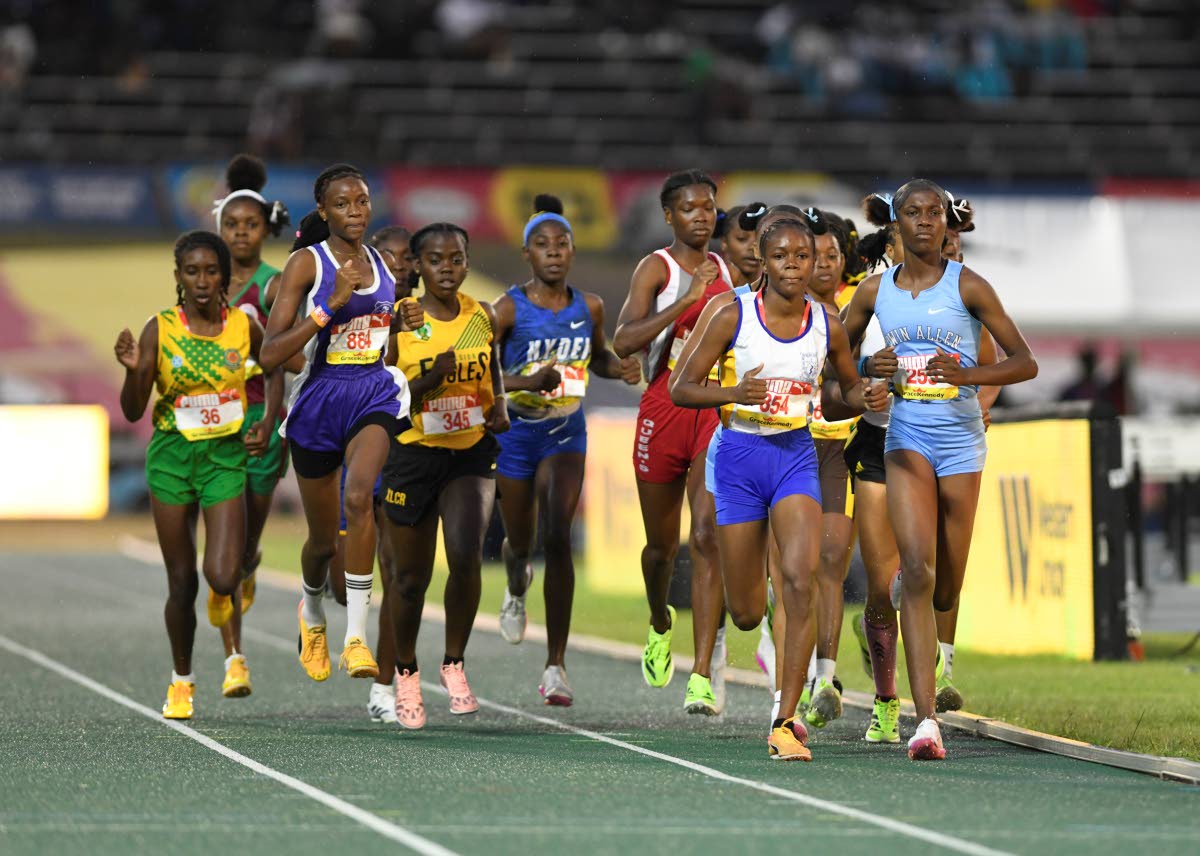 This March photo shows Girls 3000m race underway at the ISSA Boys and Girls’ Championships at the National Stadium. Photo - File
-
This March photo shows Girls 3000m race underway at the ISSA Boys and Girls’ Championships at the National Stadium. Photo - File
-
 Lascelve Graham. Photo - File
In a letter to the editor dated October 21 ‘What is the real scam?’, a very erudite Trevor Smith took Dr Dennis Minott and myself to task because of our expressed distaste for the win-at-all-costs approach to sports by the public schools. He attacked us on three important fronts:
The primary mission of public schools, as Dr Minott pointed out in his letter and referred to by Mr Smith, is the preparation of young Jamaicans for life through academic, technical, and vocational education.
Second, but very important, public schools are to assist in the socialisation of children. Public schools are key agents of socialisation, especially in Jamaica, where so many families are overwhelmed and deficient, for different reasons.
SPORTS AS A VOCATION
According to the Cambridge Dictionary, a vocation is “a type of work that you feel you are suited to doing and to which you should give all your time and energy”. It is a strong urge, inclination or calling to follow a particular career, trade or way of life. Therefore, just about any pursuit can be vocational. One can have a vocation for law, medicine, engineering, music, community work, dressmaking, cooking, dancing, animal advocacy, ministering, sports, etc.
However, the public school cannot be all things to all people. Hence, for efficiency and effectiveness, it has to specialise, have a niche, and has to prioritise. In keeping with its academic/technical emphasis, the public high school therefore focuses on vocations which require an academic or technical foundation and may in future demand formal degrees, examinations, board certifications, and adherence to external ethical codes or regulatory bodies. These are vocations covered, at least in part, by formal secondary education.
The development of sports talent does not fall within the remit of the public school, and should be undertaken by sports academies, clubs, and other institutions specialised for this purpose.
Smith presents a strong case for the formation of many more of these entities by the government and/or the private sector, since they provide such an important service. We have had more than ample time to develop these facilities.
SCARCITY
There is a scarcity of what are considered ‘better’ schools in Jamaica. This means, unfortunately, that many deserving students will not be able to get into these schools. In an attempt to make the best use of scarce educational resources, and to try and ensure that those best equipped to use these resources get the opportunity, Jamaica has set up a merit system which places children based on how they do in an exam.
It is irrational, unreasonable, and wasteful to have youngsters who are inadequately or less prepared to use these scarce educational resources (barely literate or numerate, or less so) taking the places of those who are more so. Children who show intellectual potential should not be so penalised.
The competition is so fierce, and so important, as to almost cause trauma in some families. Let us say someone from the ghetto is next in line to get into a ‘better’ school, after having undergone all the sacrifices and challenges that accompany poverty. Is it fair that such a child is denied entry because his or her place is taken by a better ‘baller’ (a double standard)? Remember, schools have limited space, so, when a child is brought in, another is kept out. One child may prioritise studying while the other is kicking a ball outside.
Public specialised educational institutions are now giving preference to the baller because of the mindset that they must win at all costs. It has absolutely nothing to do with the welfare of the child. Children are brought in from institutions that have excellent facilities and coaches (e.g., sports academies, other traditional schools). Many of the athletes, who went on to do Jamaica proud, were made very tempting offers by powerful Kingston schools to transfer. Thank heavens they refused.
ROLE OF SPORTS
The role of sports in public schools is primarily as a teaching-learning tool geared towards helping to socialise the children, as an extracurricular, co-curricular activity. It also serves a health function as physical education.
Sports as a microcosm of life can be a powerful medium for teaching young people life skills, conflict resolution, cooperation, behavioural, emotional, social, and technical expertise, values, and attitudes. It is a way of helping to deliver a holistic, rounded, horizon-widening education to those children who have entered the school in the normal way. Sports, along with other extracurricular activities, offer a more practical way for them to learn life lessons more difficult to teach in the classroom.
Whereas public schools may discover sports talent, they should not be the developmental arms of the various sports associations. This is the responsibility of the associations, sports academies and clubs, or other institutions. To win at all costs, schools recruit for sports purposes, thus corrupting and undermining the purpose of sports in school and denying regular students (“nerds” and others) an experience (exposure and lessons) they have earned and richly deserve. The mission of sports in public high schools (socialisation) is different from the mission of sports academies and clubs (development of sports talent).
Sports in high school now are intensely competitive. To compete, schools recruit based on sports ability. To win in football or track and field, one has to recruit heavily, starting from first form. One youngster some time ago told the principal of a renowned high school that he didn’t have to take GSAT and that, before the results were announced, he could tell the traditional high school he was going to attend. When asked how he could do that, he said he had already gotten a sports scholarship to attend that school.
Let us focus on improving the education system so that children willingly attend the school nearest to them. The win-at-all-costs mentality, masquerading as compassion, is distorting the system further by using public schools as sports academies and clubs.
Dr Lascelve Graham is the former Manning Cup, All-Manning, All-Schools and Jamaica football team captain. Send feedback to columns@gleanerjm.com.