Kristen Gyles | Who to believe the next time?
Loading article...
-
-
-
 Kristen Gyles
They say a picture is worth a thousand words. What of a video? One might watch the CCTV video footage of the fatal police shooting of Latoya Bulgin and be tempted to question the motive of the officer who pulled the trigger.
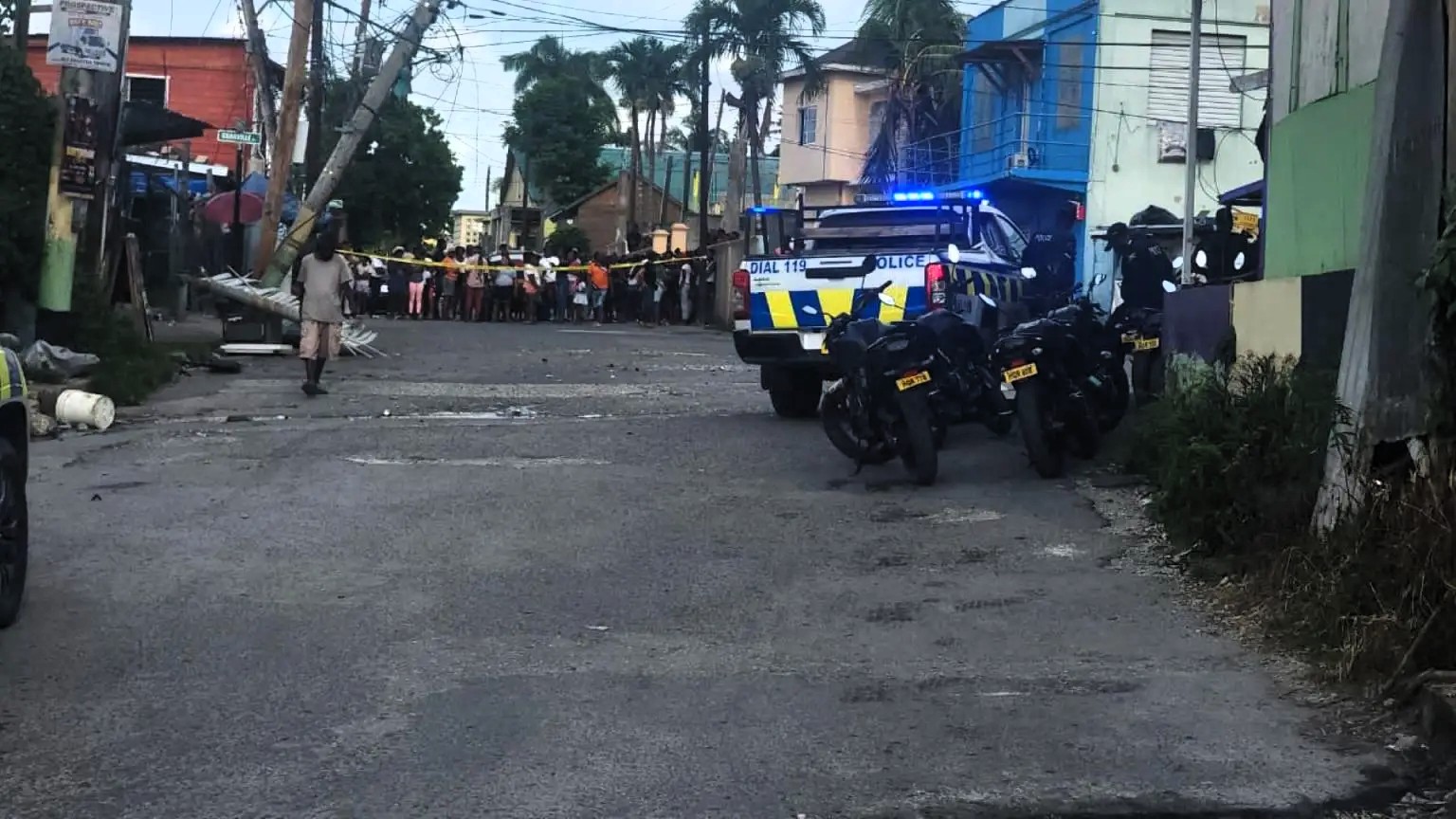
For context, Ms. Bulgin was a 45-year-old woman who was shot on Sunday by a police officer in Granville, St. James, near a planned protest in relation to the recent police shooting of a young man from the area. The CCTV video footage around the time of the incident shows Ms. Bulgin getting out of her minivan to speak face-to-face with the officer, before getting back in. The officer remains standing a few feet in front of Ms. Bulgin’s minivan, facing the vehicle. After a few moments, Ms. Bulgin’s minivan is seen moving off but only travels a distance of about two feet before the officer pulls out his weapon, points it at Ms. Bulgin and pulls the trigger.
Ms. Bulgin is now dead.
Someone wanting to give the officer the benefit of the doubt may wonder what happened. Was he frightened? Did he panic? Did his mind go for a walk? What happened? His actions after the pulling of the trigger seem to answer those questions. Moments after the shooting, the footage shows the police officer and his colleague removing Ms. Bulgin’s body from her vehicle and putting her in the back of a police van. Ms. Bulgin was pulled from the car, put on the ground and eventually lifted by her hands and feet by the officer and his colleague and thrown into the back of the police van. She was handled carelessly and callously, which in itself, is telling.
The attitude of the officers in removing Ms. Bulgin’s body from her car indicates that they had perhaps assumed that she was dead. This may not have been the case at the time. However, even if she was already deceased, the footage betrays both a lack of sensitivity and remorse for the deceased and a lack of sensitivity for those who stood by watching what had happened.
From the looks of it, the essence of the situation which left Ms. Bulgin lifeless seems to be that a police officer’s fragile ego was bruised. It is alleged that the officer had a previous interaction with Ms. Bulgin which was less than pleasant, and that further, the conversation between the officer and Ms. Bulgin on the day of the incident related to the seizure of her vehicle. It is possible that Ms. Bulgin was attempting to leave the scene. We cannot say for sure. However, even if this were the view of the officer, it is inexcusable that his reaction would be to shoot the woman.
QUESTIONABLE INCIDENT
This is not just another questionable incident of possible police misconduct. This is not a ‘he said, she said’ situation. It is a clear case of a woman being shot in cold blood by a police officer. However, the facts of the matter are only clear because of the emergence of video footage. What would have happened had the incident not taken place in full view of a CCTV camera? Who should we believe the next time?
What is very telling about the incident is that there is an evident lack of trust between residents of Granville and the police. One of Ms. Bulgin's passengers was interviewed by a reporter and made the following comments:
“Di people dem send out di video too quick … Mi wanted di police version first. Di people dem nah use dem brain. Dem love social media too much. Dem nuh know when to act.”
The passenger’s comments are very telling. What she is insinuating is that were the CCTV footage not released quickly, the police officer and his colleagues would have probably fabricated a story that paints the victim as an aggressor. In other words, she wishes that those who released the footage would have capitalized on the opportunity to test the police’s integrity. The woman’s response indicates a level of mistrust for what the police have to say.
IMPLEMENT BWCs
Whether the Police High Command wants to admit it or not, this trust issue is not one that can be solved overnight, and the easiest and simplest way to solve it at this point is actually the implementation of body-worn cameras (BWCs). With every additional police shooting incident where an individual ends up dead, the police's account of events is viewed with increasing suspicion and skepticism. The explanation is simply that in light of the recent increase in the number of fatal police shootings, the apparent resistance towards the full operationalization of BWCs across the force, has fueled mistrust.
The Police High Command seems to have interpreted the call for the use of BWCs across the force as an attack on the JCF, when in reality, it may very well be the only remaining lifeline for the reputation of the JCF, that is, within a context of declining trust.
To be fair to the leadership of the JCF, a statement issued promptly after the shooting on Sunday indicated that the High Command had ordered the immediate interdiction of the officer. It also said the Independent Commission of Investigations (INDECOM) and the Inspectorate Professional Standards Oversight Bureau (IPROB) had already commenced a full investigation into the circumstances resulting in Ms. Bulgin’s death. But, what now? Does the debate on the use of BWCs continue in perpetuity? With every delay in the adoption of BWCs as a widespread operational tool, trust continues to wane.
Kristen Gyles is a free-thinking public affairs opinionator. Send feedback to kristengyles@gmail.com and columns@gleanerjm.com