Editorial | New approach to jury law
Loading article...
-
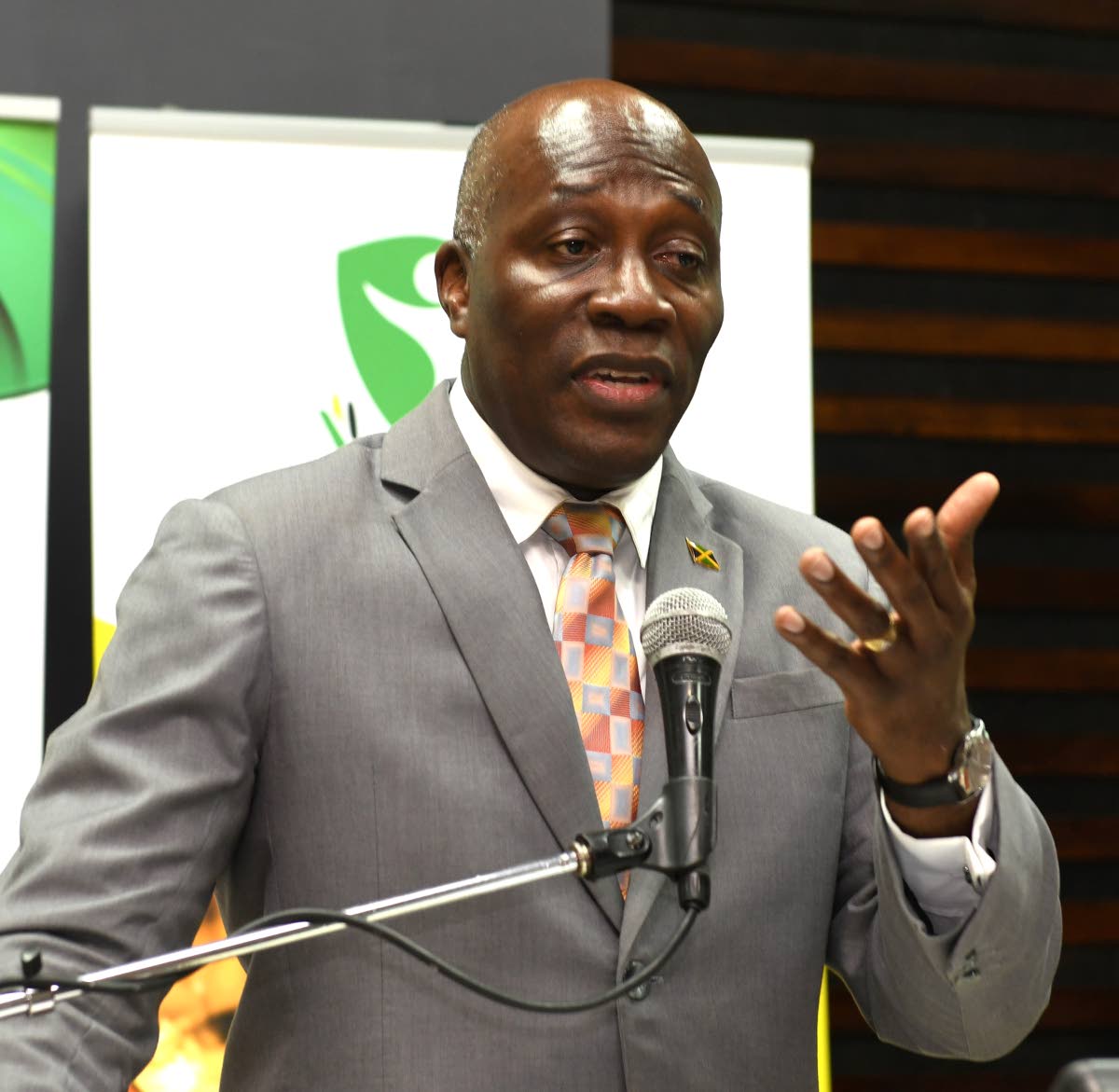
 Delroy Chuck, minister of justice and constitutional affairs, notes that in the event of the death of the witnesses to a will – or if they can no longer be located – a will should be rewritten. Photo - File
-
Delroy Chuck, minister of justice and constitutional affairs, notes that in the event of the death of the witnesses to a will – or if they can no longer be located – a will should be rewritten. Photo - File
-
 Chief Justice Bryan Sykes
The government was right to halt the parliamentary debate on amendments to the Jury Act given the several philosophical tensions inherent in some of the proposed changes.
However, the administration mustn’t merely make a few adjustments here or there, in an attempt to address the concerns of critics, before bringing back the bill. That is unlikely to address fundamental issues, and deprive critical stakeholders of a decent opportunity to lawmakers their critiques of the bill and, thereby, influence the shape of the legislation.
In that regard, this newspaper suggests two approaches to Delroy Chuck, the justice and constitutional affairs minister.
First, he should decouple the so-called Kartel Amendment – giving judges the right to discharge juries and proceed on their own in certain instances of jury contamination – from the current omnibus package and proceed with that separately, at this time.
The other proposed changes, and in particular the sort of backdoor, half-way house approach to almost making bench trials the default in Jamaica, to which The Gleaner is highly sympathetic, should be referred to a joint select committee of Parliament for hearings. Passing the bill, then referring it to such a committee, which seems to be Mr Chuck’s intended plan, would be tantamount to placing the cart before the horse.
There is nothing particularly contentious about the Kartel Amendment, so named because of its association with the Jamaican dancehall artiste Vybz Kartel (Adidja Palmer) who was freed of murder in 2024 after spending a decade in prison. The matter turned on what a judge, faced with narrow choices, failed to do when confronted with allegations that a member of the jury had attempted to bribe fellow jurors to return a not-guilty verdict.
LIFE SENTENCES
In 2014 Kartel and three associates – Shawn Campbell, Kahira Jones, and Andre St John – were given life sentences for the murder of a colleague Clive ‘Lizard”\’ Williams, allegedly over Williams’ failure to return illegal guns that were in his possession for safekeeping.
Early in the long, complex trial that lasted 64 days, one of the jurors was dismissed, having reported to the judge that she had come face to face with one of the accused while visiting her son at a lock-up. She apparently became fearful for her son.
Then on the trial’s last day, a forewoman of the jury reported to the judge that a fellow juror had offered her J$500,000 to use her influence to ensure acquittals in the case.
It transpired during a chambers review that all the jurors may have separately received the bribe offer. Defence lawyers argued for the dismissal of the jury and abandonment of the case.
On the other hand, prosecutors were in favour of taking chances with the existing jury, even the allegedly corrupt member, whose removal would have reduced the panel to below the then threshold for murder trials.
The judge sided with the prosecution. However, the London-based Judicial Committee of the Privy Council (JCPC), Jamaica’s final court, held that continuing the trial with the existing jury, including the “miscreant”, affected the right of Kartel and his fellow accused to a fair trial.
Among the arguments of the UK judges was the possibility of those jurors who rejected the bribe, whether consciously or unconsciously, overcompensating, resulting in bias against the defendants.
And in a situation where there was no legal basis for the judge to continue the case on his own, the only cure for mischief was dismissing the jury.
SUPPORTS AMENDMENT
Against that backdrop, this newspaper argued for, and supports, the amendment to the Jury Act to give judges the choice, in instances of jury tampering, of abandoning trials and ordering new ones, with or without juries, or continuing cases on their own if it would be “fair to the defendant”.
The Gleaner remains sympathetic, with some specific allowances for juries, to Chief Justice Bryan Sykes’ campaign for Jamaica to move primarily to judges only, on bench trials. We, however, believe, and have called for, full airing of the issues, including data, domestically and internationally, of the outcomes of jury and bench trials.
While we appreciate the proposal for pre-trial hearings to determine if a trial should be conducted by a judge alone if there are credible fears of jury tampering, this matter should be part of a broader review of whether the entire jury system would benefit from a robust analysis and discussion, beyond the contributions of a few legislators in Parliament and much desk-thumping by backbenchers. Indeed, if jury trials are to remain the standard, a rethinking of the large groups of people who are exempt from jury duties will have to take place.
Further, we are profoundly concerned by the provisions in Mr Chuck’s amendments that would not just allow participants in civil cases to elect whether to have jury or bench trial, but that the party who chooses a jury has to pay the jurors, albeit through the courts.
That is a fundamental departure from the principle of justice not only being done, but demonstrably seen, and perceived to have been done.
This issue, too, deserves widespread debate before being passed into law.