Lloyd Barnett | Parliamentary cabinet system versus executive presidential system
Loading article...
-
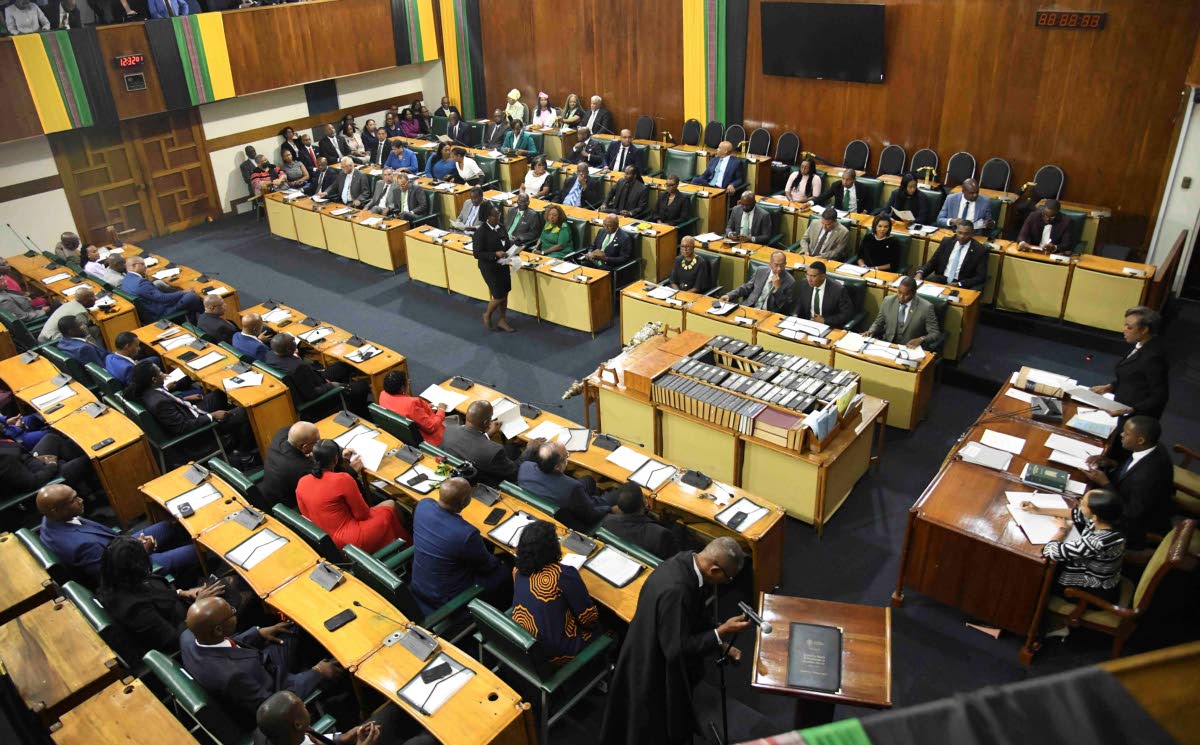 In this September 2025 photo, members of parliament are seen at a sitting in Gordon House.
-
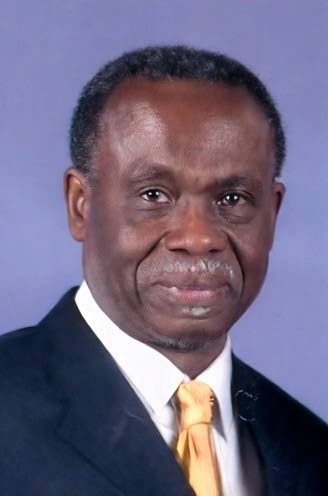 Lloyd Barnett
In the previous article of this series, I dealt with the merits of the Jamaicanisation of our Constitution by removing its monarchical labels and form. One result of this is that Jamaica will become a republic. There are some who argue that these changes would be merely cosmetic and valueless and that we should have a radical change in the nature and structure of our constitutional system.
Some support for this so-called radical change comes from persons who wish to participate in a direct election of the head of the government. Others advance the adoption of a presidential form of government rather than the parliamentary cabinet system which we now have.
While it is true that the abolition of the monarchical form and the adoption of republicanism do not by themselves effect any fundamental changes to our constitutional structure, these changes should not be condemned on the ground that they are merely idealistic. We should not ignore the value of idealism. National Hero Marcus Garvey said: “The man, the race or nation, that is not prepared to risk life itself for the possession of an ideal, shall lose that ideal.”
The second view given for making a radical change from our present parliamentary cabinet system is that the electors in the presidential system are given the specific opportunity to vote for their choice of the person to be the head of the government, while in the parliamentary cabinet system it is the Parliamentarians who make this decision. This is far from accurate, since in the parliamentary cabinet system it is generally known that the leaders of the contending parties are the prospective heads of the government as he or she is the leader of a team which presents him or her in that capacity.
The third reason given by those who propose we change to the presidential system is that our present system promotes inefficiency and corruption in public administration. This position is inconsistent with the historical evidence and the assessments of reputable international organisations. There is no doubt that countries which have the parliamentary system are among the most stable democracies and are generally highly rated on the World Economic Indices, as well as the international indices for the control of corruption and the preservation of fundamental justice and human rights. These include Australia, New Zealand, Japan, most CARICOM countries, Denmark, Estonia, Finland, Germany, Iceland, Norway, Sweden and Switzerland.
It should also be observed that many of these countries are not members of the Commonwealth, so that the use of the label “Westminster system” is inappropriate. On the other hand, countries with a high level of corruption and human rights violations mostly have the presidential system such as Venezuela, Chile, El Salvador, Argentina, Russia, Zimbabwe, Brazil, Uruguay and Peru.
PRESIDENTIAL SYSTEM
The tendency of the presidential system where one person assumes a personal individual status and has no answerability to a legislative body is for dictatorial tendencies to develop. Sri Lanka has suffered from this experience. As a result, Professor G. L. Peiris, in referring to the proposed new Constitution for Sri Lanka then being considered by that country’s Parliament, stated:
“There are several striking features. The most significant, of course, is the abolition of the Executive Presidency that is the centrepiece of the present Constitution. And we think the Executive Presidency has done a great deal of damage to our political culture, simply because it is too powerful. It represents concentration of too much power in the hands of one individual and one institution. It has produced polarisation in our political culture ... . The Executive President is above the law and is not accountable to Parliament, a negation of the Rule of Law. He is above Parliament. In all, the Executive Presidency has proved a disaster. It has militated against all checks and balances that are necessary for freedom, for liberty to flourish.”
Dr Simeon McIntosh, an eminent Caribbean constitutional law scholar, in a published article, wrote:
“Professor Juan Linz, of Yale University, in a monumental study on this very subject, has observed that, with the outstanding exception of the United States, most of the stable democracies of Europe and the Commonwealth are parliamentary regimes. In contrast, most of the countries with presidential constitutions have been unstable democracies or authoritarian regimes.”
At this time, there are many who would question Dr McIntosh’s description of the US as an outstanding exception to the undemocratic tendencies of the presidential system. Although there is need for improvement and safeguards in our current system, it is possible for us to adopt and implement measures which, if properly enacted, will reduce the incidences of maladministration and corruption without exposing us to the dangers of dictatorship.
Those who have advocated the adoption of the presidential system have failed to provide essential particulars of their proposal, such as what are the powers which will be granted to the executive president and what measures of control will be provided over his or her exercise of those powers. We have in our present system shown that it is within our capabilities to establish such institutions as the Judicial Services Commission, the Auditor General, the Electoral Commission of Jamaica and the Integrity Commission, which serve to preserve democracy, human rights and integrity.
In our future discussions, those who advocate the radical change to the presidential system will need to provide supporting evidence and rational arguments so that a wise and sound decision can be made.
Dr Lloyd Barnett is an attorney-at-law and author. Send feedback to columns@gleanerjm.com.