Sandals-Royal Caribbean deal includes 1,000-acre land bank
Loading article...
-
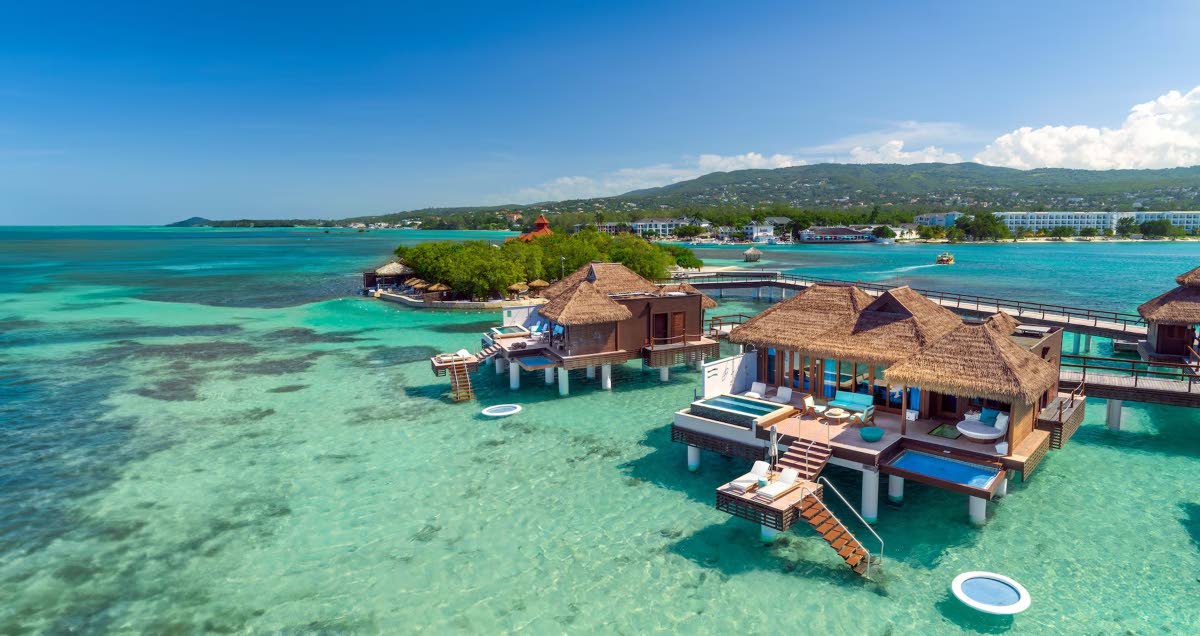 Sandals overwater villas. Photo - Contributed
-
Sandals overwater villas. Photo - Contributed
-
 Jason Liberty, Royal Caribbean’s chief executive officer.
Royal Caribbean Group said it will gain more than 1,000 acres of undeveloped Caribbean land through its planned 50 per cent stake in Sandals and Beaches Resorts.
The land provides a meaningful runway for growth, Chief Executive Jason Liberty said on an earnings call on Tuesday morning. He called the land bank one of the transaction’s most valuable assets.
“It’s not stuff that you can just go buy off the shelf. This has been curated, brilliantly, by the Stewart family,” Liberty told investors.
According to company filings and investor materials, the deal includes 18 operating resorts and three resorts under development, as well as the undeveloped land, some of which adjoins existing properties.
“There are other greenfield opportunities on other parcels of land that are inside this land bank,” Liberty said.
The Sandals and Beaches portfolio spans resorts in Jamaica, Antigua, Saint Lucia, The Bahamas, Barbados, Grenada, Curaçao, Saint Vincent and the Grenadines, and Turks and Caicos. Jamaica remains the group’s largest market, with seven operating Sandals and Beaches resorts.
Royal Caribbean announced the transaction on September 23. It will pay about US$3 billion for the 50 per cent stake, funded by committed debt financing from Morgan Stanley, which implies a US$6-billion valuation for Sandals and Beaches. The deal should close in early 2027, subject to regulatory approvals and customary closing conditions.
“The company’s share of earnings from Sandals and Beaches Resorts is expected to be immediately accretive,” Liberty told investors.
In the third-quarter filing, Royal Caribbean said the partnership would preserve the identity, operating leadership and Caribbean character of the Sandals and Beaches brands, while providing additional resources and capabilities to support growth.
Liberty said the business itself would largely fund Sandals’ expansion.
“The growth of this business is self-contained because this business generates a tremendous amount of cash flow,” he said.
He added that Royal Caribbean does not anticipate further equity contributions.
The acquisition pushes Royal Caribbean deeper into land-based vacations as part of a broader strategy to build a larger vacation ecosystem. It adds all-inclusive resorts to a portfolio that already includes cruises, private destinations and a river-cruise business.
“When our customers go into all-inclusive resorts in the Caribbean, they should be going to Sandals and Beaches,” Liberty said. “Collectively, we want to keep that customer in our ecosystem.”
Investors also asked whether the Sandals and Beaches brands could eventually expand beyond the Caribbean.
“The answer is yes. We think the Sandals brand, the Beaches brand, have great legs to it around the world,” Liberty said.
For now, however, Liberty said the company’s focus remains on expanding within the Caribbean.
The call followed another strong quarter for Royal Caribbean. Quarterly revenue rose 9 per cent to US$5.6 billion, while net income increased to US$1.7 billion, or US$6.45 per share, from US$1.6 billion, or US$5.74 per share, a year earlier. Adjusted earnings per share rose to US$6.57, exceeding company guidance, and Royal Caribbean raised its full-year adjusted earnings forecast to US$17.85 to US$17.95 per share.
The Financial Gleaner has sent questions to Royal Caribbean and Sandals asking how much of the land bank lies in Jamaica, which properties the acreage adjoins, whether Sandals, Beaches or other projects will use the sites, the estimated value of the land and the timeline for future projects.
carolyn.guniss@rjrgleaner.com