Yaakov Raskin | Can we all share one roof?
Loading article...
-
 Contributed
-
Contributed
-
 Raskin File
On September 8, Prime Minister Holness launched the Jamaica Reconstruction and Resilience Oversight Committee (JAMRROC), bringing together people from government, the Opposition, business, labour and faith communities to help guide the rebuilding after Hurricane Melissa. Opposition Leader Mark Golding attended and nominated a representative to serve on the committee. At a time when families are still rebuilding, leaders from opposite sides of the aisle have found common ground to help move the efforts forward.
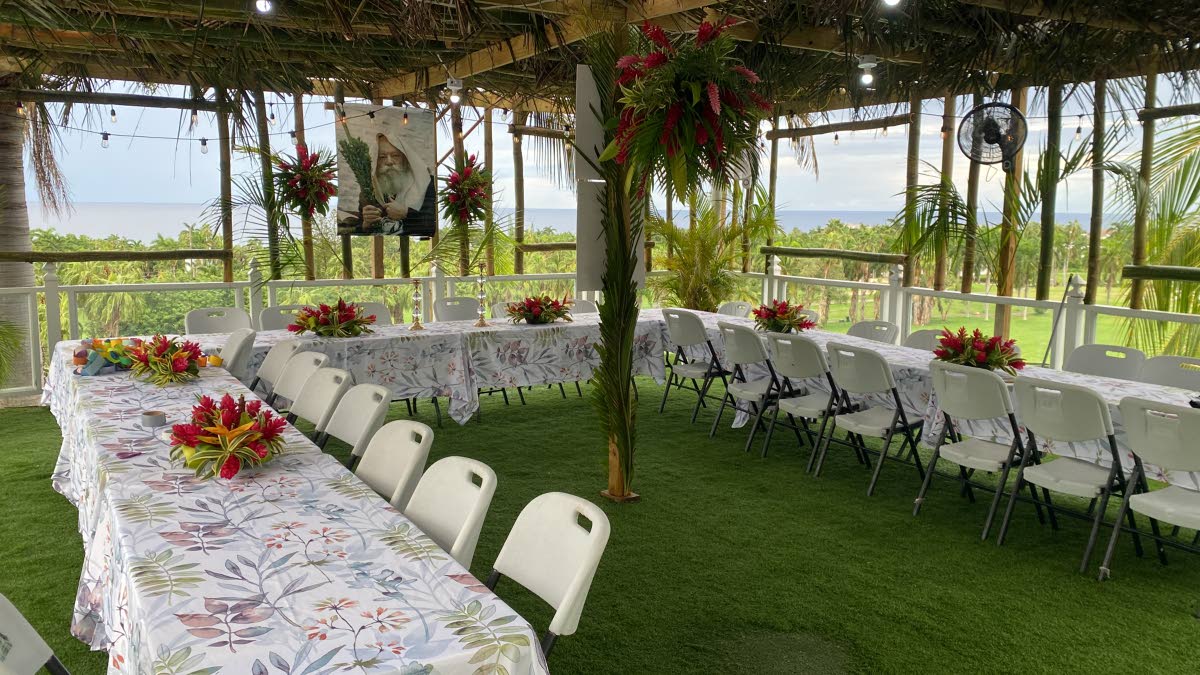
Watching people with different views take their places on the same committee brought to mind the Jewish holiday which began on Friday evening and continues through next Sunday. Jews in Jamaica and around the world are celebrating Sukkot, a holiday where we construct a temporary hut called a sukkah (plural: sukkot) and gather inside it to eat, talk, drink and celebrate. People enter with different experiences and opinions but, for a little while, share the same shelter under the stars.
The sukkah is built from natural materials and covered with branches, palm leaves or bamboo. The hut’s four walls are decorated to create a beautiful space for eating, relaxing and celebrating. If you have eaten at an open-air jerk spot, or passed by a thatched roof structure, you may already have a picture of something like a sukkah: a modest shelter where people sit together, share a meal, laugh, and linger in conversation. The sukkah symbolises G-d’s protection, as well as the temporary dwellings in which the Israelites resided during their sojourn through the Sinai desert on the way to the Promised Land.
While there are many Jewish rituals that involve the entire body such as immersion in a mivkah (ritual bath), and communal observances such as prayer with a minyan (quorum of 10 men), the sukkah is the only ritual that is both communal and encompasses a person entirely from head to toe. With other commandments, we worship G-d as an individual or with just one sense. However, when we sit and sing in the sukkah, we come together as a community, each with our entire being, representing the unity of all people despite external differences.
As I discussed last week, we also observe Sukkot by taking the Four Species: a citron (etrog), a palm branch (lulav), myrtle branches, and willow branches. On each day of the holiday except Shabbat, we bring them together, recite a blessing, and wave them in six directions, recognising G-d’s presence all around us.
Jewish tradition sees the Four Species as representing different kinds of people within our community. Each plant has its own qualities, and the commandment involves bringing all four together. When we hold the Four Species, none loses its own shape. Each has a place in our hands. The lesson is that unity does not require everyone to be the same. It asks us to recognise that we need one another because we enhance one another.
Jamaica’s motto, ‘Out of Many, One People’, expresses that same idea. Our multitudes of cultures, faiths and backgrounds create a unique melting pot where there is room for each of us to disagree, and our shared destiny is what keeps us working together.
The Lubavitcher Rebbe, Rabbi Menachem M. Schneerson, once gave a lesson in how we can find unity and transcend division. When one of his followers told him about a Jewish communal leader who strongly disagreed with him on an issue, to the point where there was significant tension, the Rebbe reminded him that the Torah contains 613 commandments. If they could not work together on that one, why not work together on the other 612? He encouraged his disciple to get to know the man on a deeper level and recognise the good he and his family could do.
That is a model for how we can all move past our divisions – be they in our homes, in our communities or in a nation. We do not have to pretend our differences are non-existent. But we should be careful not to let our disagreements overshadow everything else we share.
The Sukkot holiday is also referred to as Zman Simchateinu, the ‘Time of Our Joy’. Joy grows when we share it. If you are in Montego Bay this week, I invite you to visit our sukkah. Come see the Four Species, share a conversation, and experience for yourself what it feels like to sit together beneath one roof.
We will also be taking our mobile sukkah on the road, travelling by truck across several parishes to bring the joy of Sukkot and the mitzvah of shaking the Lulav and Etrog to fellow Jews throughout Jamaica. If you would like us to visit you or meet us along the way, please reach out.
The sukkah is temporary, reminding us that lasting security comes not from the walls around us, but from our faith and reliance on G-d. And perhaps its greatest lesson is one we can carry with us long after the holiday ends: to make room for one another, even when we disagree. Jamaica is home to many beliefs, backgrounds and ways of seeing the world. May we always remember that, beneath G-d’s great sky, there is room for us all.