Basil Jarrett | Jamaica’s next cyber crisis may not start here
Loading article...
-
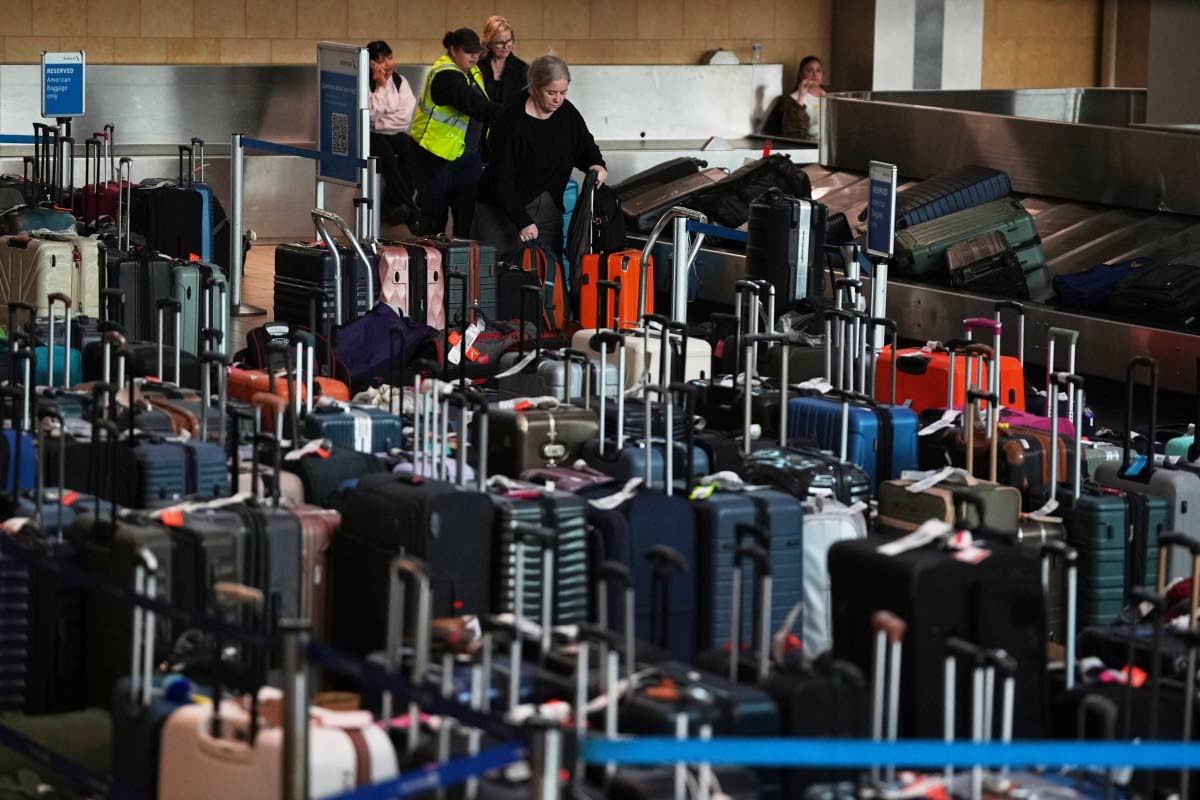 A woman moves past baggage at San Diego International Airport in San Diego, Monday, November 16, 2026. Photo - AP
-
A woman moves past baggage at San Diego International Airport in San Diego, Monday, November 16, 2026. Photo - AP
-
 In this posed picture a smart phone displays the Microsoft sign in page, in London, Friday, November 13, 2026. Photo - AP
There is an old African proverb that says. when elephants fight, it is the grass that suffers and. unfortunately for small countries like Jamaica, that proverb has always had an uncomfortable ring of truth. When the big economies go to war, our fuel prices move. When Wall Street catches pneumonia, our dollar starts coughing. When shipping lanes close, supermarket prices suddenly skyrocket. And now, increasingly, when the technological elephants stumble, the digital grass beneath them gets trampled too.
Over the past several days, the United States has experienced a remarkable string of highly disruptive technology failures. A nationwide Federal Aviation Administration ground stop halted departures across the country for hours after a network failure overwhelmed parts of the air-traffic-control systems. Thousands of flights were cancelled or delayed. The government blamed the breakdown on the difficult transition from antiquated infrastructure to newer fibre systems, with investigators examining whether faulty equipment or human error was responsible. Officials said there was no evidence of a cyberattack.
That week, Microsoft also suffered a major global outage affecting Outlook, Exchange and other Microsoft 365 services used by businesses and governments worldwide. The company said there was no indication of malicious cyber activity and attributed the disruption to technical problems associated with network changes and infrastructure capacity.
Then, earlier this week, customers at several major American banks reported trouble accessing accounts and completing transactions. JPMorgan Chase said a software bug affecting internal hardware systems was responsible and stressed that the problem was not cyber-related. United Airlines then joined the party with a widespread technology outage affecting departing flights. Again, the airline said there was no indication of a cybersecurity incident.
Different organisations. Different systems. Different explanations. But none dared to say what most people think: That the outages were not isolated and something wicked this way comes. For now, no evidence tying these events together exists, so we can extract a measure of comfort right now. Just don’t let that comfort make you completely miss the larger point.
WHEN TECHNOLOGY BECOMES INFRASTRUCTURE
Today, we have built modern life on systems most of us cannot see, do not understand, and simply assume will work. Banking, air traffic control, email, payments, even eating on a Friday night. One minute everything is fine, the next, somebody presses refresh and discovers that a system upon which millions of people depend has developed an attitude.
For Jamaica, dismissing these failures as somebody else’s problem would be dangerously naive. Our financial institutions use global technology providers. Our businesses depend on Microsoft, Google, Amazon Web Services and other international platforms. Our banks interact with overseas financial institutions. Our airlines connect into global aviation systems. Our economy increasingly relies on digital payments and interconnected networks. And, as Jamaica was reminded only weeks ago, our own critical systems are not immune. Because, beneath all the talk about routers, vulnerabilities, ransomware and fibre-optic cables sits something much more valuable.
Trust.
TRUST IS NOT A PUBLIC RELATIONS WORD
Executives sometimes speak about trust as though it belongs somewhere between the annual report and the corporate Christmas message. But trust has economic value.
For a generic industry such as banking, it may be the most valuable asset a company can possess. Customers deposit their life savings because they trust the institution will still be there tomorrow. Businesses process payroll because they trust the payments system. And people use online banking because they trust that the number on the screen represents actual money they can access. Take that confidence away and the consequences can become very real, very quickly.
A financial institution does not have to collapse for customers to behave as though it might. All it takes is uncertainty. A prolonged outage. A badly worded statement. Silence.
And suddenly people begin transferring funds, calling branches and asking uncomfortable questions. That is why a technology crisis can become a trust crisis long before it becomes a financial one.
Some organisations mistakenly believe that, because customers have few alternatives, reputation matters less. But that, too, is dangerous thinking, because compulsory usage is not the same as trust. A customer forced to use your service while deeply distrusting you becomes an angry customer, a political problem, a regulatory problem and eventually an opportunity for somebody else.
THE TECHNICAL FIX IS ONLY HALF THE JOB
Where organisations often get crisis management wrong is by leaving the fix to the technicians who are responsible for restoring systems. Legal is focused on liability, Risk is focused on exposure, and regulators want answers. But somewhere in that room somebody must also be asking questions such as, What are customers thinking right now, what are employees telling people and what rumours are circulating? Also, Who is speaking? What do we know? What do we not know? Those questions should not be invented after something goes wrong. They require protocols, executive preparation, stakeholder mapping, message frameworks and, sometimes, alternative communications channels.
It also requires people who understand that the objective during a crisis is not simply to say something, but to preserve confidence while facts are still emerging. And that capability cannot just appear magically because the CEO has entered the WhatsApp group. It has to be built beforehand.
THE ELEPHANTS WILL STUMBLE AGAIN
The recent American outages may ultimately prove to be exactly what officials say they are: separate technical failures in enormously complicated systems. But that should not make Jamaicans feel better. Our economy is so interconnected and dependent on global technology platforms, that failures thousands of kilometres away can become Jamaican problems almost instantly.
That means Jamaican banks, utilities, government agencies, telecoms providers, healthcare institutions and operators of critical infrastructure need to stop treating resilience as a technical matter to be delegated downstairs. Boards should be asking whether crisis communication plans have been updated for cyber and technology failures. Executives should know who speaks, who approves, who contacts regulators, what happens if email or WhatsApp is compromised, how customers are warned and how misinformation is corrected. Communications teams should be training alongside IT, Legal, Risk and Operations, not meeting them for the first time when the servers go dark.
Do not wait for the next outage to discover whether your organisation knows how to communicate under pressure, and do not mistake restoring the system for restoring confidence. The institutions that survive best in these uncertain times will not necessarily be the ones that never fail. They will be the ones Jamaicans still trust when they do.
Major Basil Jarrett is the director of communications at the Major Organised Crime and Anti-Corruption Agency (MOCA) and a crisis communications consultant. Send feedback to columns@gleanerjm.com and follow him on Twitter, Instagram, Threads @IamBasilJarrett and linkedin.com/in/basiljarrett