More than A-B-C, 1-2-3
Loading article...
-
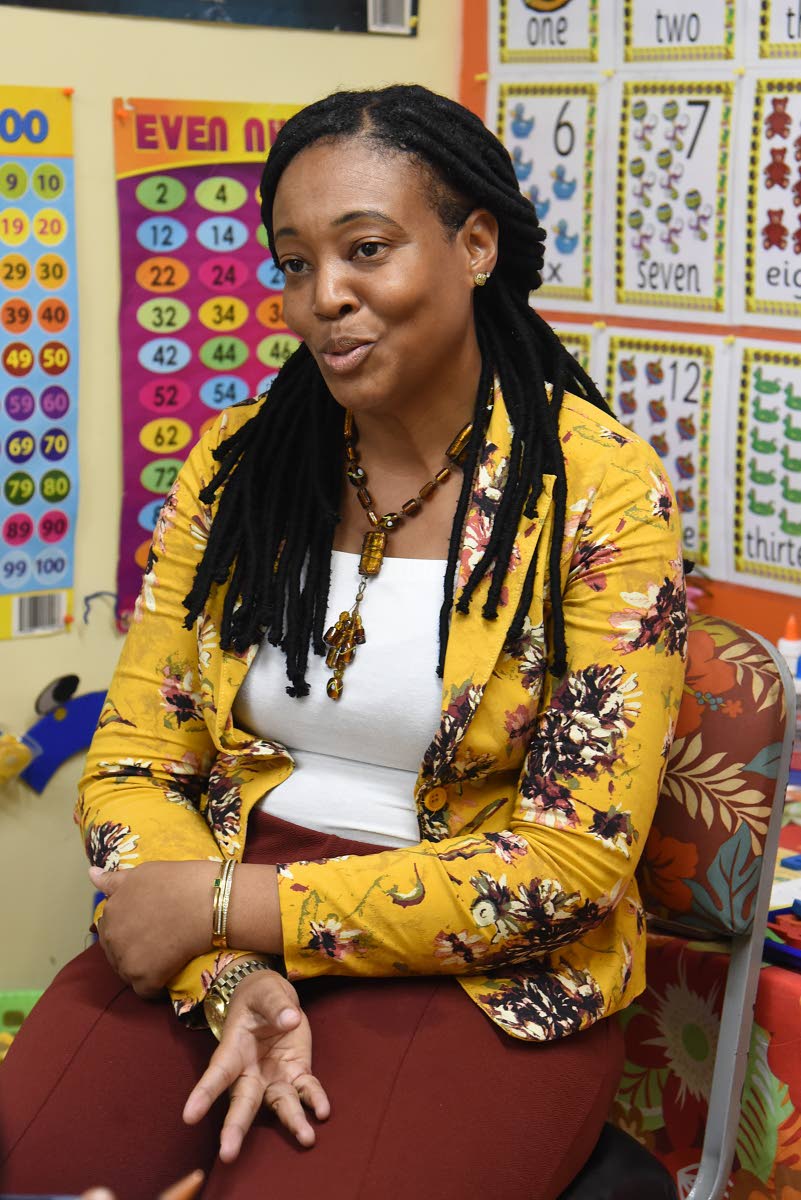 Racheal Daley, Jamaica’s first master teacher at the early childhood level, who works at the Waterford Infant School in Portmore, St Catherine. Photo - Ian Allen/Photographer
-
Racheal Daley, Jamaica’s first master teacher at the early childhood level, who works at the Waterford Infant School in Portmore, St Catherine. Photo - Ian Allen/Photographer
-
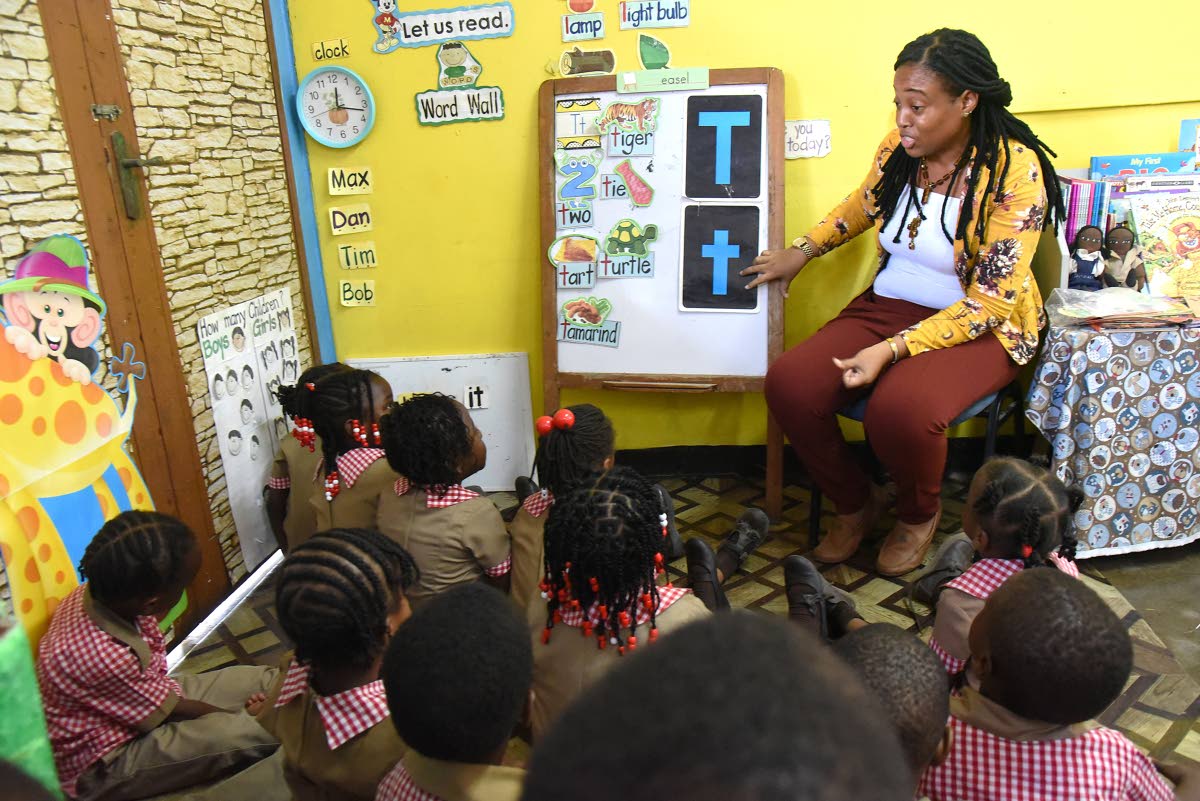 Master teacher Racheal Daley guiding her four-year-old students through a lesson on the letter ‘T’ at the Waterford Infant School in Portmore, St Catherine, on Wednesday. Photo - Ian Allen/Phtoographer
Racheal Daley gently led her four-year-old students at the Waterford Infant School in Portmore, St Catherine, to identify and pronounce words beginning with the letter ‘T’ on Wednesday afternoon.
As the spunky children became a little restless, she skillfully redirected that energy into a song, and they all cheerfully joined in.
“We do a lot of music and sounds and gems to get their attention,” the early childhood educator explained to The Gleaner.
Care is also taken to make sure that her classroom environment is very colourful and welcoming as the “babies like to see colours and bright print”, she said.
Passionate about her career choice, Daley, who has been an early childhood teacher for 17 years, stressed the significance of having a strong foundation and has been building it through a nurturing and playful environment.
“There is this notion that the pre-school, infant school, basic school is just ‘A-B-C, 1-2-3’. It is much deeper than that,” Daley said. “There is this thing called window of opportunity in brain development, where your brain is being developed up until you are about 12 or so ... . We have to capitalise on when the children’s brains are still being developed.”
Her dedication to her profession was rewarded last month when she was appointed Jamaica’s first master teacher at the early childhood level.
“This had been a dream of mine upon entering my career. I learnt about it from my aunt, who was a master teacher herself – a master teacher of special education – and through my passion, she ended up introducing it to me,” she said.
“It’s good to know that we have at least one in early childhood education. Early childhood education has been somewhat neglected, and it’s unfortunate because it is actually the foundation,” she added.
A master teacher is an educator who has demonstrated great expertise in the art and science of teaching by achieving excellence in current practices through a comprehensive assessment process.
“It is an incentive for the teacher who does excellently at their craft of teaching, the pedagogical execution and experience. Of course, there will be added responsibilities with the post. There are a lot of opportunities for growth in terms of training and mentoring,” Daley explained.
The programme was implemented more than 30 years ago by the Jamaica Teaching Council (JTC), the agency established to professionalise, regulate, and elevate the status of the teaching profession.
Director of the Master Teacher Unit at the JTC, Dr Joseph Thomas, noted that over the years, appointments have been granted to primary and secondary educators, but only recently was the early childhood sector recognised.
“Everybody who will apply will not necessarily get it because we have a series of selection levels, and there is an established benchmark to get it, and some of the candidates, unfortunately, are not meeting that benchmark, so they will be out of that selection,” he said.
Thomas said the process is an evidence-based appraisal, which normally takes a year to complete. It includes the submission of a professional portfolio showcasing the applicant’s contribution to the teaching profession. If the standard is met, then the panel will subsequently visit the applicant’s school for observation and interviews. The panel’s report is then passed on to the national committee, which comprises stakeholders from the education sector, for appointment of master teachers.
The committee then makes a recommendation for appointment, which is executed by the chief education officer.
Consistently high performance
Thomas noted that the title of master teacher is tied to a consistently high level of performance and expires every three years.
The aim, he said, is to provide a professional pathway for teachers while ensuring that the best ones are in the classrooms. Master teachers are paid at the same salary scale as the vice-principals in their school.
“When someone becomes a principal or vice-principal at a school, that comes with a lot of administrative responsibilities. So they are not teaching, or they are limiting their teaching experience in that school. But when someone becomes a master teacher, they are still remaining in the classroom with the teaching because we want to ensure that the students benefit from this master teacher at the maximum level,” he said.
Thirty-nine-year-old Daley told The Gleaner that she has spent the majority of her career at the Waterford Infant School, and although she sometimes carries out administrative tasks, she finds the most joy while teaching.
“I’m not looking to be principal. I am not sure what the future holds right now, but I do plan to make my mark,” she said
School Principal Marcia Henry said Daley has been excelling at the institution, which has a population of 165 students in 11 classes, guided by 12 teachers.
“I am so elated. I am glad to know that we can promote what we do at the early childhood level to the extent that we can get a master teacher. My teacher is an excellent teacher, among so many others,” she said.
Although honoured that she is the first, Daley said she does not want to be the only one. She is encouraging other early childhood teachers to also endeavour to advance to the master teacher level.
“I can’t do it alone, so I would want to encourage other teachers to come on board,” she said.
sashana.small@gleanerjm.com