Harvest heartbreak
Loading article...
-
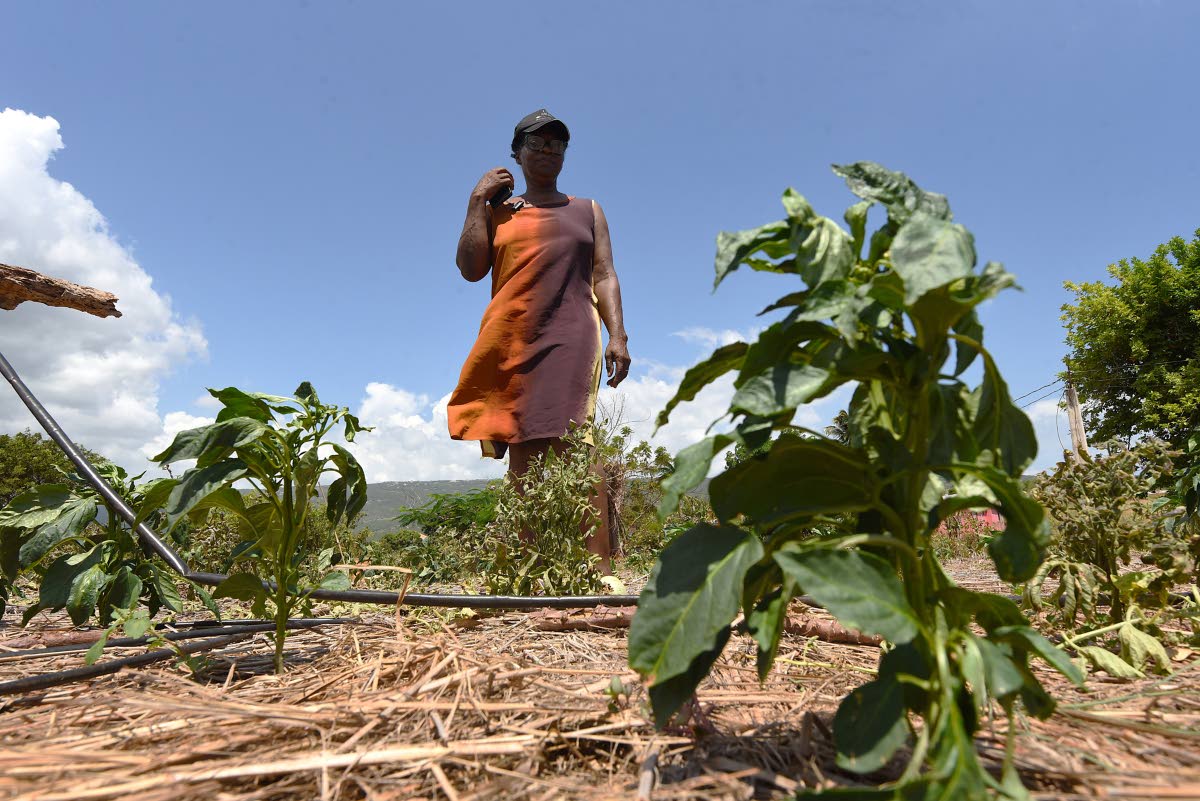 Angella Jones, farmer in Flagaman district, St Elizabeth, looks at crops that have been blighted in the field by an ongoing drought and extreme heat.
-
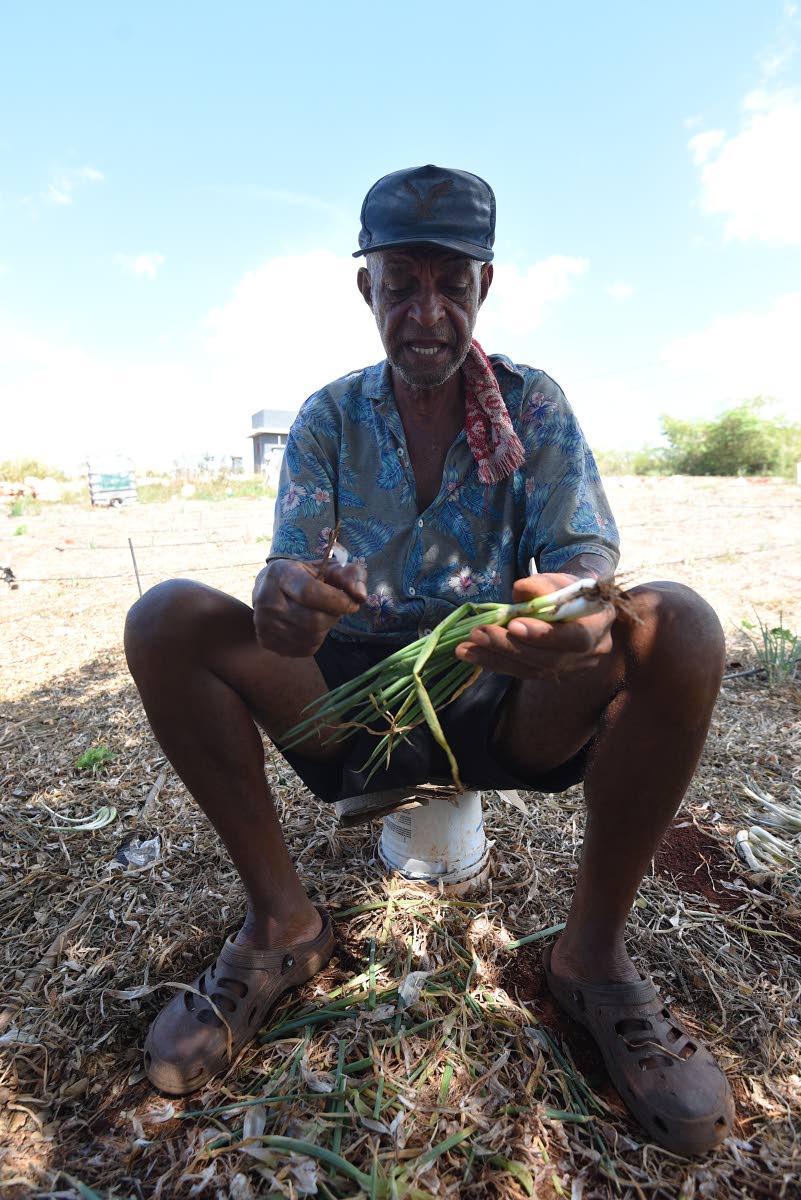 Lennox Gayle, farmer in Woodside district, Ballards Valley in St Elizabeth, prepares escallion for planting despite an ongoing drought across the island.
-
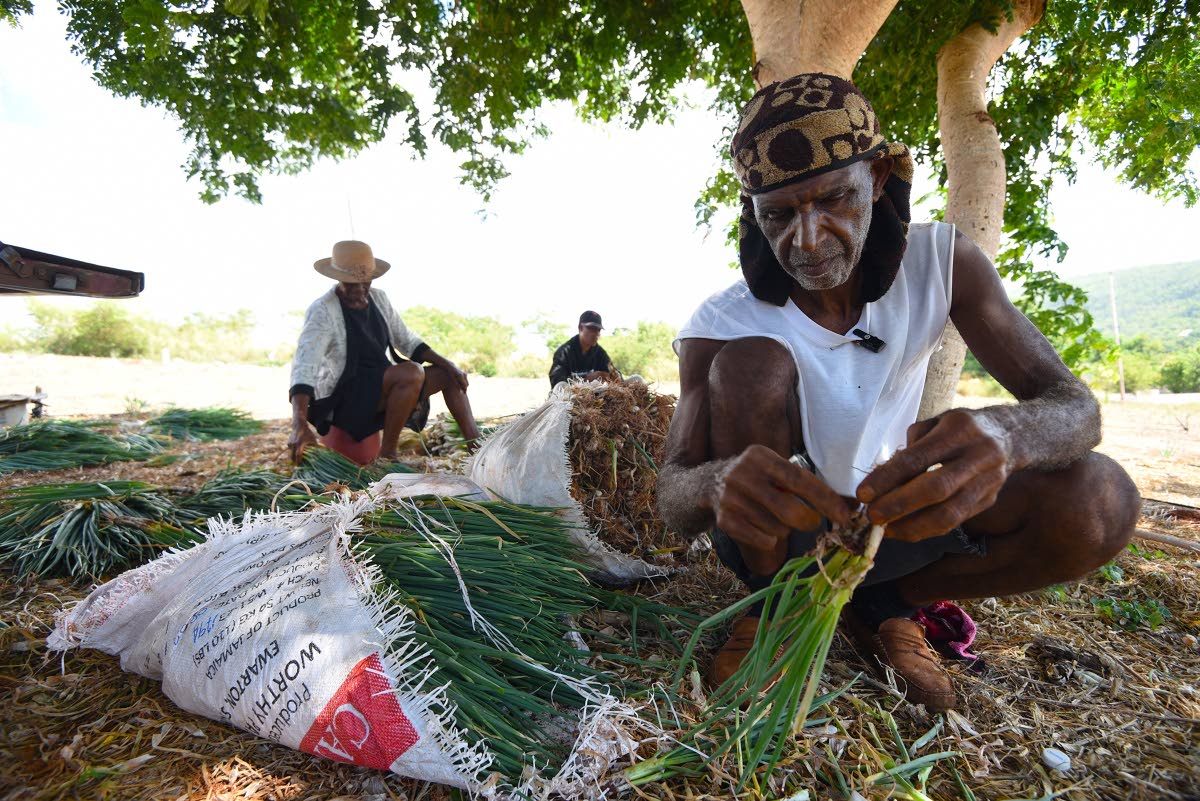 Trevor Dixon prepares escallion for planting in Woodside district, Ballards Valley in St Elizabeth, despite the drought conditions impacting the island.
-
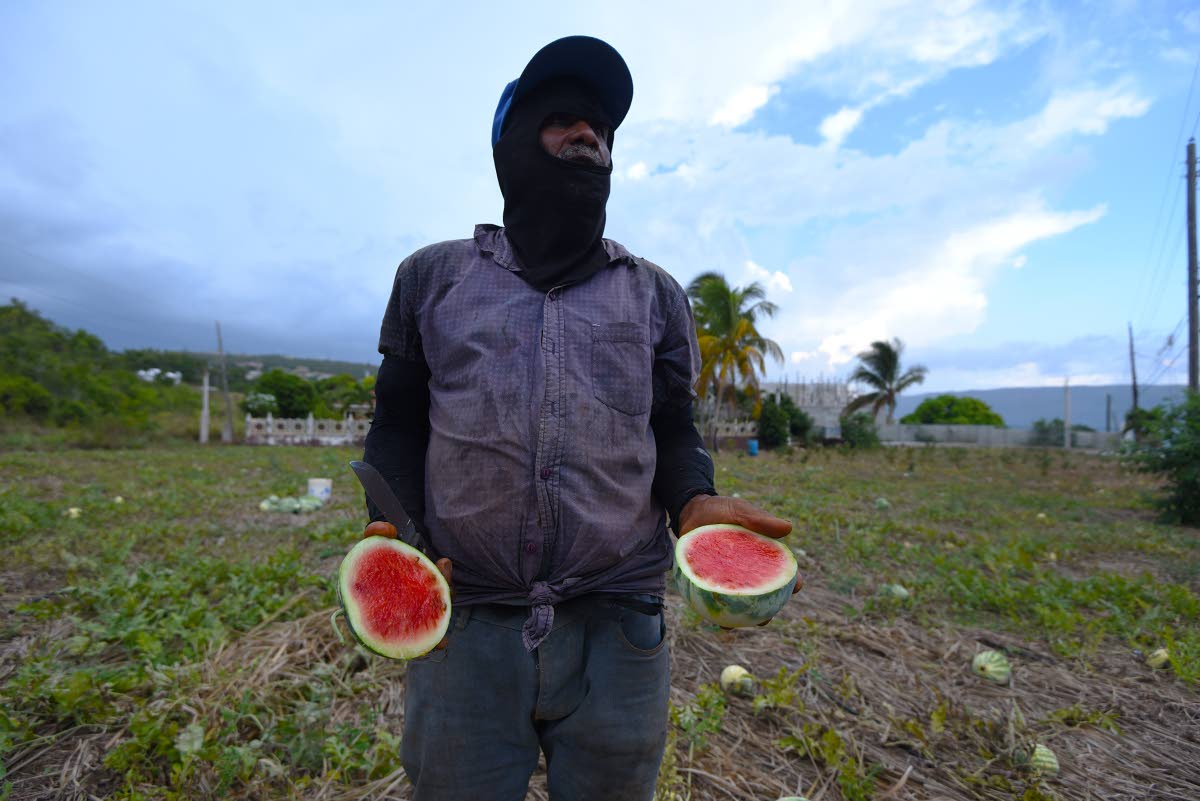 Farmer Paul Martin tries to salvage melons from his field in Bull Savanna, St Elizabeth after his melon crop was blighted by drought conditions and extreme heat.
For Angella Jones, the hardest part of farming is not the work.
It is putting everything she has into the ground, watching crops fail repeatedly, and then having to find the money to start all over again.
Jones shared that reality during an interview with The Sunday Gleaner on Tuesday as she sat beneath a mango tree, struggling to keep her tears at bay while describing the toll months of drought and extreme heat have taken on her farm in Flagaman, St Elizabeth.
For more than 30 years, the 53-year-old farmer has made her living from agriculture, using the proceeds to build her house and send her two children to college, along with her husband, a taxi driver.
However, as the drought drags on, Jones is beginning to question whether she can afford to keep doing what she loves.
“All my life I’ve been doing this, and if mi affi go give this up, I don’t know where to start. It breaks my heart,” Jones said.
“I’m discouraged. I don’t know how much longer I can stay in farming. I caa tek de loses anymore,” she added quietly, noting she has already placed her husband and parents on notice.
Jones’ despair is being echoed by farmers across St Elizabeth, where prolonged dry weather, extreme heat, limited access to water and rising production costs are threatening their livelihoods.
Jones said one female colleague has abandoned farming, tired of “throwing away her money in the ground”, while another chose not to farm this year and is focusing on his water company.
For Jones, water is one of the biggest problems.
No reliable irrigation supply
Farmers in Flagaman, she said, have no reliable irrigation supply and must either depend on rainfall or pay heavily for water.
“You have to find the money from somewhere to put back,” she said. “And every time that you lose a crop, you have to go somewhere else to take the money from and put it there. And you keep losing it.”
Jones estimates that she has lost about $500,000 on onions alone. Beetroot planted nearly four months ago has also failed to develop properly, while sweet pepper has struggled despite repeated watering.
“I buy three loads of water just for that little piece where the sweet pepper deh,” she said. “And I don’t get nothing, so I stopped with it.”
The intense heat, she said, is making matters worse.
“You put the water inna it, and by the time you turn yuh back, it looks like you never did put any it in.”
In nearby Ballards Valley, farmer Lennox Gayle said he has also been unable to afford enough water to sustain his crops.
Gayle grows melon, sweet pepper and scallion, but said the drought has damaged virtually everything planted on his farm.
‘We caa afford to buy water’
“Cause we caa afford to buy water. We nuh have any source, and you caa buy water fi do farming, because it’s rough. So we just affi depend on the rainfall,” he said.
Gayle estimates that he has lost at least $150,000, while another farmer he knows has suffered losses of more than $200,000.
“From mi born a it mi people dem a do, and a di worst one we’ve seen for some years,” he said. “I don’t know wha happen to the atmosphere, but mi a tell u say di breeze and dem som’n just dry up everything. It rough.”
Asked how he has been managing, he said, “Well, mi affi depend pon grace and mi have mi pickney dem and dem we send something come gi me fi live offa, that’s all mi can tell you. And we affi cut dung pon everything, because we caa afford fi do farming. It’s very expensive.”
His friend Trevor Dixon has also been forced to supplement his income by buying and selling produce after the drought wiped out much of his crops.
Dixon previously grew pumpkin, cucumber, tomato and scallion but has resorted to growing only escallion and thyme.
“Through the drought, everything just die out.”
His farm was parched, with rows of wilted and stunted escallion and thyme.
Dixon said produce prices have climbed sharply, with tomatoes selling for about $300 per pound, thyme for around $1,500, scallion for about $200 and lettuce for about $1,000 per pound.
However, higher prices do not necessarily mean higher earnings for farmers, he said, because producers often have little control over what buyers are willing to pay.
He also pointed to the high cost of water, saying a small keg cost $2,500 to fill but could wet the farm for only two days.
Asked what he felt was the solution in light of the yearly drought, he said, “Well, if we did have water in the main, if de politician did give us some water in the main from a long time. From 1976 dem dig up the road all now we caa get some water inna de main and fi years now.
“If we get water, we stand up on wi own. All wi affi do get meter fi pay we bills.”
Dixon noted that the provision of water through the main pipe or irrigation channel would assist farmers greatly, especially during the drought period.
Paul Martin, a farmer and construction worker from Bull Savanna, said he spent about $468,000 on two farming gardens, including water, fertiliser and other expenses, but much of the produce was damaged by the drought.
Purchased about $228,000 worth of water
He said he had purchased about $228,000 worth of water since starting one of the gardens in July.
“A two time a week mi buy water but, as mi wet it, it dry up again and mi naa mek back mi money,” he said.
“The drought rough, man,” Martin said, describing it as the worst he too has experienced.
“You know, mi farm yam to, mi had 1,264 hill of yam dead since the drought. The storm did touch it, but the drought come worsa kill it.”
Fortunately for Martin, his farms produced some melons, although some were smaller than usual. But he said vendors did not want the smaller melons and were offering very low prices despite their sweetness.
However, he was very critical of assistance he said was promised through the Rural Agricultural Development Authority (RADA), saying he attended meetings where farmers were promised supplies including drums and hoses.
“Not even piece a hose ...”
“Not even piece a hose mi nuh achieve. A di man wey get di house sell me back,” he said, claiming that supplies were being distributed to non-farmers.
Jones said farmers in Flagaman had also made their difficulties known but that she had not seen agricultural officials visit her farm.
“We call. We talk,” she said. “But nobody is trying to help us in Flagaman. You don’t see nobody come to your farm and look and, if you call to help, you’re not getting it.”
Jones said she had registered her losses suffered during Hurricane Melissa but had not received any assistance.
Another concern is the financial consequences of crop failures. None of the four farmers with whom The Sunday Gleaner spoke said they had insurance covering their current crop losses.
Satreena Christian, who farms with her father Simon on their approximately 20-acre farm in New Forest, said insurance had not been practical for their operation.
“If it fails, it fails, and then we just start over, go strong and get it,” she said. “It’s like, we have to do it. That’s how we make our living.”
The Christians have irrigation and receive water every other day for about three hours, but Satreena said they need more.
“We would really like daily water,” she said.
Their main crop is escallion, but she said the plants are thinner and lighter than usual because of inadequate water.
“If we had had more water, then it would have looked definitely better than this right now,” she said.
Rising costs and difficulties finding a market have added to the pressure. Thousands of scallion plants from a previous crop had to be discarded because there was no buyer.
“We just throw them away and replant,” she said.
For Jones, the losses are now forcing her to consider whether to renew her leases. One is due to expire in April and another in June.
“I don’t think I’m going to lease them back because I can’t take the losses,” she said.
The thought is painful because farming is all she knows.
“I’ve been doing it for 30-odd years. It’s the only thing I know,” she said.
She has stopped raising pigs because of the rising cost of pig feed and has started selling off her goats, which went from 20 down to seven.
“For the last couple of years we find ourselves spending more than what we getting. If we did see we even a get a likkle bit we would a gwaan and be happy. But we’re not getting anything and that is the problem.
“ And it drains every cent you have to be farming in this drought. We between a rock and a hard place and me a tell yuh say de rock a close in pon we as a farmers,” she said.
Yet Jones insists that hard work is not the problem.
“I’m not afraid to work,” she said. “I love farming.”
What she cannot sustain is working without seeing a return.
“If I spend $10, and a get $5, even half. If I spend $10 I don’t get nothing, that’s the problem for me.”
At the same time, Jones worries that if farmers abandon the land, Jamaica will become increasingly dependent on imported food.
“Dem affi go import it like wa dem a do now. That’s what they would do because some a fi wi struggle is import, because when we have it and then dem import it then we can’t get it. That’s what happened to the onions last year and this year.”
In the meantime, Jones wants greater support for farmers, particularly better access to water.
“We need to do more for the farmers, especially the farmers in this side of St Elizabeth,” she said.
“If they don’t give you irrigation, find a way to make the water cheaper.”
For now, Jones is still farming, but admits that her patience is running thin.
“I hope the Government does something to help farmers,” Jones said. “I don’t want to leave the farm.”
Efforts to get responses from the Ministry of Agriculture and RADA were unsuccessful, as questions sent to the entities had not been responded to up to yesterday.
tanesha.mundle@gleanerjm.com