Silent struggle - Jamaican students battle rising mental health crisis
Loading article...
-
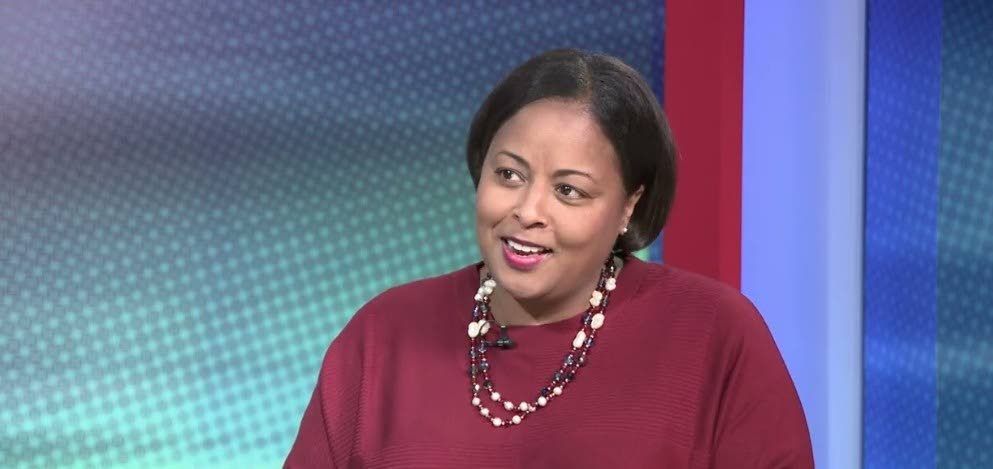 Uki Atkinson, acting principal director of the Public Education and Treatment Branch of the NCDA
-
-
-
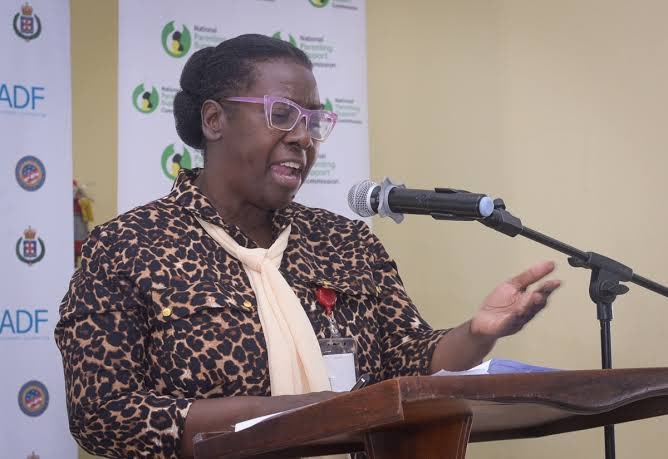 Kennecy Davidson, assistant chief education officer.
There is a rural high school in Jamaica where almost all students in a seventh-grade class are reportedly receiving counselling for self-harm ideation. One student, in a recent study by the National Council on Drug Abuse (NCDA), reported that she could not count the number of times she had tried to take her own life.
“At first, we assumed she didn’t understand the question. But she explained that she did; and repeated that she could not count the number of times she had attempted it,” recalled Uki Atkinson, acting principal director of the Public Education and Treatment Branch of the NCDA.
Atkinson was presenting the findings of Jamaica’s leg of this year’s Global School-Based Student Health Survey (GSHS), which paints a concerning picture of the health and well-being of Jamaica’s adolescents, including poor dietary habits, declining physical activity, and worsening mental health indicators.
The survey was conducted among 3,058 students, ages 13 to 17, in 32 high schools between January and March. It examined nine areas, including substance use, diet, social media usage and sexual promiscuity, and gauged student behaviour over the previous year.
“That student was very melancholic; her whole disposition was; and as soon as she completed the survey we went to the guidance counsellor,” said Atkinson, noting that she was then informed that the student’s entire class was on watch for self-harm, with some students already engaging in such practices.
The students in that class, the guidance counsellor said, are being monitored by the school and other professionals.
“The mental health state of our adolescents is declining. In terms of seriously considering suicide, planning how they would attempt suicide, and actual suicide attempts, that has gone up since 2017. Three in 10 of our adolescents are reporting that they seriously considered, that they made a plan; and approximately a quarter of those adolescents actually attempted suicide,” Atkinson said.
In 2017, 25 per cent of adolescents surveyed reported considering suicide.
“Girls are disproportionately affected when you look at the indicators. Significantly more female students than male students are reporting more suicidal ideations, depression, [and] anxiety.”
According to the 2026 survey, 36.6 per cent of girls reported considered suicide in comparison to 23.1 per cent of boys.
prolonged exposure to social media
The problem is also significantly more pronounced among older students, she said, theorising that exam pressure and prolonged exposure to social media could be likely causes.
The impact of COVID-19 and Hurricane Melissa is another possible factor. However, Atkinson noted that the study did not specifically examine those influences.
Veteran guidance counsellor and former president of the Jamaica Association of Social Workers, Jacqueline Bryan, did.
In support of the study, Bryan said that, based on her experience, the current decline in students’ mental health may have had its roots in COVID-19 when many were at home and exposed to varying forms of unsupervised social media content. She said the situation worsened with the effects of hurricanes Beryl and Melissa last year.
There is also a general decline in parental coping skills, the GSHS suggests.
Compared with the previous survey in 2017, the 2026 study found a decline from 31 per cent to 26 per cent in the number of students who felt understood by their parents. Four in 10 respondents said their parents knew their whereabouts and activities during their free time, while four in 10 students also reported that their parents spent quality time with them.
“Parental advice and guidance has also gone down; almost 10 per cent. Four in 10 adolescents say that their parents give them advice and guidance most of the time,” reported Atkinson.
However, it is not so easy to point fingers at parents, Bryan argued.
pulling away from their parents
“What you will find is that a lot of these children, teenagers, are at the age where they are pulling away from their parents and at the same time are internalising some of the economic and social challenges that they are exposed to,” she said, again referencing the influence of social media on local teenagers’ development.
According to the GSHS, 87 per cent of respondents possessed a cellular phone, 78 per cent used it for social media and online purposes, and only 39 per cent said their parents had rules and guidelines about their social media usage.
According to Bryan, only through one-on-one counselling can trained practitioners determine what are real suicidal threats versus calls for attention, care and love from students.
One principal of a Kingston high school, who asked for anonymity, said suicidal ideation has indeed increased.
“I don’t think many of them [students] are actually planning to do it, but certainly that is the tone of many of them when you talk to them; and they will tell you several reasons,” the principal said.
Kanesha Simmonds* has been fighting an uphill battle with her 17-year-old son ever since being notified by school administrators at a prominent high school in Kingston two years ago that he had left a cryptic goodbye message for friends. His friends later informed their parents of his message, and one parent reportedly informed the school, she recalled.
“They reached out to me and I had to go down to the school where they enrolled him into a counselling programme there,” said Simmonds, adding that experts determined her son’s messages were a call for attention rather than a serious threat.
behaviour worsened
He was later pulled from the school and sent overseas, where he received additional counselling. But his behaviour worsened overseas and continues to be a challenge after he was sent back home, she said. There have been no further threats of self-harm from him, however.
“He has no manners, nobody can talk to him. He smokes, he bleaches, and he pierced his ears. I’m absolutely disappointed, and the bleaching disgusts me. That, over everything else, is the worst to me. He looks like tie-and-dye,” said the single mother, her voice quivering with hurt.
Outside of school and counselling overseas, the mother said she has never sought any professional intervention for her son, although she is open to trying anything before he becomes an adult next year. She tries to convince herself that she is “done with him at that point”.
The NCDA has several hotlines for children and their parents facing mental health challenges and said it received some 10,000 calls to its ‘You Matter Chat Line’, established in 2022 for people between 16 and 24 years old. Some 217 calls came to the hotline in July this year.
The number for the You Matter line is 876-838-4897, while other helplines include the Substance Abuse Misuse Helpline: 876-654-4357; and the Mental Health and Suicide Prevention Helpline at 888-639-5433.
Most callers were suffering from psychosocial and mental health challenges, fear and anxiety, depression, loneliness, lack of support, suicidal thoughts, and self-harm. Parent-child relationships also featured heavily, followed by peer and romantic relationships, substance abuse and pregnancy, according to NCDA data obtained by The Sunday Gleaner.
The Ministry of Education, Skills, Youth and Information, through its Guidance and Counselling Unit, also provides support to students and parents, according to its head, Assistant Chief Education Officer Kennecy Davidson.
The ministry also provides repeated training for guidance counsellors, a shortage of whom it has been making do with as it tackles the multitude of complex challenges facing the nation’s students.
More than 700 students, 50 staff members and more than 100 parents have accessed an integrated mental health service within the last year. The programme offers clinical support paid for by the ministry and features 12 service providers made up of psychiatrists and psychologists.
prevention content
“Everybody gets exposed to prevention content, how to manage and how to be resilient. But we recognise that 80 per cent of people will adapt. There is a 15 per cent that don’t manage so well, so they get more targeted support, and then there is that five per cent that you can’t serve in the schools because we don’t have that capacity in the schools. That is the five per cent for whom the ministry pays the psychiatrists and other service providers to help,” she explained.
“There are several pathways [for help]. If it is brought to the attention of any adult or even a student that a child is attempting suicide, there is no investigating; that child is rushed to a medical facility. That is how it operates. Because you are also ensuring your adherence to the Child Protection Act,” Davidson said.
“Now, if it is a case where it is the children who are saying themselves that they are trying things, this is where we bring in the service providers. Sometimes when they come back from the hospital to us, the psychologists will tell us that a case was not an intended suicide. Sometimes it is for attention, sometimes it is for being a part of a group, sometimes it is for recognition.
“We have over 1,000 guidance counsellors; we will never have enough. But what we are trying to do is to reframe how we approach something, so we can become more effective. Every school in Jamaica has access to guidance and counselling services, but not every school has a resident guidance counsellor. Small schools will have a shared guidance counsellor.”
corey.robinson@gleanerjm.com