More than time off for HANDS-ON DADS - Paternity leave reshaping fatherhood in Jamaica
Loading article...
-

-

Owen Brown and his two children, Josiah and Elianna.
-

Anthony Simpson and his children Lydianna, Alliana, and Azarie (baby).
-
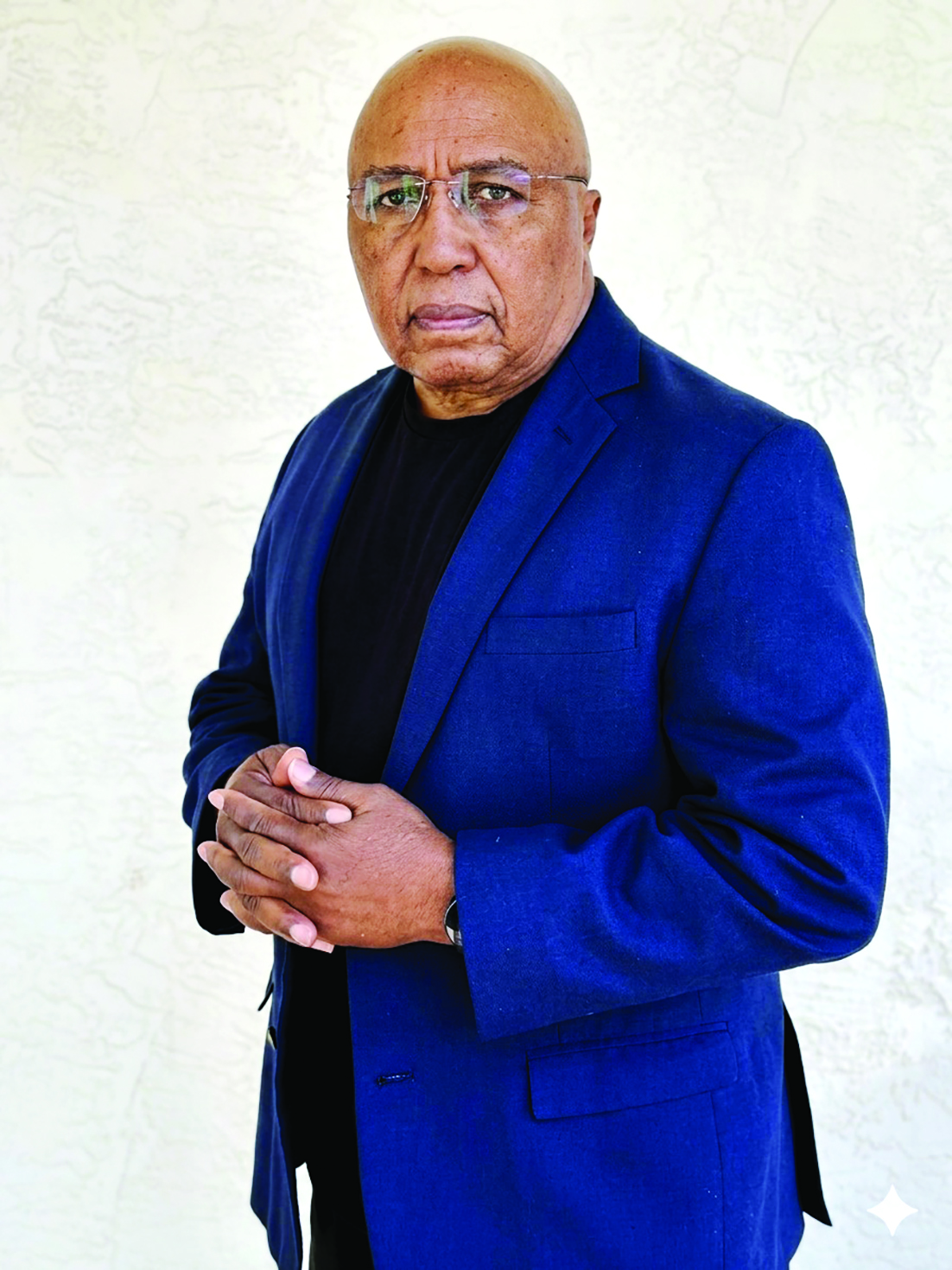
Psychologist Leahcim Semaj believes more men are stepping up today to take care of their families beyond financial needs.
-

Jamin Wedderburn, his wife Taneika, and their children Sarah (in dad’s arms), Hannah (graduate), Jorim, and Benjamin (in front). Jireh (baby girl) is not in this picture.
Anthony Simpson never knew his father; the story he was told is that soon after he was born, his father came to see him at the hospital, took one look at him, and concluded he was not his child.
Simpson was born with only one leg and eight fingers.
After his father’s declaration, his mother panicked and abandoned him at the health facility.
Neglected by his parents, he was nurtured by hospital staff and, eventually, caregivers at the SOS Children’s Village in Stony Hill, St Andrew, where he grew up.
Although he admitted that he was often teased by peers and strangers alike because of his disabilities, Simpson said he also learned to enjoy life, despite his persistent anxiety of abandonment.
Confident that he’d have a family of his own one day, Simpson told The Sunday Gleaner that he knew fatherhood would give him the chance to write a much better story of his own.
“I don’t regret my life,” the father of three said last week. “I am pleased and I am at peace with myself to know that I have the responsibilities I have.”
He added: “Being a father, one of the things you enjoy is the fact that yuh watch yuh children from the baby stage growing up, and you get to nurture them, and you get to support them.”
But equally important, Simpson said, is the need to be there for the children’s mother, especially in the postpartum period.
Just last month, Simpson, who works as a driver at the Ministry of Industry, Investment and Commerce, said he also took on the role of private chef and nurse, tending to his wife, who had given birth to their son.
It was the first time that he was able to take advantage of the paternity leave policy that was implemented by the Government in January 2023, and he marvelled at the significant difference the policy made to his family life by giving him the time to support his wife.
“Most times the woman has to be the one under pressure. They breastfeed, they cook, they wash, they clean, and so forth,” Simpson said.
The policy, which entitles public sector workers to 20 days paid leave, gives fathers the opportunity to actively participate in early childcare and support the mother immediately following childbirth.
There are stipulations guiding how the benefit can be accessed, which include fathers taking the leave within the first six months of the child’s delivery, and it can only be obtained a maximum of three times within a single government organisation.
The paternity leave was a blessing for Simpson, who has worked in the public sector for 18 years. He told The Sunday Gleaner that the paternity leave gave him additional family time to bond with his newborn and his seven-year-old and five-year-old daughters, as he endeavours to give them the parenting experience he never received.
“It is a good thing, but in my case, I wish I had more time. The 20 days that we receive for fathers, I don’t think are sufficient because the woman needs the assistance more,” he said.
Father-of-two Owen Brown scheduled his vacation around the time of birth for his first child four years ago.
By the time his second child came along two years later, Brown, who works in financial management in the public sector, said he was “excited” to learn that he could now take paternity leave.
“It was such a blessing to know that it was not treated like my vacation leave. It’s something that allows for additional time to spend with my family,” the 33-year-old said.
Brown said he tried his best to maximise the special time with his wife, and was happy to cater to her needs and connect with their newborn.
“I was able to prepare the home environment, her meals, ensure that our home was comfortable and clean. I was a full-time nurse and cook, and I also was there to listen to her, support her, ensure that she felt cared for, and nurse her through the aches and pains,” he said.
So useful was the paternity leave that Brown is urging more private sector companies to adopt the policy.
“It is critical to ensuring that fathers and families thrive and that the fathers who are critical in the family foundation get an opportunity to support their families during a very delicate season of their journey,” he told The Sunday Gleaner.
Private companies are not legally mandated to implement paternity leave policies, but some companies were giving fathers paid time off at the birth of their child before the Government policy was introduced, while others followed suit.
Scotiabank Jamaica has been offering fully paid weeks for all fathers and adoptive parents since March 2022. At Carreras Ltd, fathers get three weeks paternity leave per child – the policy has been in place since 2019. National Commercial Bank also has a similar framework, which it enacted in 2021.
Other companies such as PepsiCola Jamaica have been offering 20 working days paternity leave since February 2023. Sandals Resorts offers one week paid paternity leave for full-time team members with one or more years of service; this benefit was added in May 2023.
Flow Jamaica has one of the most generous parental leave policies in the country, granting eligible fathers, birth partners, adoptive parents, and foster parents eight weeks of fully paid leave.
Rhino Jamaica Limited also offers one week paternity leave for one child per year. While at JMMB Group Jamaica, male employees are provided with a paid 15-day paternity leave
Like Brown, Wedderburn would schedule his vacation leave around the birth of his children. But the 42-year-old father of five told The Sunday Gleaner that he was able to benefit from paternity leave for the birth of his last two children.
More than anything, he said he appreciated the flexibility of the benefit.
“I never had to rush into it as the baby was born. My wife also never needed me to be there at that specific time, but later on down within the six months, when she needed to make a particular transition, I was now able to apply for the paternity leave, which basically means that she was now freed up,” the public sector employee said.
He charged that the presence of fathers, especially in the early stages of a child’s life, is essential in building stability in the family.
It is a perspective reinforced by psychologist Dr Leachim Semaj. He told The Sunday Gleaner that the role of Jamaican fathers in the family has evolved, with a shift from fathers being seen as the “wallet” to men also providing emotional support.
“Increasingly, Jamaican fathers are broadening their role. There are more fathers involved in active caregiving, emotional support, and shared parental responsibilities. We even hear about cases of single parent fathers raising boys and girls and plaiting hair and all of those things,” said Semaj. “[There is] more participation in the education and child development – much more active.”
Stating that technology and social media have exposed Jamaican families to different parenting models, Semaj asserted that younger fathers are more likely to be involved in the holistic development of their children.
“Some men who grew up without positive father figures, they are now learning as they go along and actively trying to figure it out,” he said.
He noted that policies like paternity leave are important in creating a supportive environment for fathers to bond with their children.
Although he was unable to share data on the number of fathers who have benefited, Clarence Frater, vice president of the Jamaica Civil Service Association (JCSA), which was integral in advocating for the implementation of a paternity leave policy, said three years later, it is working tremendously.
So much so, that the JCSA are considering advocating for more time.
“It’s a new benefit, and now that we have started with one month, the objective is, possibly, to get at least another month on it,” he said.
sashana.small@gleanerjm.com