Omar Sweeney | Impact of global warming on Small Island Developing States
Loading article...
-
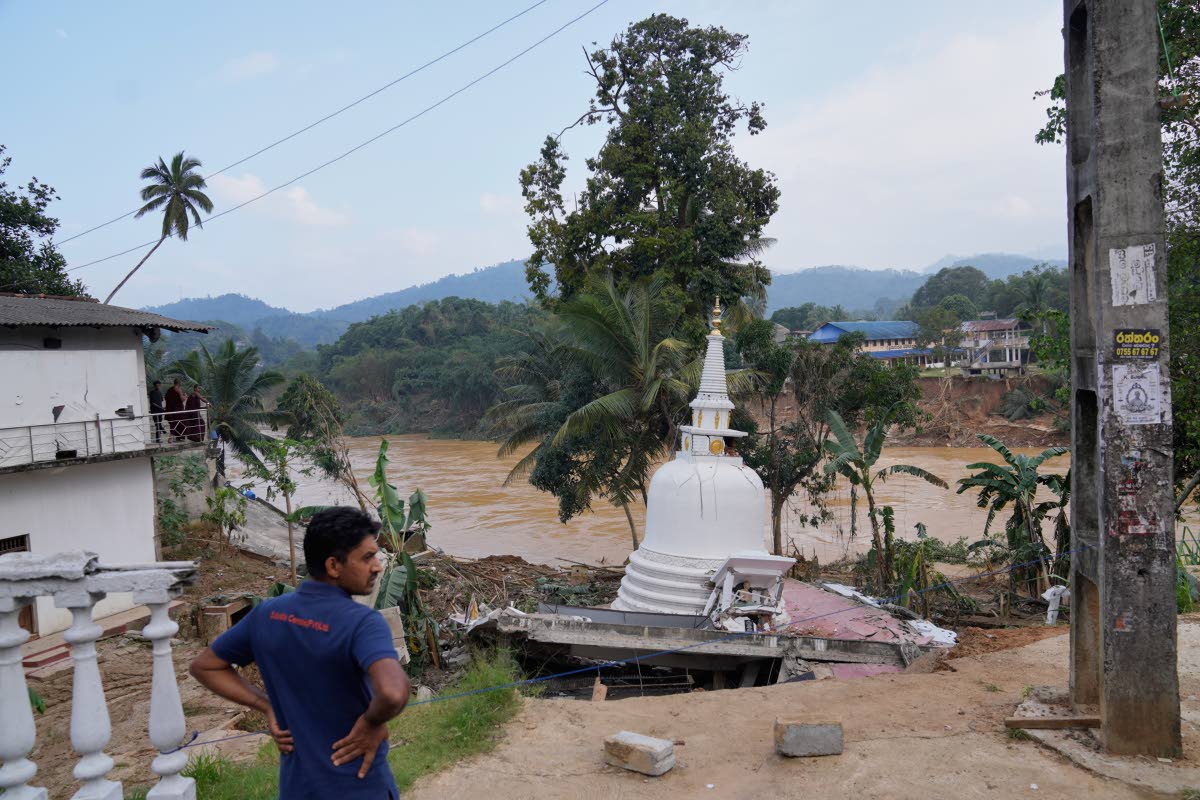 A man looks at the damage caused by the floods at Gampola, Sri Lanka.
-
 Omar Sweeney
Climate change is a pressing global issue, and Small Island Developing States (SIDS) like Jamaica are among the most vulnerable to its devastating impacts.
At the start of the 19th century, the human population exceeded one billion for the first time in history. In 1960, the population hit three billion; by 1987, five billion; and by 2011, seven billion. It is estimated that the world’s population will reach over nine billion in 2045.
GLOBAL CLIMATE CRISIS
Rising global temperatures are driven by human activities such as burning fossil fuels, deforestation, and industrialisation. Predictions estimate that Earth will warm more than 20 times faster than the average rate of warming during past ice-age recoveries. The Paris Agreement of 2015 aimed to limit global warming to 1.5°C above pre-industrial levels. The consequences of this warming are severe, including rising sea levels, extreme weather events, and biodiversity loss.
FRONT LINES OF CLIMATE CHANGE
Small Island Developing States are particularly vulnerable to the impacts of climate change due to their geographical and economic characteristics. The passage of Hurricane Beryl last year and the more recent passage of Hurricane Melissa highlight the impact and consequences of climate change. As the Earth warms, sea surface temperatures are increasing, which will serve as an energy source for hurricanes. Hurricanes require warmer sea surface temperatures of 27 degrees Celsius for development.
Hurricane Beryl intensified from a tropical depression to a hurricane in a record 42 hours. When hurricanes develop rapidly, countries have less time to prepare before impact. It is also noted that islands that are not usually impacted by hurricanes lack resilient infrastructure and systems to withstand hurricane-force winds and torrential rainfall. Hurricane Beryl (2024) and Hurricane Melissa (2025) were developed in an unconventional way but are examples of the extremes we should now anticipate due to global warming.
CASE STUDY IN CLIMATE VULNERABILITY
Jamaica is a prime example of the challenges faced by SIDS in the face of climate change. The country’s economy, heavily reliant on agriculture, has been severely impacted by extreme weather events. Hurricanes and tropical storms have caused billions of dollars in damage to infrastructure, including roads, bridges, energy systems, and water supplies. Between 2001 and 2010, Jamaica spent over J$111 billion on damage from seven hurricanes ranging from category three to five, two tropical storms, and one flood-related natural disaster. The capital recovery cost for Hurricane Melissa has now been estimated by the World Bank at US$ 8.8 billion. The cost of the economic recovery is still being tabulated.
The economic toll of climate change is compounded by its social impacts. The destruction caused by hurricanes and floods exacerbates food insecurity and poverty, particularly in vulnerable communities. Intense storms cause significant damage to health facilities, agricultural lands, and infrastructure, further straining the country’s resources. For instance, Hurricane Beryl in 2024 affected 160,000 people, including 37,000 children, in need of humanitarian assistance at an economic cost of two per cent of GDP. Hurricane Melissa affected more than 1.6 million people, with approximately 280,000 children in need of humanitarian assistance, mostly due to learning loss, at an economic cost of 41 per cent of GDP
MITIGATION AND ADAPTATION
To address the risks posed by climate change, countries like Jamaica must prioritise both mitigation and adaptation strategies. In addition to transitioning to renewable energy, SIDS like Jamaica must invest in climate-adaptation measures to protect their infrastructure and communities. This includes fortifying coastal defences, upgrading drainage systems, and enforcing building codes during construction. For instance, Miami has invested US$500 million in flood-prevention measures, including check valves, elevated streets, and improved building codes. Similar initiatives must be adopted in Jamaica’s built environment to mitigate and adapt to the impacts of extreme weather events.
GLOBAL RESPONSIBILITY
The responsibility for addressing this crisis lies within the global community. Wealthier nations, which have, historically, contributed the most to greenhouse gas emissions, must take the lead in reducing their carbon footprint and supporting vulnerable countries. The United Nations has called for developed countries to contribute $100 billion annually to help developing nations cut emissions and adapt to a changing climate.
The cost of inaction is far greater than the investment required for climate action. Without immediate and sustained efforts, the world will face irreversible damage to ecosystems, economies, and human health. It is imperative that governments, businesses, and individuals work together to create a sustainable future.
Small Island Developing States like Jamaica will continue to bear the brunt of climate change. The risks it poses are undeniable and demand urgent action. Rising sea levels, extreme weather events, and biodiversity loss threaten the livelihoods and well-being of millions.
By investing in climate-adaptation measures, Jamaica can reduce its vulnerability and build resilience against the impacts of global warming. However, the global community must also step up and take responsibility for reducing emissions and supporting those most affected by climate change.
Omar Sweeney is the managing director of JSIF. He is a civil engineer and is currently conducting doctoral research at the University of Florida, Engineering School of Sustainable Infrastructure and Environment. Send feedback to osweeney@ufl.edu and columns@gleanerjm.com