Bulb blues - The seasonal reality behind Jamaica’s onion price spike
Loading article...
-
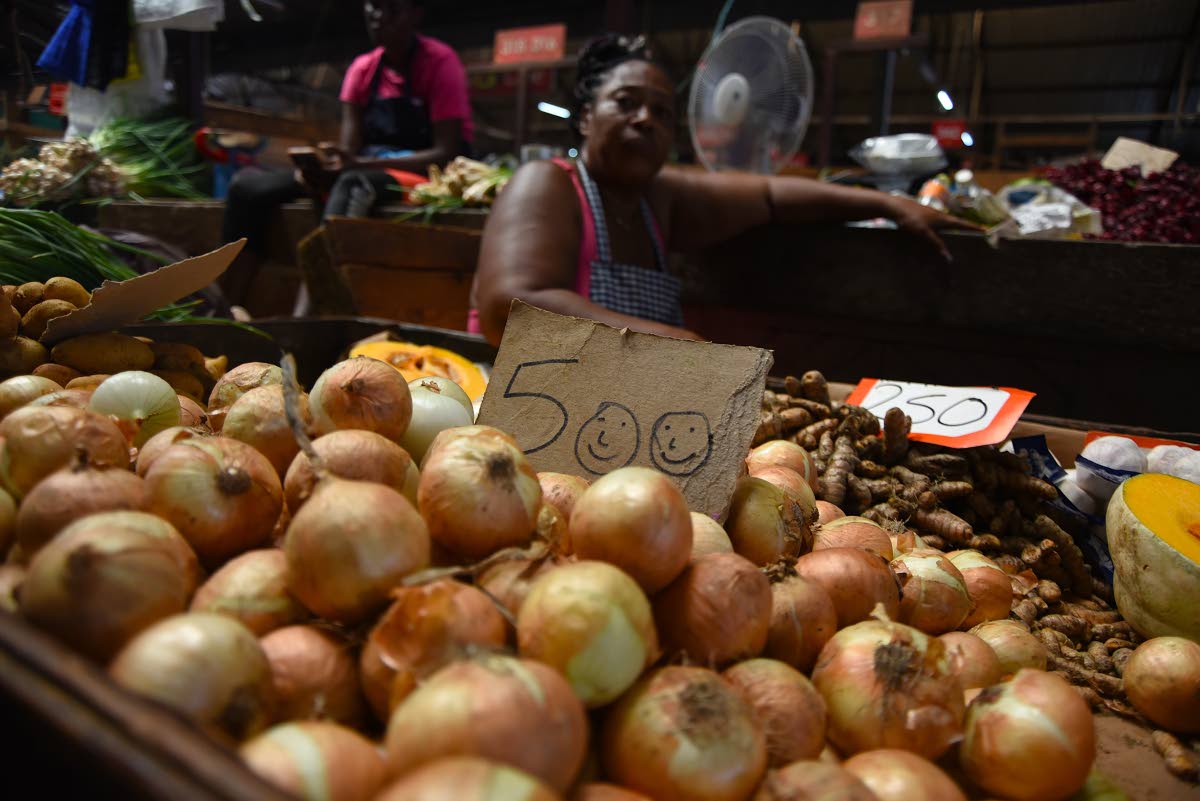
Imported onions on sale in the Coronation Market, downtown Kingston.
-
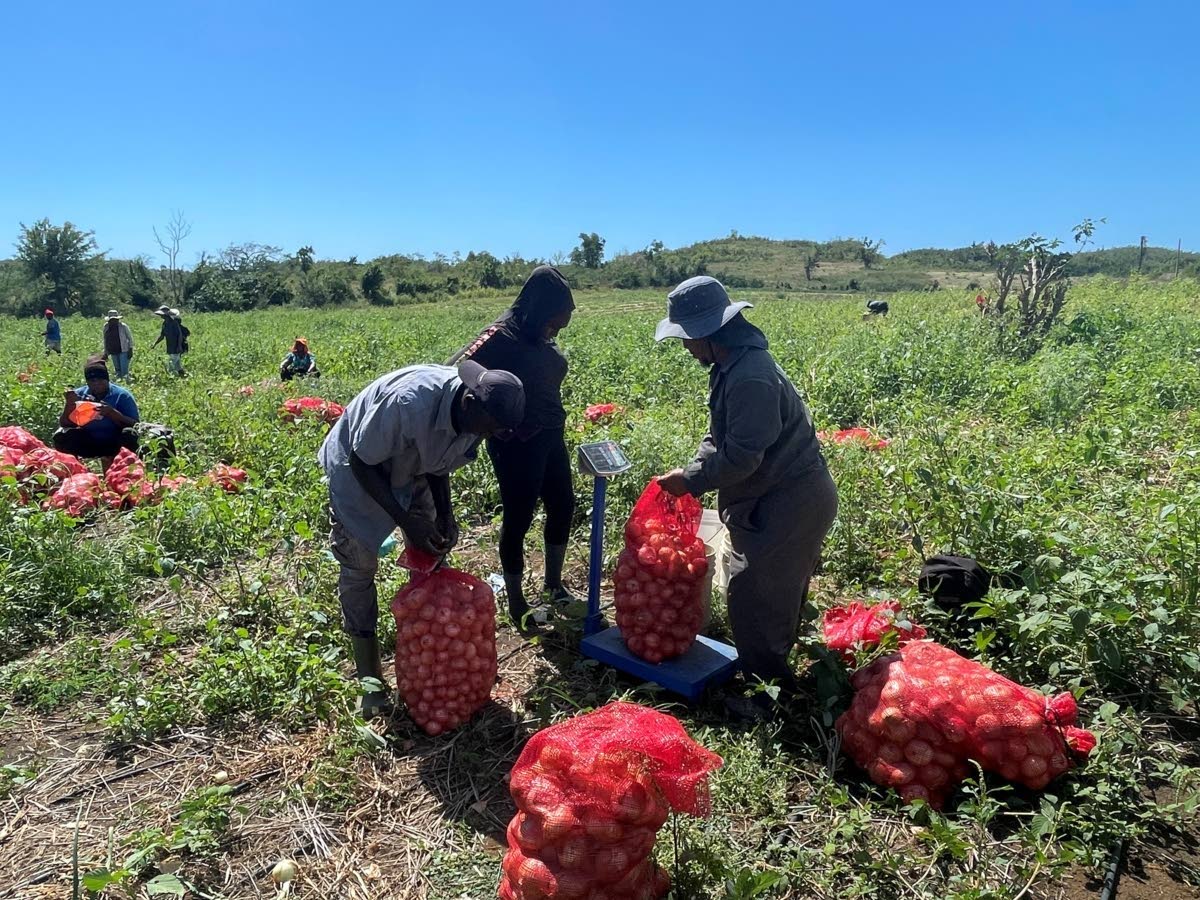
Workers reaping the first crop of onions since the passage of Hurricane Melissa on Andre Dyer’s five-acre farm in Mountainside, St Elizabeth, in February.
The first thing many shoppers notice at Coronation Market these days isn’t the smell of fresh produce or the chorus of vendors calling customers. It’s the price of onions.
“Five hundred dollars a pound!” one vendor shouts, hoping not to scare away another customer.
There is little room for bargaining. The familiar local onion has disappeared from the stalls, replaced entirely by imported bulbs costing more than twice the usual price.
For Jamaican households, where onion is as essential as scallion, thyme and garlic, going without is hardly an option.
A Sunday Gleaner trek through downtown Kingston’s bustling Coronation Market found vendors patiently explaining the steep increase to customers, many of whom paused, sighed, and bought smaller quantities than usual.
“So they’re bawling. well, not bawling. They’re buying it the same way. When it cheap, dem buy it cheap. So, now that it expensive, we just have to work with the flow,” vendor Sandra said matter-of-factly.
Her colleague Jenny said shoppers are feeling the pinch.
“Dem say it very expensive, very expensive. Yeah, them think twice to buy it,” she said.
For Joy, another vendor, the mathematics are unforgiving.
A 48-pound bag of imported onions now costs her about $20,000. Selling them for $500 a pound is the only way to stay afloat.
“We only can get the imported one for a high price, and we have to survive,” she said.
Still, she tries to meet customers halfway.
“Well, some [customers] buy dem half pound same way. So you have to give people what them can afford, because the people them no have no money, you know. You have graduation and all of these things,” she reasoned.
Among those reluctantly paying the higher prices is George, who sees little choice.
“Sometimes I find it for $400 a pound, sometimes higher, but I need it. You can’t eat the money,” he said with a shrug.
PREDICTABLE SHORTAGE
The spike in prices is not the result of a failed crop or supply chain disruption.
It is the predictable consequence of Jamaica’s onion-growing cycle.
Unlike many vegetables, onions thrive only during the cooler months, with harvesting running from February to June and peaking between March and May. Once the local crop is exhausted, Jamaica turns to more expensive imported supplies until the next planting season.
The challenge, Agriculture Minister Floyd Green argues, is not simply producing more onions. It is preserving what is already grown.
That is where the Essex Valley Agro Park and Post-Harvest Facility in St Elizabeth comes in.
The nearly $8-billion complex, funded by the United Kingdom and officially opened in February, is designed to reduce post-harvest losses, improve storage, and expand agro-processing capacity in one of Jamaica’s most productive farming regions.
When The Sunday Gleaner visited the facility last Wednesday, only Irish potatoes remained in storage. The local onion stock had already been exhausted.
Green believes that will change once farmers begin using the facility through an entire production cycle.
“We have to ramp up production to try and ensure that during the season we are producing a full year’s supply,” he said.
“It would be difficult to do that without Essex Valley. It is one of the three or four storage facilities we are bringing on stream this financial year. You have to put the storage in place first, or else you’re just going to increase the wastage.”
WASTED CROPS
The storage issue became painfully clear after Hurricane Melissa.
In St Elizabeth and St Thomas, farmers showed The Sunday Gleaner large acreages of produce left to rot as demand from the tourism sector weakened in the aftermath of the powerful storm.
Others have long complained that imported onions arrive while local crops are still available, leaving them with unsold produce worth millions of dollars.
Green argues that better storage – not simply restricting imports – is the long-term solution.
Jamaica has steadily increased local onion production over recent years and is edging closer to meeting all domestic demand. But extending the crop’s availability beyond the harvest season depends on preserving it properly.
One critical step is curing, or drying the onions before storage.
The government plans to introduce dedicated drying facilities in major onion-producing parishes such as St Elizabeth and St Thomas this financial year.
“Now that we have storage and the capacity of that storage, we can increase production,” Green said.
“One of the things that we’ve said we’re going to be doing this year is introducing dry-outs, which is a critical part of post-harvest management for onions ... . We dry them first before they’re stored in a facility like Essex Valley,” the agriculture minister said.
For now, however, the Essex Valley facility represents more promise than immediate relief.
Its real test will come when the next onion harvest arrives and farmers attempt to store enough of the crop to carry Jamaica through the months when local onions traditionally disappear from market stalls.
Until then, shoppers will continue doing the arithmetic.
Some will buy a pound.
Others will settle for a half-pound.
And many, despite grumbling about the price, will walk away with imported onions in their shopping bags because, in Jamaican kitchens, some ingredients are simply too important to leave behind.
karen.madden@gleanerjm.com