Jamaica Rising Day Parade ‘belongs to the people’
Loading article...
-
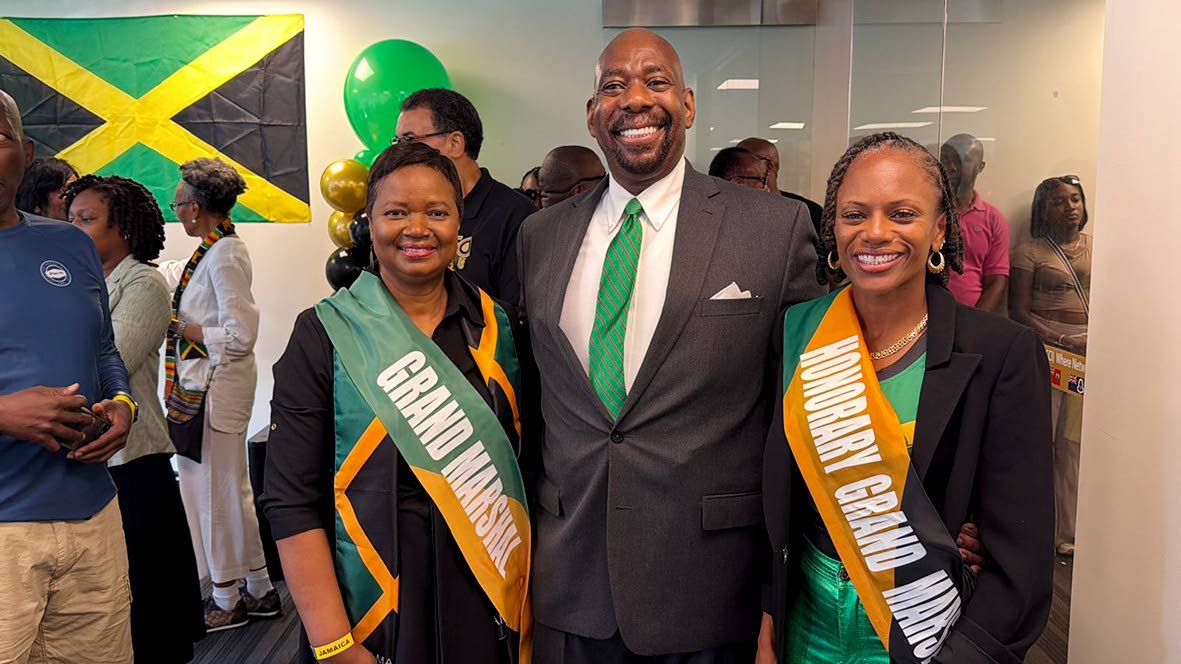 From left, Officer-in-Charge at the Consulate-General of Jamaica in New York, Ariel Bowen; Dr Bill Tinglin, conceptualiser of the Jamaica Rising Day Parade; and Assemblywoman Monique Chandler-Waterman.
-
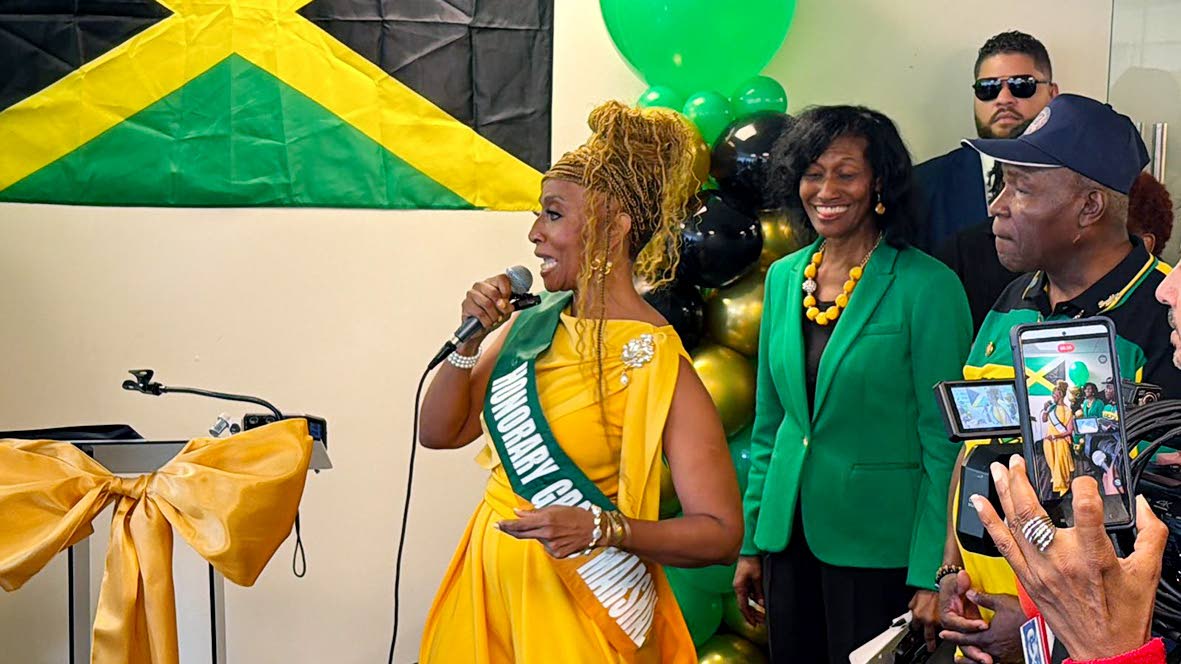 Nadine Sutherland performing recently at the Jamaica Day breakfast in New York.
The inaugural Jamaica Rising Day Parade which brought thousands of revellers into the streets of Brooklyn on Saturday, August 8 is now in the history books. Dr Bill Tinglin, who planned and executed the historic parade in Brooklyn, told The Gleaner that news of the parade travelled far beyond Flatbush Avenue.
“When people in the diaspora saw a major public celebration in Brooklyn, they don’t simply see a parade, they see themselves,” he said.
Dr Tinglin, who was born in Westmoreland, is an internationally recognised educator, historian, and humanitarian. President and CEO of School News Nationwide and founder of Tour for Tolerance, CBL Publishing, and the Words of Bonds Initiative, he has built global educational partnerships that inspire young people to become compassionate, ethical leaders.
He still remembers the mile-and-a-half barefoot walk to school in Galloway, Bethel Town, Westmoreland – the milking of cows before dawn, the chickens fed, the eggs collected, all before eight o’clock, when the school house door would close on anyone who was late.
“Looking back today, I understand what that experience was teaching me: discipline,” Tinglin said of his Westmoreland upbringing.
It’s a word that comes up again and again when he talks about what it actually took to build a parade from nothing.
The spark to launch the parade,he said, came, of all places, at a Jewish celebration. It was June 2024 and Dr Tinglin was standing among thousands of patrons at the Israel Day Parade in Manhattan when a simple question took hold of him: “Why shouldn’t Jamaican history, achievement, culture, and identity have an institution of this magnitude?”
It was a ‘light bulb’ moment that he had to act on.
“I didn’t want simply another celebration,” he told The Gleaner passionately. “I wanted to build an institution. I wanted something our children could inherit,” he opined.
He sought out Dr Una S. T. Clarke, a trailblazing Jamaican-American politician who made history as the first Caribbean-born woman elected to the New York City Council. By March 2025, the organisational work had begun in earnest.
He noted, however, that when “people see the parade ... they don’t necessarily see what it takes to produce the parade”.
For the detractors who get consumed about what went wrong at the inaugural parade, he reminded that there is no precedent to lean on.
“When you’re establishing something for the first time ... there is no manual,” he explained. “You’re writing the manual while simultaneously building the institution.”
Pulling off a first-year parade of this magnitude, meant Tinglin’s team had to think and work outside of the box.
“You have traffic, pedestrians, businesses, residents, transportation, emergency access, crowd movement, street closures, sanitation, security, and numerous logistical considerations,” he explained.
Coordinating with public safety agencies, he said, demanded “communication, patience, flexibility, cooperation, and an understanding that public safety had to come before everything else”.
And, when plans shifted, as they inevitably did, leadership meant staying composed. That philosophy was put to the test just days before the parade itself, when officials required a last-minute route change and the planned block party that would be the ‘high point’ had to be cancelled for safety reasons.
“Of course, last-minute changes create logistical difficulties,” he admitted. “After months of planning, nobody wants to alter something at the final moment. But safety cannot become negotiable simply because you’ve worked hard on a plan,” he reiterated.
On parade day, thousands of revellers, some first-, second- and third-generation Jamaicans and some friends of Jamaica turned out for the parade. Standing at Church and Ocean Avenue, Tinglin found himself simply witnessing history.
“I saw a sea of green ... Jamaican flags,” he recalled. “I saw families. I saw young people. I saw elders. I saw people who had worked tirelessly to make this happen. And I saw people who came because they wanted to be part of history.”
It was in that moment, he said, that ownership of the event quietly changed hands.
“The Jamaica Rising Day Parade no longer belonged to the organisers. It belonged to the people,” he confessed.
“An organiser can establish an event. Only a community can create a tradition.”
With Jamaica’s 65th independence anniversary arriving in 2027, Tinglin and his team are already thinking about what comes next.
entertainment@gleanerjm.com