Editorial | Mandate rainwater harvesting
Loading article...
-
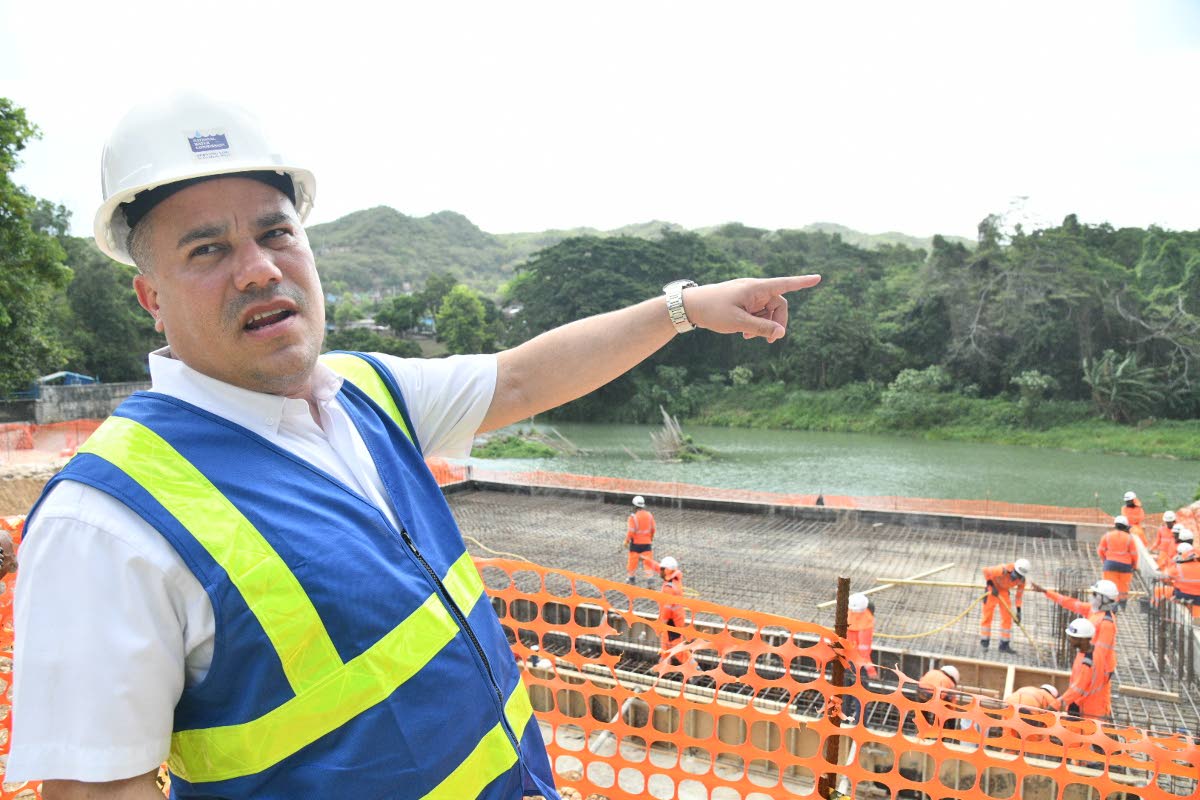 Samuda. Photo - Contributed
-
Samuda. Photo - Contributed
-
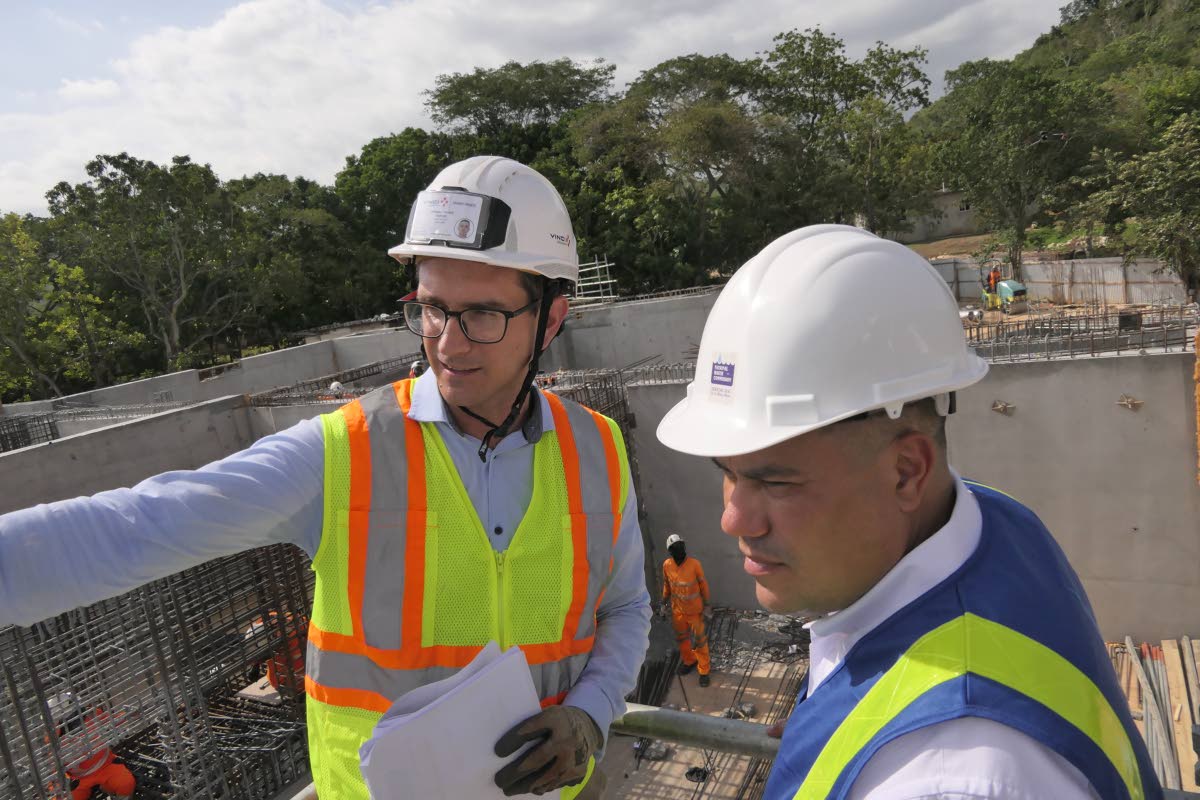 Thomas Savary (left), project manager at VINCI Construction Grands Projets, shows Matthew Samuda, minister of water, environment and climate change, the work being carried out at the Rio Cobre Water Treatment Plant in Content, St Catherine. Photo - Contributed
With two major water transmission and distribution projects under way on Jamaica’s north and south coasts, the government expects that, over the next three years, the island’s periodic water crises will be substantially eased.
When the more advanced of these projects is completed by the middle of next year, an additional 15 million gallons of water per day will be delivered from the Rio Cobre to 600,000 people in 150,000 households in the parishes of St Catherine and Kingston and St Andrew.
The US$92-million scheme is being financed, built and operated by a consortium led by the French company VINCI Construction and Capital Infrastructure Group, which has a 23-year take-or-pay concession with the government’s National Water Commission (NWC).
“To put this in context, in the worst drought recorded in Jamaica in 2022, Kingston and St Andrew, Portmore and Spanish Town (St Catherine) were short 12.5 million gallons a day relative to demand,” the minister with responsibility for water said recently. “This project will supply that area with 15 million gallons a day. That closes the gap and provides a buffer, even in what was our worst drought.”
The other major undertaking is the NWC’s €144-million buildout of 68 kilometres of wide cast-iron pipeline (distributed over 130 kilometres) to transport 35 million gallons of water a day from treatment plants on the Queen of Spain and Martha Brae rivers in the northwestern parish of Trelawny to towns in the parishes of St James, Hanover and Westmoreland. A VINCI Construction subsidiary has the contract for this project, which is to be completed in 2029.
WATER RESTRICTIONS
In the meantime, as the phrase goes, every little helps, especially when it comes to water during a drought. Therefore, the water restrictions imposed on Kingston, St Andrew and St Catherine in the south; St Ann in the north; and St Mary, St Thomas and Portland in the east are understandable.
After above-average rainfall between January and April, Jamaica has since entered both a meteorological and hydrological drought. In June, 11 of the island’s 14 parishes received rainfall below their 30-year climatological average for that month. Temperatures have been scorching and, exacerbated by the emerging El Niño phenomenon, climate officials have warned that the drought could continue until the end of the year and probably into the first quarter of 2027.
Water levels in some rivers are already desperately low, as is also the case with major reservoirs.
Last week, Minister Samuda reported that the capital’s major water storage sources, the Hermitage Dam and the Mona Reservoir, were at 37.9 per cent and 53 per cent of capacity, respectively. These facilities are old, burdened with sediment, and difficult to repair. It is therefore not surprising that building new dams and reservoirs is among the government’s plans for responding to the threats posed by climate change.
Indeed, Mr Samuda has also disclosed that the administration is analysing the feasibility of constructing desalination plants, as part of integrated energy projects.
“We have looked at options for St Thomas and, indeed, for Clarendon,” he said.
What is surprising to this newspaper is that in the wide-ranging search for solutions to the island’s water problems and for building resilience against climate change, Mr Samuda has remained silent on an obvious piece of low-hanging fruit: mandated rainwater harvesting in all new multi-family residential developments, as well as commercial buildings.
BOOM IN CONSTRUCTION
In the past decade, as Jamaica has increased the allowable density of buildings, there has been a relative boom in the construction of high-rise buildings in the island’s cities and towns, especially in the capital. However, infrastructure, including the provision of water, has not kept pace with demand.
It is unlikely that these buildings can harvest sufficient rainwater to meet all their requirements, but having collection facilities in place can help offset some of their needs. That would help ease demand on the national water system.
Indeed, Jamaica’s 2018 Building Act contemplated mandating rainwater harvesting in new construction, giving the minister authority under Section 61 to make regulations “for the harvesting, including requirements to be made for the storage of rainwater runoff”.
In 2019, Daryl Vaz, one of Mr Samuda’s predecessors, said that revised regulations were being prepared that would make rainwater harvesting “a condition of approval for all new residential and commercial buildings, where appropriate”.
As far as this newspaper is aware, no such guidelines were ever promulgated. Indeed, in 2023, Mr Samuda seemingly rejected, or at best was lukewarm to, the idea.
“Anything that you insist upon that increases the cost of housing, there has always been a general sensitivity to,” he told reporters.
As we indicated then, building resilience to the climate crisis trumped the economic and political concerns implicit in Mr Samuda’s statement. That position is even more compelling today.
Harvesting rainwater from a single building will not solve Jamaica’s problem. But doing so from hundreds of buildings will make a difference.