Ex-Bosnian warlord who oversaw atrocities dies as a prisoner at 84
Loading article...
-
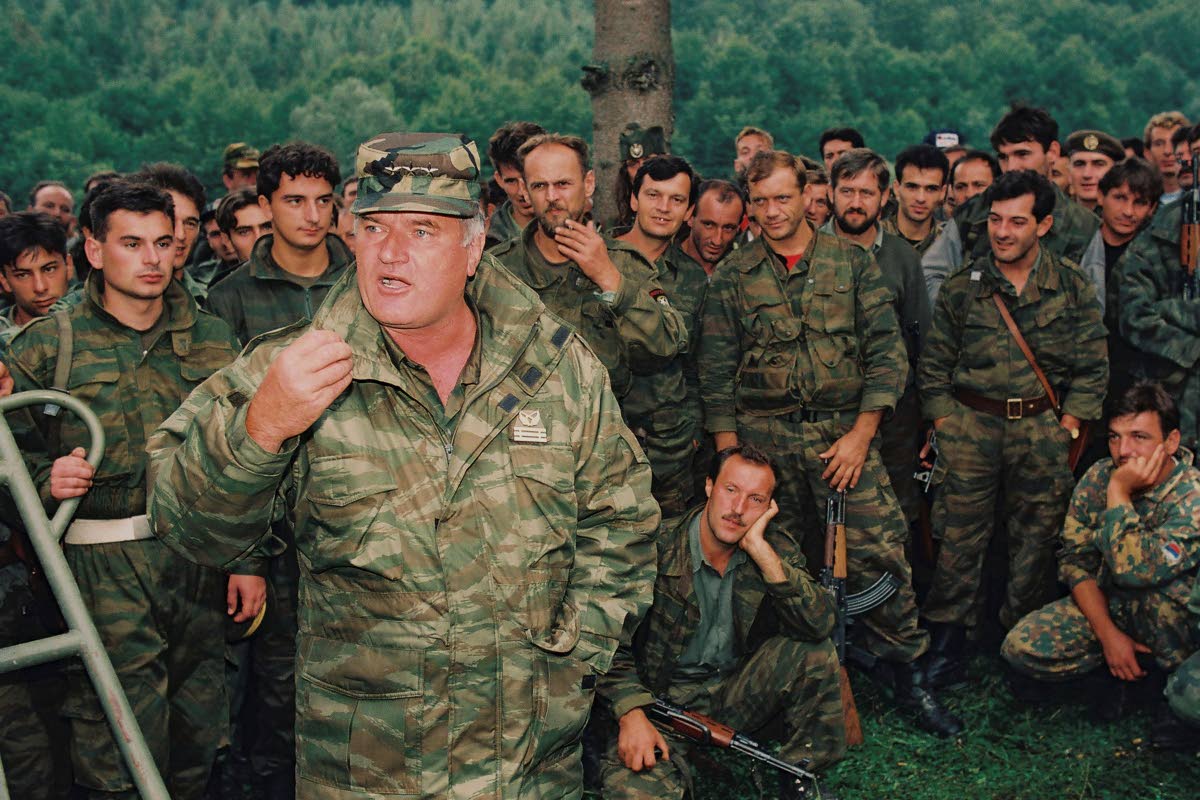 Bosnian Serb General Ratko Mladic speaks to soldiers near the Bosnian town of Cazin, September 4, 1994.
-
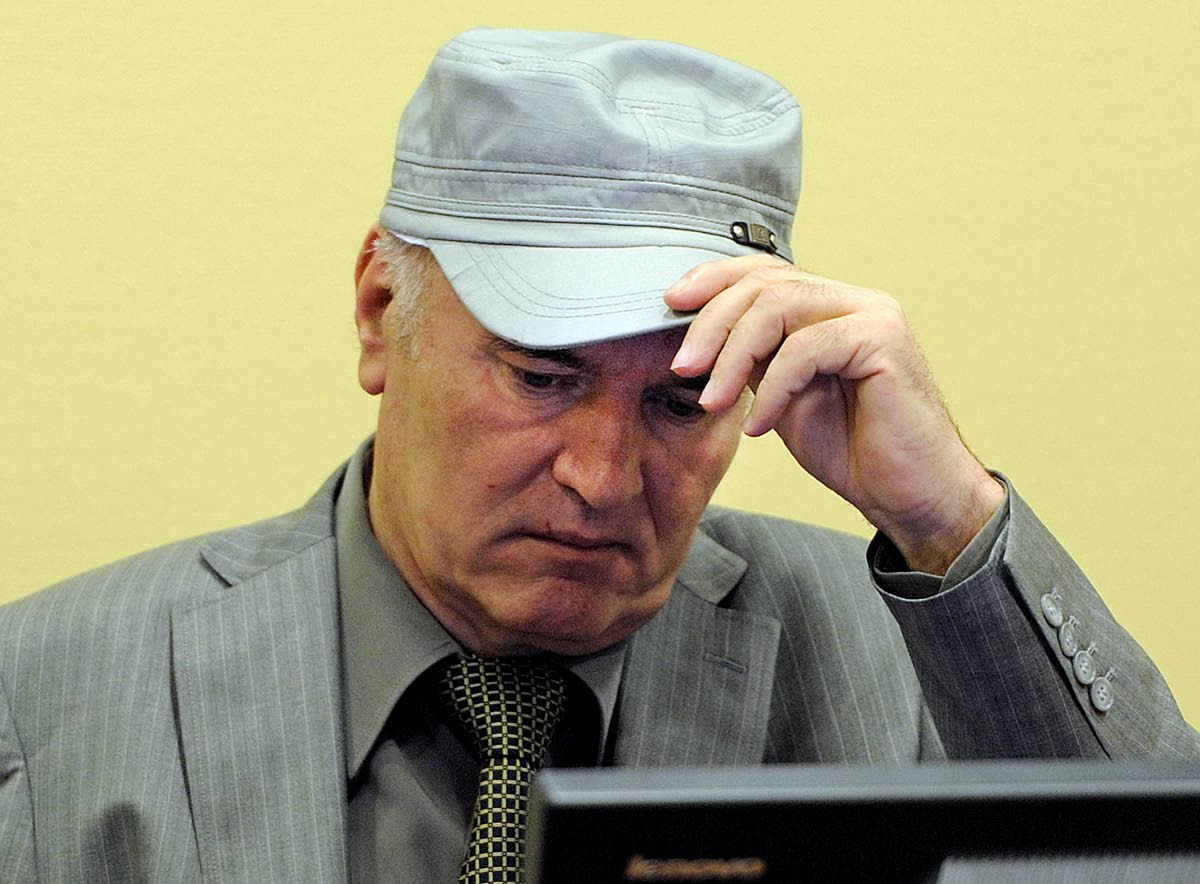 Ratko Mladic removes his hat in the court room during his initial appearance at the UN's Yugoslav war crimes tribunal in The Hague, Netherlands, June 3, 2011.
BELGRADE (AP):
Ratko Mladic, the bullish Bosnian Serb general whose forces besieged the Bosnian capital for several years in the 1990s and carried out the worst massacre in Europe since World War II, died yesterday while serving a life sentence for his crimes, UN officials said. He was 84.
Mladic died at a hospital in The Hague, Netherlands, UN court officials said. A Mladic relative who spoke on the condition of anonymity because of the sensitivity of the situation confirmed the reports and said Mladic’s son, Darko Mladic, was on his way to the Dutch city.
The UN tribunal for war crimes committed during the wars in the former Yugoslavia in the 1990s sentenced Mladic to life in prison in 2017 in what was considered a key step toward bringing justice to the victims. He had been in custody since 2011 after many years on the run.
The ruthless, blue-eyed former communist officer-turned-nationalist-warlord was one of the most notorious figures of the conflict that left more than 100,000 people dead and over 1 million homeless. He commanded his troops to “scorch the brains” of the Bosnian Muslims and boasted of being a “Serbian god.”
When the ethnic war in Bosnia and Herzegovina started in 1992, Mladic became the commander of the Bosnian Serb troops and took control of large swaths of the country to form a Serb mini-state.
Serbs under Mladic’s control laid siege to the Bosnian capital, Sarajevo, and other cities and villages, established concentration camps for detained non-Serb civilians and enemy soldiers, and systematically killed prisoners.
In Sarajevo, Serb troops kept the city isolated while killing civilians with snipers and heavy artillery. In 1995, Mladic’s troops slaughtered more than 8,000 Muslim men and boys in Srebrenica – the first case of genocide in Europe since WWII.
But Mladic and his admirers have never repented. He was seen by many as a patriot fighting for the first pan-Serbian state. Defiant, Mladic acted bullishly during his trial and yelled at the judges when sentenced to life in prison.
Munira Subasic, from the Mothers of Srebrenica group, said she had mixed feelings about Mladic’s death and deplored that Mladic’s crimes are still being denied by many Bosnian Serbs.
“Today, a major war criminal died, the criminal of the Balkans,” Subasic said. But while mothers of victims “are still carrying the pain in our souls” 31 years later, “we are still listening to denials, we are still listening to how Ratko Mladic was a hero for the Serbs,” she said.
“I am sorry that he died and that he did not suffer for a little while longer, that he didn’t wait for more and dream about the eyes of our children,” she said.
Residents of Pale, a Bosnian Serb stronghold just outside of Sarajevo, mourned Mladic.
“He was murdered there, in those dungeons,” said Janko Seslija, a former Bosnian Serb soldier. “I feel sorry for General Mladic. He was an honourable man, honourable soldier and commander.”
Mladic was born March 12, 1942, in the tiny Bosnian village of Bozinovici, in the hills 40 kilometres (25 miles) south of Sarajevo. Like other protagonists in the Yugoslav conflict, he imbibed nationalism from his family’s fate in WWII – his own father was killed by Croats.
A communist-era officer, Mladic sided with the Serbs as Yugoslavia disintegrated into war. Mladic first led a Serb insurgency in Croatia before taking over the Bosnian Serb army that was backed by Serbia and then-President Slobodan Milosevic, who also died in the custody of the Hague court in 2006 while on trial for genocide.
He completely disappeared from public view in 2008 and was finally arrested in May 2011 in a village near Belgrade where he was hiding at a relative’s house.
The frail-looking old man who appeared in court at the Hague was a far cry from the robust image Mladic exuded in wartime. But his defiance was intact.
“Everything you said is pure lies. Shame on you!” he yelled at the UN judges when they handed down the conviction.
Already in poor health upon arrest in 2011, Mladic is believed to have suffered multiple strokes during his years on the run and was hospitalised on several occasions while in custody.