Sean Major Campbell | Theology for today
Loading article...

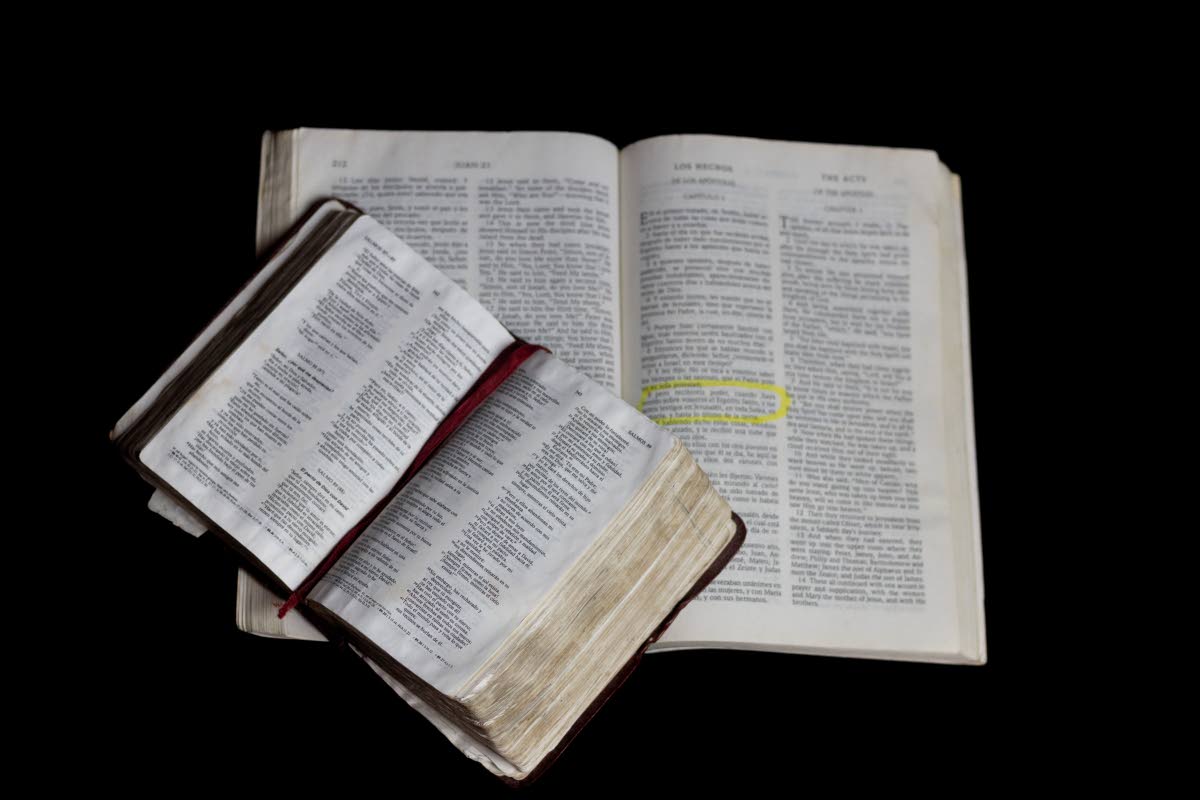
Everyone does theology. Theology is an exercise that is not limited to seminarians and other students in ministerial studies and pastoral formation. The Bible comprises books written by various writers who reflected the norms and cultural contexts of their time.
Many people today often make the mistake of bringing a contemporary interpretation to texts which did not know a 21st century way of thinking or even theological understanding. We often here people saying that “this is what is biblical or that is not biblical”, I do not wish to shock anyone, but not everything that is biblical is prudent for the Christian or the modern world or a particular cultural context.
It is common to hear many Christian conservatives speaking about the holiness of monogamy and a nuclear family as images of the biblical affirmation of marriage and family. Biblical marriage types are, however, much broader than some would care to admit.
Polygamy was well known in the world of the Bible. Elkanah, Ashur, Jacob, each had two wives. Esau and Rehoboam each had three wives. There was Abijah with 14 wives. Other men had multiple wives. However, David had many and Solomon had 700. Will the men-to-women ratio in places like Jamaica see a return to consideration for polygamy? And, if so, would women be also free to have multiple husbands?
In Deuteronomy 22:28-29, “If a man happens to meet a virgin who is not pledged to be married and rapes her and they are discovered, he shall pay her father fifty shekels of silver. He must marry the young woman, for he has violated her. He can never divorce her as long as he lives.” How would this fit in our Jamaican context today? What would be an equivalent of 50 shekels of silver? Would the price be different given that many of these Jamaican women come with university qualifications? Note that this approach is that of marriage because of rape.
To what extent do we see this concubinage pattern locally. This is another biblical one. This is where a man has one or more wives, along with some concubines. These would be women of lower status than the wife or wives. This is why Sarah could comfortably ask Abraham to send away Hagar.
What do you think about the idea of Levirate marriage in which a brother-in-law had a duty to marry his brother’s widow. Maybe just as well, since he would still be expected to impregnate her to ensure that she carries on her husband’s bloodline. In the case of Ruth, as a widow she was the closest living relative to Boaz. Hence the easy arrangement.
There are so many biblical things that we do not observe today. Take something as simple as wearing mixed fabrics. Deuteronomy 22:11 is quite clear. “Do not wear clothes of wool and linen woven together.” However, many Christians are wearing mixed fabrics today. And, in this heat, who wants to wear wool only?
Leviticus 19:19 is crystal clear. “Do not plant your field with two kinds of seed.” But many Christians who preach following every word of the Bible have all kinds of plants in their backyard garden. Show of hands. Who is “following every word” of the Bible?
The truth is that, within the realm of Biblical marriage, purchasing wives, marriage through abduction, and arranged marriages were all par for the course. When Jacob was unable to buy his wife because of a lack of assets, he agreed to give seven years of work for her. With people getting married later in today’s world, which 35-year-old woman would be interested in waiting seven years for the purchase price prior to marriage?
In Deuteronomy 21:11-14, there is a piece of biblical advice concerning women in captivity. Israelite men were to be so guided when treating with female captives, out of sensitivity for their protection and dignity. “If you notice among the captives a beautiful woman and are attracted to her, you may take her as your wife. Bring her into your home and have her shave her head, trim her nails and put aside the clothes she was wearing when captured. After she has lived in your house and mourned her father and mother for a full month, then you may go to her and be her husband and she shall be your wife. If you are not pleased with her, let her go wherever she wishes. You must not sell her or treat her as a slave, since you have dishonoured her.”
Caring language is used. However, this biblical advice does not fit within a Christian understanding of marital relationships. Or, maybe I should say, it would not be consistent with a progressive or Christian humanist approach. These days, we are seeing all forms of so-called Christian teaching which conflict with the way of Christ. Right here in Jamaica, there are pastors who are sustained by head offices where the order of the day is Christian nationalism! Shh! Their members are often not aware. These groups are also anti human rights.
In all these biblical arrangements concerning marriage, gender inequality was a significant feature. The woman was simply a movable item. Take the matter of an enslaved woman being given to an enslaved man. And this would usually be in cases of rape. Of course, children of the union were automatically the property of the slave owner. Similarly, if an Israelite man sold his daughter into slavery, she was to be a slave forever.
Christian theology does not seek to advance the Ten Commandments in their original form as universal. That original version also treats women as property. No wonder rape and adultery were offences against the man who owned the woman. Not against the woman! Too many Christians are busy preaching what they do not understand.
Keep your questions and comments coming in. Have a good week!
Fr. Sean Major-Campbell is an Anglican priest and advocate for human rights and dignity. Please send feedback to columns@gleanerjm.com and seanmajorcampbell@gmail.com