Montego Bay doctor leads Jamaica into AI medicine era
Loading article...
WESTERN BUREAU:
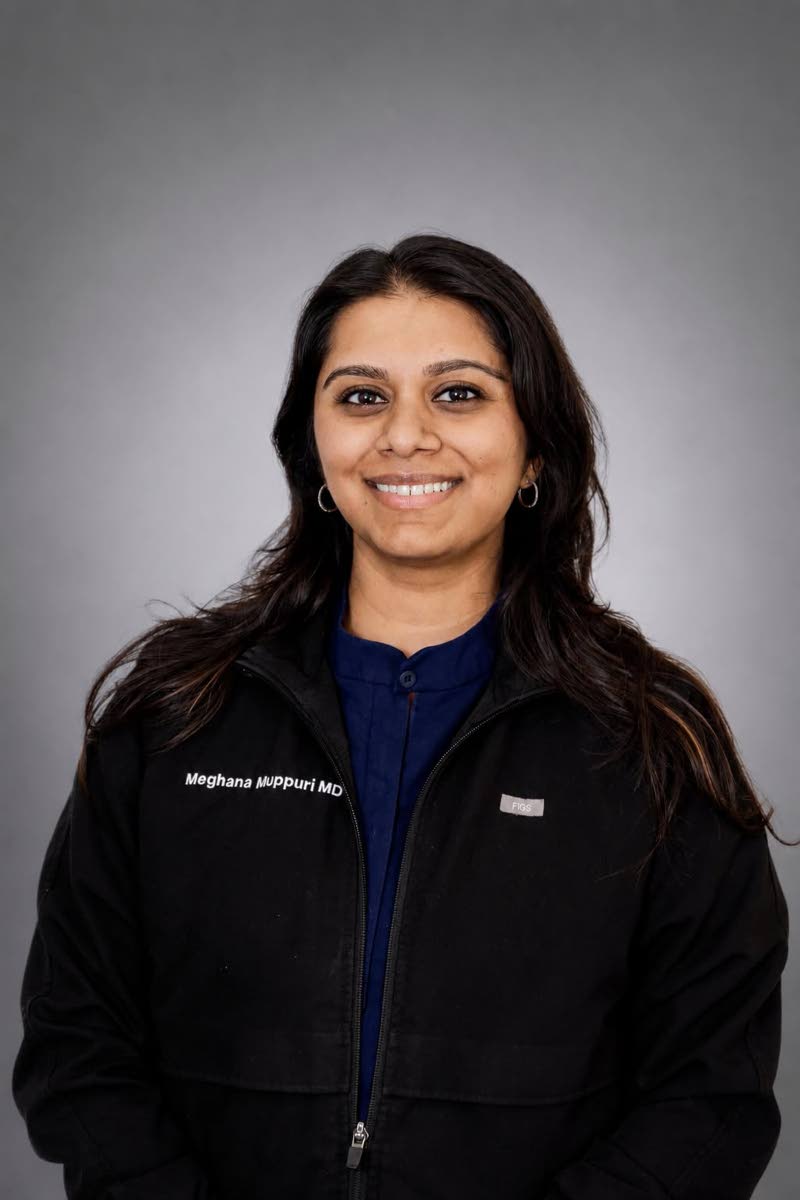
A Montego Bay doctor has become one of, if not the first, Jamaican physicians to earn a postgraduate degree in Artificial Intelligence in Medicine, positioning her at the forefront of a technological revolution she hopes will one day transform healthcare back home.
Dr Meghana Muppuri, a former Mount Alvernia High School student and graduate of The University of the West Indies (UWI), Mona, says her ambition extends well beyond personal achievement. She wants to return to Jamaica armed with the knowledge to improve patient care, modernise hospital systems and help integrate artificial intelligence into the country’s healthcare sector.
“I really wanted to see how this could one day benefit Jamaica,” Muppuri told The Gleaner. “I wanted to explore how AI could improve patient care, strengthen healthcare workflows, enhance medical education and eventually be applied to our own healthcare industry.”
The 28-year-old physician’s journey has taken her from Montego Bay to Kingston and then to some of the United States’ leading medical institutions, including the University of Alabama at Birmingham, the Martinos Center for Biomedical Imaging at Harvard/Massachusetts General Hospital, and Richmond University Medical Center, where she has begun her residency in radiology.
For Muppuri, however, the story did not begin in a research laboratory or with artificial intelligence.
It began with curiosity.
“I was always the child who asked too many questions,” she said with a laugh. “Why did it happen? How does this work? What can I do to make it better? I never really outgrew that habit.”
Born in New York City to parents originally from Tirupati, India, Muppuri, a naturalised Jamaican, was raised in Montego Bay, where she says Jamaica shaped both her character and her purpose.
“My parents were my greatest influence, but so were the neighbours, the teachers and the community,” she said. “I really believe all of that collectively instilled compassion, resilience and the belief that if you can help someone, you should.”
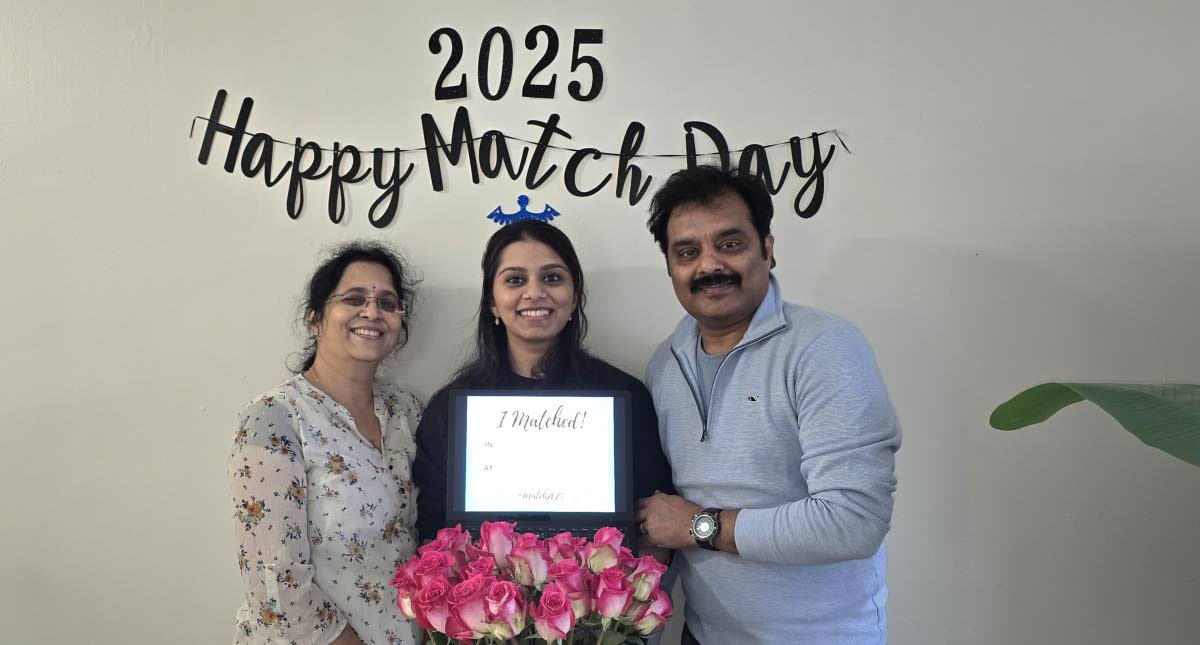
Her father, Dr Guna Muppuri, is a physician and founder of BIMS Medical School, while her mother, Vishnu, who holds a master’s degree in nutritional sciences and dietetics, has worked alongside him in building the institution. Ironically, it was her parents who first encouraged her to explore artificial intelligence.
“They saw AI in medicine as the future,” she recalled. “They encouraged me to learn more about it.”
After completing her medical degree at UWI Mona and serving as an intern at Cornwall Regional Hospital, followed by a stint in radiology, Muppuri moved to the United States to continue her education.
Her exposure to radiology research at the University of Alabama at Birmingham in 2022 proved to be a turning point.
radiology research
“At first, I thought AI was just for engineers,” she admitted. “It wasn’t until I began working in radiology research that I realised there was a place for physicians at the table.”
Today, she sees artificial intelligence not as a replacement for doctors but as a powerful partner in improving healthcare.
She points to its growing role in interpreting medical images, identifying disease patterns, improving hospital workflows and helping physicians detect abnormalities earlier and more accurately.
However, one of the projects closest to her heart had nothing to do with sophisticated imaging technology.
Instead, it focused on helping patients understand their own medical reports.
Working with researchers from the University of Pennsylvania, Muppuri helped develop an artificial intelligence model capable of translating highly technical radiology reports into plain language.
Many patients receive imaging reports filled with unfamiliar medical terminology long before they meet their doctor.
“The reports can be confusing or even frightening,” she said. “We wanted patients to understand what was happening with their own health.”
complex medical findings
The project demonstrated how large language models could convert complex medical findings into patient-friendly explanations, allowing patients to become more informed participants in their own care.
“Innovation doesn’t always mean creating something entirely new,” Muppuri said. “Sometimes it’s about making healthcare more understandable, more reachable and more human.”
She believes that approach could have a profound impact in Jamaica, where heavy patient loads often leave doctors with limited time to explain every aspect of a diagnosis.
“Our healthcare system is stretched thin,” she said. “If patients better understand their health, they become more empowered to make decisions and participate in their own care.”
Looking ahead, Muppuri predicts that artificial intelligence will reshape medicine over the next decade, particularly in specialties such as radiology and pathology, where image recognition plays a central role.
She envisions a future in which electronic medical records are seamlessly connected across public and private hospitals, allowing patients to receive more coordinated and personalised care.
Still, she warns that technology alone is not the answer.
“The future is full of promise, as long as we steer it thoughtfully,” she said. “We have to make sure these innovations are equitable, safe and always centred on our patients’ trust.”
Despite building an impressive career in the United States (US), Muppuri insists Jamaica remains at the centre of her plans.
“Whenever I have a weekend, I’m in Jamaica,” she said. “I’ll take a Friday off, fly home and go back on Sunday. I often surprise my family by just showing up at the doorstep.”
Her long-term goal is to return permanently while maintaining research collaborations with leading American institutions.
She believes Jamaica already possesses the talent needed to build an AI-enabled healthcare system.
clinical expertise
“We have exceptional clinicians, data scientists and intellectuals. That’s just Jamaica,” she said. “If we combine the right clinical expertise with thoughtful innovation, we have a tremendous opportunity to strengthen our healthcare system and improve patient care.”
She believes the process should begin with practical steps: investing in digital infrastructure, introducing AI education into medical training and launching small pilot projects that solve real healthcare problems before expanding nationally.
The journey, however, has not been without sacrifice.
Moving from Jamaica to the US meant adapting to a completely different healthcare system while balancing clinical duties, research, graduate studies and family life.
“There were times I questioned whether I had made the right decision,” she admitted. “The work felt endless.”
Those difficult moments, she said, taught her one of life’s greatest lessons.
“Any path worth taking comes with moments of doubt,” she reflected. “Looking back, those moments didn’t mean I was on the wrong path. They meant I needed to step back, reset and keep moving forward.”
Although she has now achieved a milestone as Jamaica’s first physician to earn a postgraduate qualification in Artificial Intelligence in Medicine, Muppuri is reluctant to describe herself as a history-maker.
“I don’t think I’ve made history,” she said quietly. “I think it’s in the making.”
Instead, she hopes her journey inspires another young Jamaican to dream bigger.
“If my story encourages even one young Jamaican to pursue something they once thought was out of reach, then it’s been worthwhile.”
For the girl from Mount Alvernia High School who never stopped asking questions, that may prove to be her greatest contribution of all.
janet.silvera@gleanerjm.com