Earth Today | Local roots, global stakes - Caribbean conservation finance about more than money
Loading article...
-
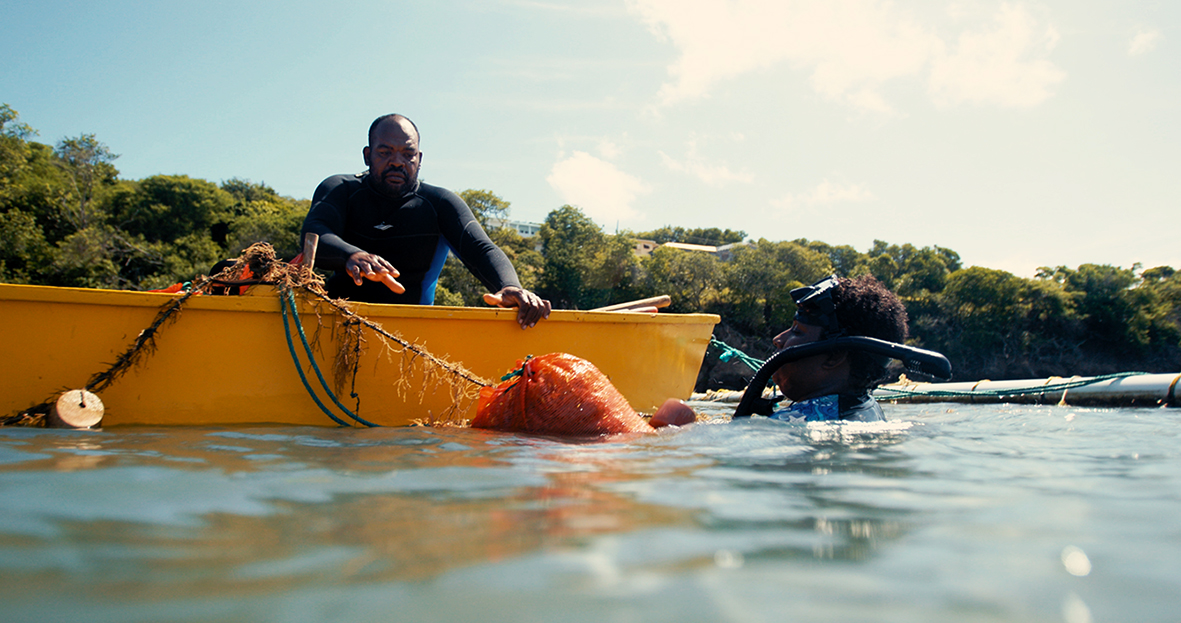
A diver resurfaces after checking on an underwater coral restoration project. Photo: Caribbean Biodiversity Fund.
-

In the Dominican Republic, conservationists preserve the country’s national flower, the Bayahibe Rose. Photo: Caribbean Biodiversity Fund.
OUR REGION is facing a critical decline in biodiversity, exacerbated by climate change impacts.
Latin America and the Caribbean are experiencing the steepest regional decline in average species abundance on Earth; currently estimated at 94 per cent. Freshwater species populations are seeing an 83 per cent overall global decline. Behind those numbers is a financing crisis, but it is not the one most people assume.
The conversation around conservation finance tends to begin and end with the funding gap. The Inter-American Development Bank estimates that gap at between USD 600 and USD 800 billion per year - in our region alone, defined as the difference between current conservation spending and what is needed to halt biodiversity loss and meet global targets like 30x30. That figure is staggering, and it matters. But the dollar amount is only part of the story.
Consider what happened in Belize. We have witnessed ground-breaking mechanisms being deployed to halt these declines, one of them being the Belize Blue Bond Agreement, concluded in November 2021.
“This Agreement reduced the country’s total debt by 12 per cent and its debt to GDP ratio by 25 per cent,” said Beverly Wade, director for Blue Bond & Finance Permanence Unit in Belize.
Ground-breaking as it was, a mechanism like this depends on something money alone cannot buy: strong legislation, accountable governance, and institutions capable of managing resources over the long term.
Those are precisely the gaps that receive far less attention. A World Justice Report on Corruption in the Caribbean found that bribery remains a common feature of everyday institutional interactions across the region, eroding public trust and slowing implementation at the project level. Lengthy procurement processes compound the problem, as does the chronic difficulty of attracting and retaining skilled professionals in small-island jurisdictions where talent pools are limited and opportunities abroad are plentiful. Smaller community-based organisations face additional pressures around transparency, accountability, and leadership succession that can quietly destabilise otherwise effective programmes.
How do we overcome some of these challenges? We have found that the most consequential shifts in conservation finance begin when a coastal community is granted legal authority over its fishing grounds or a national trust fund that has strengthened its governance to meet internationally recognised standards, and a programme officer is retained because their institution invested in their growth.
Organisations like the Caribbean Biodiversity Fund (CBF) work alongside its network of National Conservation Trust Funds to bridge some of those gaps. Guided by the globally recognised Practice Standards for Conservation Trust Funds, the CBF's partnerships invest simultaneously in governance, institutional capacity, and knowledge management. Conservation knowledge generated across the network is shared through publications, digital platforms, and direct partner support, so that a lesson learned in one country strengthens practice across the region.
This year's International Day for Biological Diversity theme, ‘Acting Locally for Global Impact’, captures exactly what that work represents such as the incremental steps toward stronger and more accountable institutions and the support we provide towards retaining motivated individuals who are leading implementation efforts at the forefront, not just the dollar amounts.
Contributed by Tanja Lieuw, CBF conservation finance programme manager.