FAKE GUNS, REAL TIME - Music producer gets life sentence for imitation firearms
Loading article...
-

Whittaker
-
Smith
Ewayne Pryce, a Kingston music producer, who told investigators that imitation firearms found at his home were being used as props in music videos, has been sentenced to 15 years’ imprisonment and life behind bars under the controversial Firearms Act.
On February 10, Pryce was convicted in the Supreme Court (Gun Court) of eight counts of possession of prohibited weapon and stockpiling prohibited weapons after a joint police-military operation uncovered eight imitation firearms at his Grants Pen Drive, Kingston 8, home on December 28, 2023.
Under the sentence handed down last Friday, the 47-year-old will serve 15 years’ imprisonment on the possession charges and life imprisonment for stockpiling prohibited weapons.
He will become eligible for parole after 10 years.
According to the facts outlined in court, lawmen searched a room at the home and found the imitation firearms inside a bag.
Investigators said Pryce told them the items were being used in music videos.
When asked whether he had a permit for the weapons, he reportedly told officers he did not, after which he was arrested and charged.
The case has now become a flashpoint in the growing national controversy surrounding the Firearms (Prohibition, Restriction and Regulation) Act, 2022, which, in certain circumstances, treats imitation firearms similarly to real guns and imposes mandatory minimum penalties.
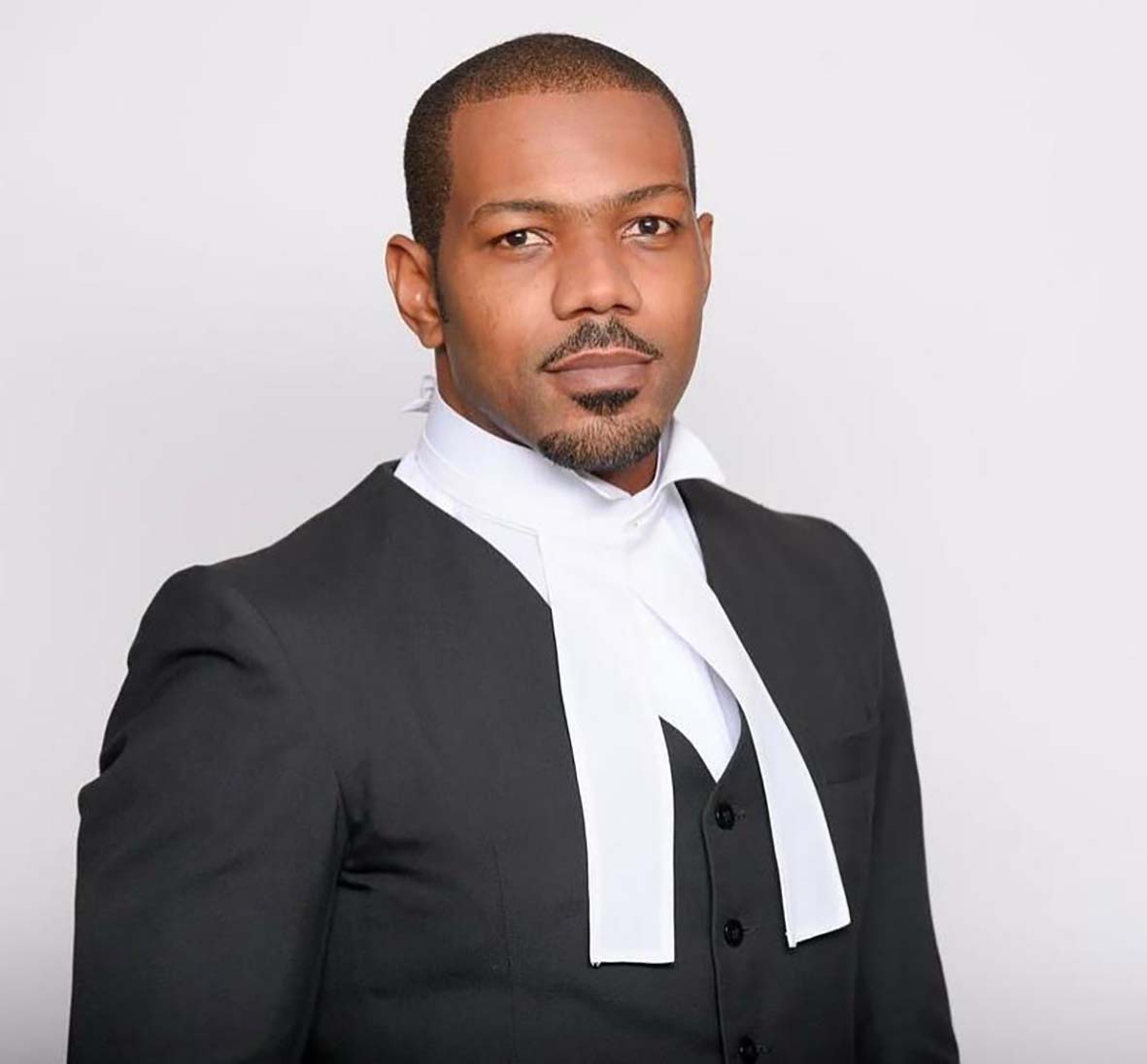
Attorney-at-law Kymberli Whittaker argued that the legislation raises “serious constitutional concerns” because it “criminalises appearance rather than actual capability”.
“A person can be subjected to the same severe penalties applicable to real lethal firearms even where the object is incapable of firing a projectile or causing ballistic harm,” Whittaker told The Sunday Gleaner.
“This offends the constitutional principle of proportionality. Punishment must bear a rational relationship to the actual harm and danger involved.”
Whittaker also questioned whether the law satisfies standards of legal certainty, arguing that the definition of imitation firearm may be so broad that ordinary citizens may struggle to know what items fall within the legislation.
She added that laws carrying severe criminal penalties “must be clear, predictable, and narrowly defined”.
She further criticised the mandatory minimum sentencing structure, contending that once an object is classified as an imitation firearm, judges are left with limited ability to impose individualised sentences based on the circumstances of each case.
“Even in addressing violent crime, Parliament must legislate within constitutional limits,” Whittaker added.
Attorney-at-law Sanjay Smith said the case has intensified concerns over the shift between the old Firearms Act and the current legislation.
“Previously, under the old Firearms Act, the punishment would range from a fine to 15 years. Now, the punishment is far more harsh,” Smith told The Sunday Gleaner.
“It is unjust in my view that possession of an imitation firearm with a reason advanced of them being props for a music video has resulted in such a punishment.”
Smith noted that while both the old and new Firearms Acts required an accused person to establish a lawful reason for possessing imitation firearms, the law still leaves unresolved questions.
“The question becomes, what can be accepted as a lawful reason?” he said.
He also pointed out that under the current law, possession of three or more prohibited weapons can amount to stockpiling.
“It still comes back to the question of whether a fine would have been more appropriate in the circumstances,” Smith added, while cautioning that every case must be assessed on its own facts and merits.
Meanwhile, human rights advocates Jamaicans For Justice (JFJ) said the law went too far by applying the same harsh mandatory minimums to imitation items as real operational firearms.
While declining to comment specifically on Price’s case, the advocacy group’s executive director, Mickel Jackson, said the organisation welcomed the Government’s announced intention to review the legislation.
“We believe the current Firearms Act (2022) went too far by treating imitation items with the same harsh mandatory minimums as real, operational firearms,” Jackson told The Sunday Gleaner.
She argued that the previous Firearms Act contained more balanced provisions, including carve-outs for imitation firearms used in film, television, theatrical performances, and rehearsals.
“If there is a need to tighten safeguards in those areas, that can and should be done, but the current blanket criminalisation is problematic and counterproductive,” Jackson said.
She stressed that the law already containeds provisions dealing harshly with persons who use imitation firearms to commit crimes.
“The penalty for mere possession cannot, and should not, be the same as the penalty for use with intent to cause harm,” she said.
Jackson also warned that rigid mandatory minimums risk undermining the justice system by stripping discretion from police, prosecutors, and judges.
“The Government must not arrogate upon itself the role of the judiciary. Otherwise, grave injustices will occur,” Jackson said.
She further cautioned that the broad wording of the legislation could potentially affect ordinary citizens, including children using toy guns.
“For parents, the game of police and thief, which many played growing up, ought to be avoided as the law makes no clear distinction with even a child with a toy gun,” Jackson said.
The controversy comes amid indications from the Government that amendments to the Firearms Act may be forthcoming, particularly regarding the treatment of imitation firearms.
When the legislation was being debated in Parliament, Deputy Prime Minister and National Security and Peace Minister Dr Horace Chang defended the tough provisions, arguing that criminals frequently use imitation firearms to commit robberies and violent crimes and that police officers confronting what appears to be a gun cannot safely determine in real time whether the weapon is fake or real.
The measures were passed in 2022 when Jamaica was recording high murder figures and there was strong public pressure for tougher anti-gang and anti-gun legislation.
Chang had also indicated that amid Jamaica’s violent crime crisis, the Government intended to remove from public spaces “anything that looks like a gun”, arguing that replica weapons can create the same fear and intimidation as real firearms.
But critics, including at least one music video director who spoke with The Sunday Gleaner on condition of anonymity, argue that Price’s case now highlights what they describe as the unintended consequences of one of Jamaica’s toughest anti-crime laws.
“What would be the outcome if we are on set and a police team pull up and request a search? … We would have to have gained permission, and let’s say we did not have permission, you can be doing your job and get 15 years to life. Something is fundamentally wrong here,” the video director told The Sunday Gleaner.
What is prohibited?
Any firearm for which no authorisation is granted is considered a prohibited weapon. Under Section 5 of the Act, the mere possession of a prohibited weapon attracts a penalty of imprisonment for such term, of not less than 15 years or more than 25 years, as the court considers appropriate, upon conviction.
The correct route
In relation to imitation firearms in particular, authorisation may only be obtained from the minister under very specific circumstances. These include use in theatrical performances, including films and music videos, and recreational activities such as the operation of paintball facilities.
Getting permission
To legally use fake guns, toy guns, or prop replicas in a music video, you must take the following steps, you must apply for a special permit from the Ministry of National Security. Simply bringing in or using props without presenting proof of this authorisation to law enforcement is a serious offense.
You should also register your music video shoot with the Jamaica Film Commission. They will guide you through the permit processes, including obtaining letters of endorsement for the use of mock weapons and explosives. They may also provide guidance on storage to prevent legal issues.
Get police supervision. Even with approvals, it is standard practice to notify the Jamaica Constabulary Force. The police often require a supervising officer to be physically present on set whenever weapons (real or imitation) are being brandished.