A safe space to grow - New Child Mental Health Centre opens in St Elizabeth
Loading article...
-
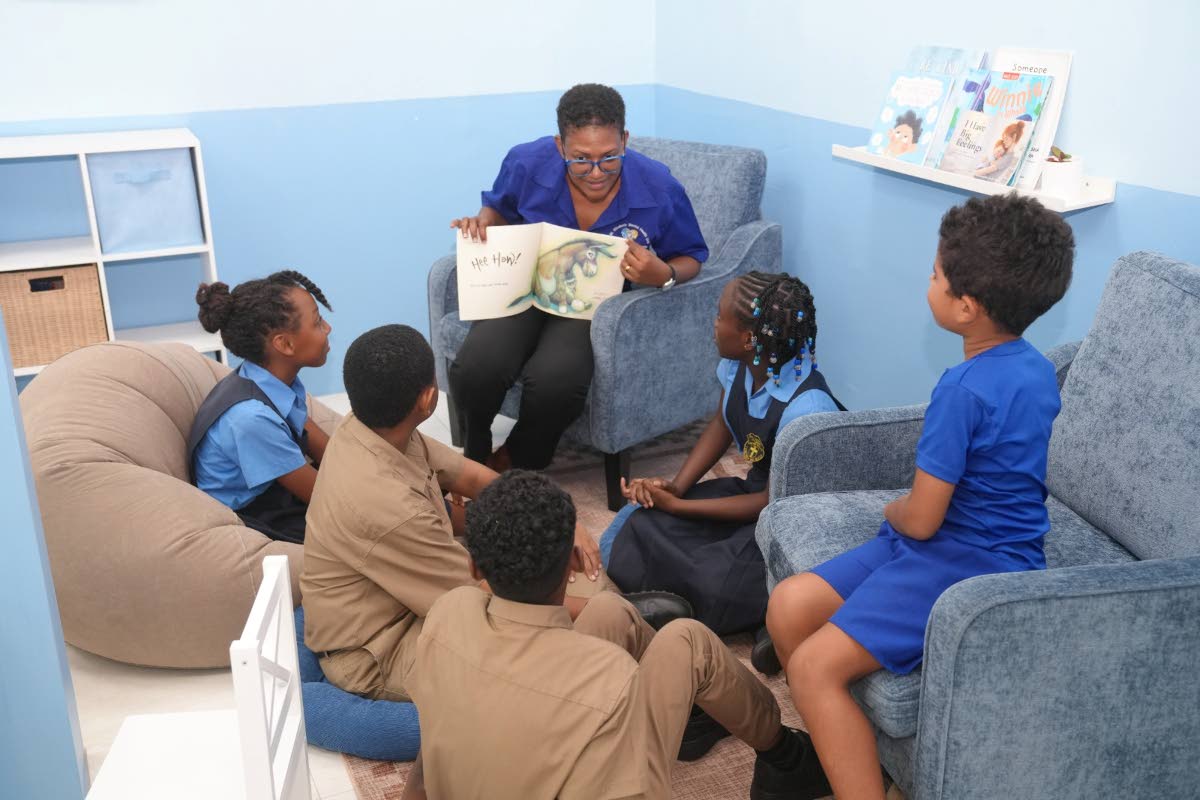 Nurse Racquelia Gayle-McIntyre participates in a book-reading with the children. Photo - Contributed
-
Nurse Racquelia Gayle-McIntyre participates in a book-reading with the children. Photo - Contributed
-
 Personnel at the Child and Adolescent Mental Health Wellness Centre at Junction Health Centre in St Elizabeth. Back row (from left): R. Parchment and M. Yorke. Third row (from left): N. Braham, A. Vassell, D. Whyte and T. Walker. Second row (from left): K. Palmer, N. Lindo, E. Chambers, Dr G. Channer, Nurse P. Ebanks, Dr K. Bugam and D. Rowe. Front row (from left): psychiatrist Dr D. Garvey, F. Nesbeth-Brown, S. Wright, S. Wright, T. Fairclough, clinical psychologist Amanda Fraser, Nurse R. Gayle-McIntyre, C. Mundy, Nurse S. Channer and D. Robinson. Photo - Contributed
-
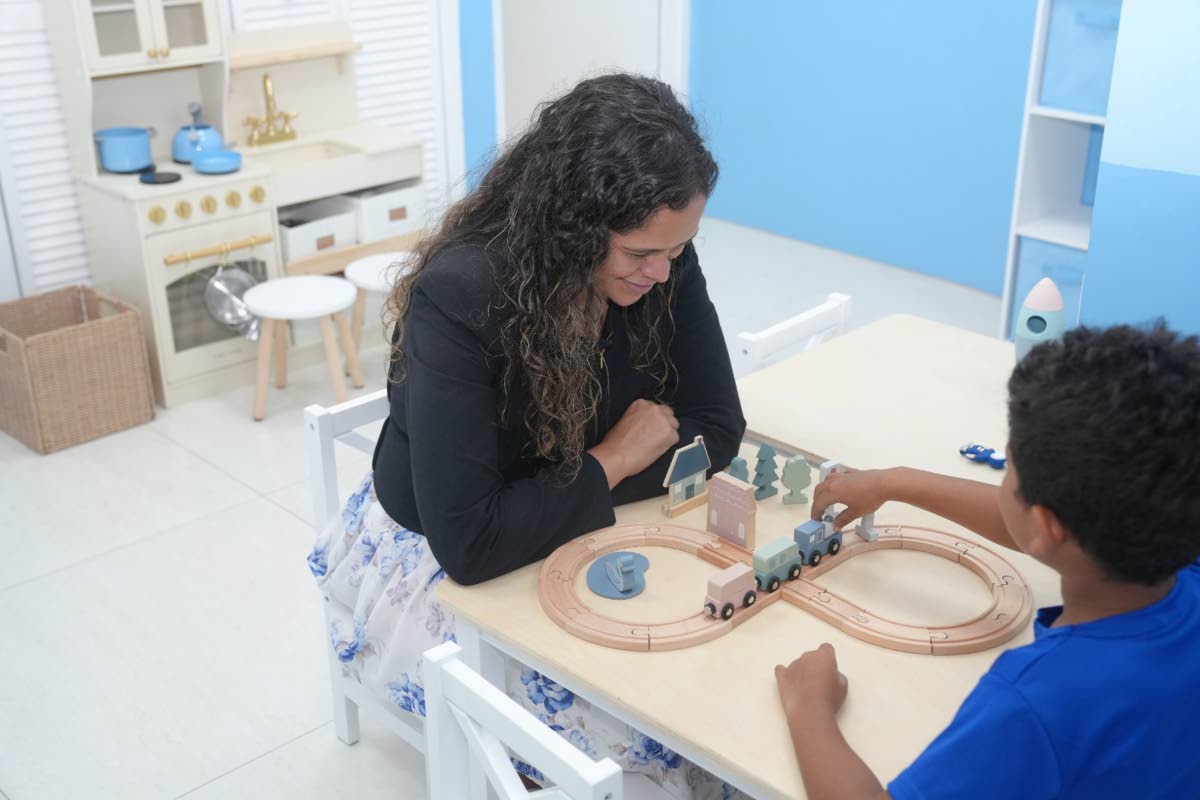 Regional clinical psychologist Amanda Fraser demonstrates play therapy with her son, Luca, highlighting how play can help children express their emotions, explore their experiences, and develop communication and coping skills in a safe, supportive environment. Photo - Contributed
A child who struggles to communicate may have a great deal to express but needs a different way to do so. A child who behaves differently from peers is not necessarily deliberately difficult; and a child experiencing emotional or developmental challenges should not have to navigate those difficulties without support.
These are the principles guiding Amanda Fraser, regional clinical psychologist with the Southern Regional Health Authority (SRHA), who has helped establish the Child and Adolescent Mental Health Wellness Centre at Junction Health Centre in St Elizabeth.
Officially opened on October 8, 2026, the centre represents a significant step towards improving access to child-focused psychological care in the southern region. Designed around the developmental and emotional needs of children, it aims to provide a welcoming environment where young people can receive therapeutic support without the intimidation sometimes associated with traditional clinical settings.
Fraser, who holds a Master of Science degree, led the research, conceptualisation, design and execution of the centre’s physical space, working alongside the St Elizabeth Mental Health team to turn the vision into reality.
Her motivation stemmed from recognising that making clinical services available was only part of the solution. The environment in which children receive care can also influence their comfort, engagement, and willingness to participate.
“I wanted to help create a space that would feel welcoming rather than intimidating, encourage engagement rather than anxiety, and recognise the importance of play in children’s emotional and psychological development,” Fraser said.
The result is a play-guided, Montessori-inspired environment intended to accommodate children with different developmental, emotional, behavioural and learning needs. The centre has three clinical offices, while its wider development plans include a multifunctional space, an outdoor playground and a sensory garden. Together, these facilities are intended to support a more holistic approach to child and adolescent mental health.
The centre is intended to serve children and adolescents between three and 18 years old, with a target of reaching approximately 300 children annually.
Its intended beneficiaries include children experiencing difficulties associated with autism spectrum disorder, attention-deficit/hyperactivity disorder (ADHD), learning challenges, developmental differences, anxiety, emotional regulation, behavioural concerns and social interaction.
At present, the centre provides play therapy and other therapeutic interventions. Specialised psychological assessments and diagnostic evaluations are among its longer-term goals, rather than services currently being offered.
Fraser believes the child-friendly approach is particularly important because younger children may not yet have the vocabulary or communication skills to explain what they are feeling or experiencing. “Play is much more than recreation. It is one of the primary ways children communicate, learn, explore their environment, and make sense of their experiences,” she said.
Through play therapy, children can explore emotions, practise problem-solving, develop coping strategies and work through difficulties in ways suited to their developmental stages.
A child experiencing emotional regulation difficulties, for example, may benefit from activities that help them recognise and express feelings. Another who struggles with social interaction may benefit from supported activities that encourage communication, cooperation and turn-taking.
These approaches also recognise that children with the same diagnosis can have very different needs.
Autism and ADHD, for instance, can affect communication, attention, sensory processing, impulse control and social interaction in different ways.
“We want to engage children according to their individual needs, abilities, interests and developmental stages, rather than expect every child to respond in the same way,” she said.
Some children may communicate more comfortably through imaginative play, drawing or creative activities, while others may respond better to structured games that encourage emotional expression, problem-solving and coping skills.
Creating a safe and predictable environment is equally important. Children should not feel ashamed of their differences or pressured to participate in ways that cause unnecessary distress. “Ultimately, inclusion means creating conditions in which each child can participate, communicate, develop skills and feel that they belong,” Fraser said.
The planned multifunctional space, outdoor playground and sensory garden are intended to complement the centre’s therapeutic services by creating additional opportunities for movement, exploration, social interaction and practical learning.
The centre is also developing a partnership with ISRATECH to incorporate gardening and agricultural activities into its outdoor environment. Plans include planting seedlings, growing plants and providing suitable features, such as pots, benches and fencing, to support the development of the garden.
“Gardening activities can encourage patience, responsibility and confidence. Children can plant seeds, water plants and observe their growth, while learning about living things and the environment,” Fraser said.
The activities may also reinforce basic cognitive skills, including counting, recognising colours, sequencing and following instructions. Working together can encourage children to share materials, take turns and contribute to a common goal.
For children who find conventional classroom-style learning challenging, hands-on activities can provide another way to explore new concepts.
While the centre is designed around children, Fraser recognises that parents and caregivers also need guidance as they try to understand and respond to their children’s needs.
Fraser encourages parents to trust their observations and seek professional guidance when concerns persist or begin to affect a child’s everyday life. “Seeking help is not about labelling a child. It is about understanding the child,” she said.
She cautioned that children develop at different rates and that every developmental difference does not necessarily indicate a disorder. However, persistent concerns deserve attention, and observations from both home and school can help professionals better understand a child’s experiences.
A child who struggles at school, she noted, is not necessarily lazy or unmotivated. Similarly, a child who has difficulty communicating may have much to express but requires a different way to do so.
Parents are encouraged to speak with teachers and healthcare providers when they have concerns, and to enquire about available services through the Junction Health Centre or the relevant SRHA health facility.
Formal psychological assessments and diagnostic evaluations are planned for the future, subject to the availability of appropriate assessment tools, trained personnel and resources.
Although the centre has opened, Fraser said sustained investment will be necessary to develop its facilities and broaden its services. Therapeutic materials, toys, educational supplies, sensory resources, furniture and equipment are among the items needed to strengthen its current programmes.
In the longer term, specialised assessment tools and testing materials will be important as the centre works towards introducing psychological assessments and diagnostic services.
Trained personnel and continuing professional development will also be essential to supporting children with complex emotional, behavioural and developmental needs.
Her vision is for a service that recognises children’s challenges without defining them by those difficulties, while helping them develop their strengths and potential. “If there is one message I would want people to take away from this initiative, it is that every child deserves to be understood before they are judged, supported when they are struggling, and given the opportunity to reach their full potential,” she said.
keisha.hill@gleanerjm.com