Patrick Robinson | Need for a body of counsellors
Loading article...
-
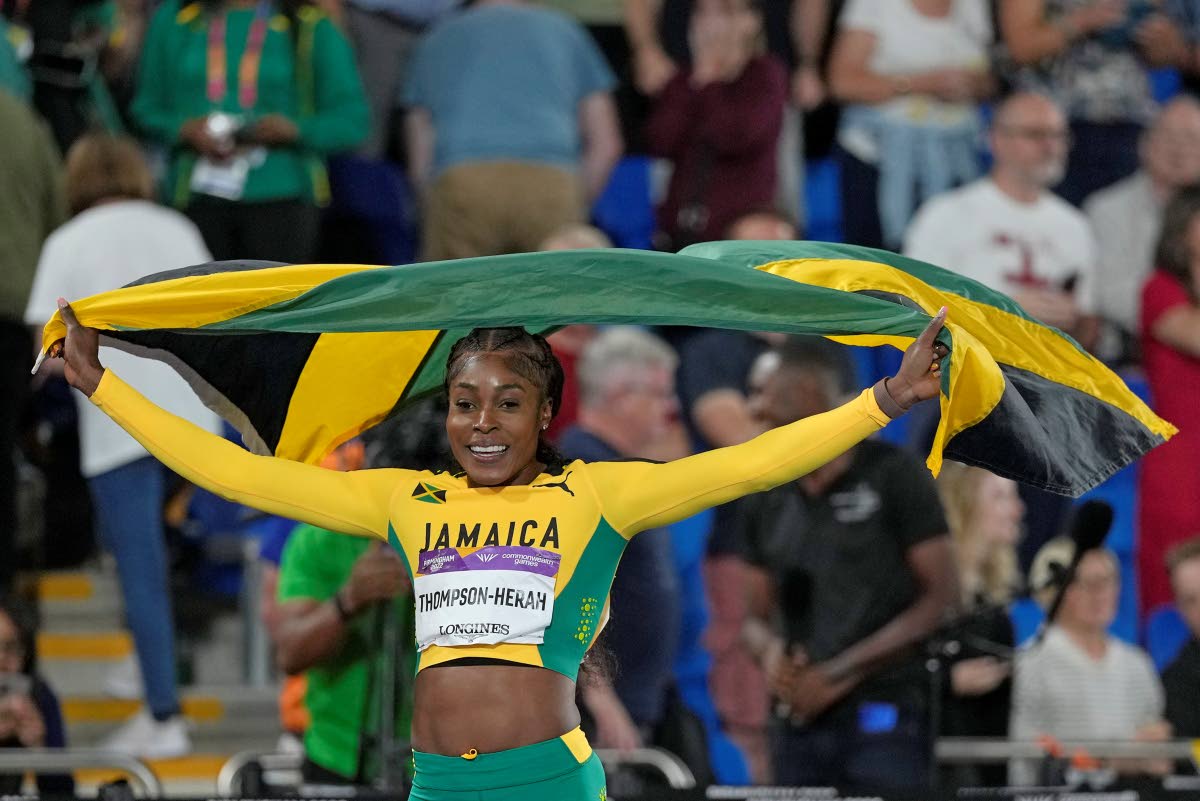 Elaine Thompson-Herah celebrates after winning the gold medal in the women’s 100m final during the athletics in the Alexander Stadium at the Commonwealth Games in Birmingham, England, in August 2022. Photo - AP
-
Elaine Thompson-Herah celebrates after winning the gold medal in the women’s 100m final during the athletics in the Alexander Stadium at the Commonwealth Games in Birmingham, England, in August 2022. Photo - AP
-
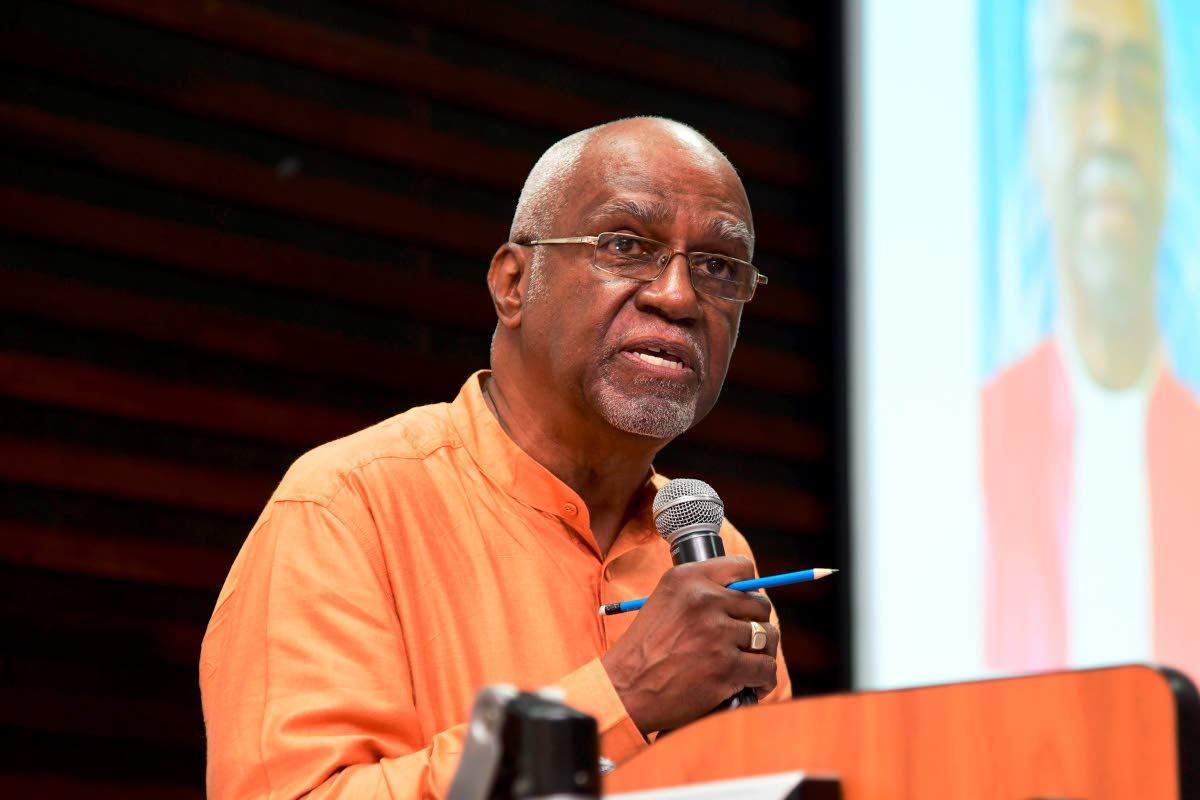 Judge Patrick Robinson. Photo - File
Elaine Thompson-Herah of Banana Ground, Manchester, Jamaica is arguably the greatest female sprinter the world has ever seen.
For the purpose of the analysis below, I am excluding the records held by Florence Griffith- Joyner.
The 100m and the 200m are generally considered to be the quintessential sprinting events in track and field athletics, though I concede that Wade Van NieKerk’s 400m world record of 43.03 seconds is not a Sunday afternoon stroll in Hope Gardens.
It is performance in the 100m and the 200m that will determine the greatest sprinter in the world. An athlete who only runs the 100m or the 200m may be the greatest 100m or 200m runner in the world, but cannot be the greatest sprinter in the world. That distinction is reserved for an athlete who runs both events.
The 100m and the 200m are companion events, mutually reinforcing and complementing each other with speed and strength. Many of our athletes have recognised the benefit of competing in both events. Donald Quarrie ran both the 100m and the 200m, as did Merlene Ottey, Juliet Cuthbert, Usain Bolt, Yohan Blake, Veronica Campbell-Brown, Shelly-Ann Fraser-Pryce, Kerron Stewart and Shericka Jackson, who also ran the 400m.
Thompson-Herah’s times of 10.54 secs. for the 100m and 21.53 secs. for the 200m qualify her for consideration as the greatest female sprinter ever. But Shericka Jackson’s times of 10.65 secs. for the 100m and 21.41 secs. for the 200m give her a marginally faster time for both events when they are taken together. However, I rate Thompson-Herah as the greatest female sprinter ever for three reasons. First, her top-end speed of 39.72km per hour is the fastest by a woman; second, she is the only woman to win the 100m and 200m in consecutive Olympics - 2016 and 2020 - and third, she is the only woman to run the 100m under 10.60 secs.
CANNOT BE CONFINED
Comments on Thompson-Herah’s athletic achievements cannot be confined to her speed. There is a compelling case to consider how she runs, how she executes her races. In Thompson-Herah, we see not just power raw and crude, but power refined and transformed into a thing of beauty. In her prime, she is the most attractive sprinter, male or female, on the planet. Look at how she separated herself from the pack in the 100m with her top-end speed at the 2016 Rio Olympics. You see a woman running with authority and grace. The majesty of her running is without equal. She is, indeed, the Lawrence Rowe of sprinting. Thompson-Herah has created an empire of form, class and elegance that will never fall. I am indebted to Thompson-Herah (quantum to be determined after negotiation) for the hours of entertainment and relaxation that watching her races between 2016 and 2021 has provided.
But what has happened to Thompson-Herah over the last three to four years is nothing short of a national disaster calling for a national response.
There appears to be a general feeling that Thompson-Herah erred when she left Stephen Francis’ MVP, the club that brought her from a time of 12.01 secs, for fourth place in the Class 2 100m at Champs 2009, to 10.54 secs. The Class 2 race was won by Diandra Whitethorne in 11.52 secs. She did not represent her school in the Class 1 100m, and, according to coach Paul Francis, in 2012, her first year at MVP, she ran ‘11.80 something’. The fact that she ran 11.80 secs as a 20-year-old - a time slower than Diandra Whitehorne’s winning time of 11.52 secs. in the Class 2 100m – demonstrates MVP’s patience, foresight, and faith in Elaine’s promise. It is also an index of the phenomenal improvement she made at the MVP. (Source: Article by Howard Walker in the Jamaica Observer, May 20, 2015, captioned ‘Sensational Elaine Thompson keeps rising and rising’.)
After leaving MVP, her career spiralled downwards, but was briefly rescued when she secured the services of Shanieke Osbourne, herself from Stephen Francis’ MVP. Again, there appears to be a general view that another mistake was made when she terminated that relationship, because, under Ms Osbourne’s guidance, her times were improving. Notably, Osbourne is having tremendous success with 21-year-old Brian Levell, who in the current season has run 9.81 secs for the 100m and 19.69 secs for the 200m. Thompson-Herah did not participate in the National Championships (Trials) at the end of June. She is 33 years old and, subject to injuries, may still have a few more years of running.
NOT THE FIRST
But Thompson-Herah is not the first Jamaican premier athlete who appears to have made a mistake in the management of her career, and we can be certain that she will not be the last.
Since track and field athletics is by far the sport in which we have had the greatest success at the global level, and is as ingrained in our being and culture as Bob Marley’s reggae or Miss Lou’s poems, we must find a strategic response.
I am proposing the establishment of a body of three counsellors, one with in-depth knowledge of track and field athletics and two with expertise in counselling. This body would assist athletes who are experiencing difficulties in the management of their careers. The body would act on invitation from the athlete, but would also be empowered to act on its own initiative, based on information it has received. After consulting with the athlete and with anyone else it considers appropriate, the body would provide counselling to the athlete by recommending a certain course of action. This will not be a body with enforcement powers; the emphasis is on the soft touch.
I anticipate that objections will be made to the proposal on the ground that it is too interventionist and intrusive for our society. After all, it will be said these athletes are adults and no one has a right to interfere with the decision they make about the management of their careers. My response is that the proposal is justified by reason of the special significance of track and field athletics for Jamaica, and its role in promoting national pride and self-esteem in Jamaicans. For that reason, it is better to act rather than surrender to impotence and inertia.
Judge Patrick Robinson is a former Jamaican member of the International Court of Justice (ICJ). He is the author of ‘Jamaican Athletics - A Model for the World’ and executive producer of the documentary, ‘Jus Run’. Send feedback to columns@gleanerjm.com